Will AI Choose Your Brand?
Watch the Trusted Shops and AWS webinar about AI visibility, verifiable AI agents and how Brands can prepare for machine-mediated decisions.
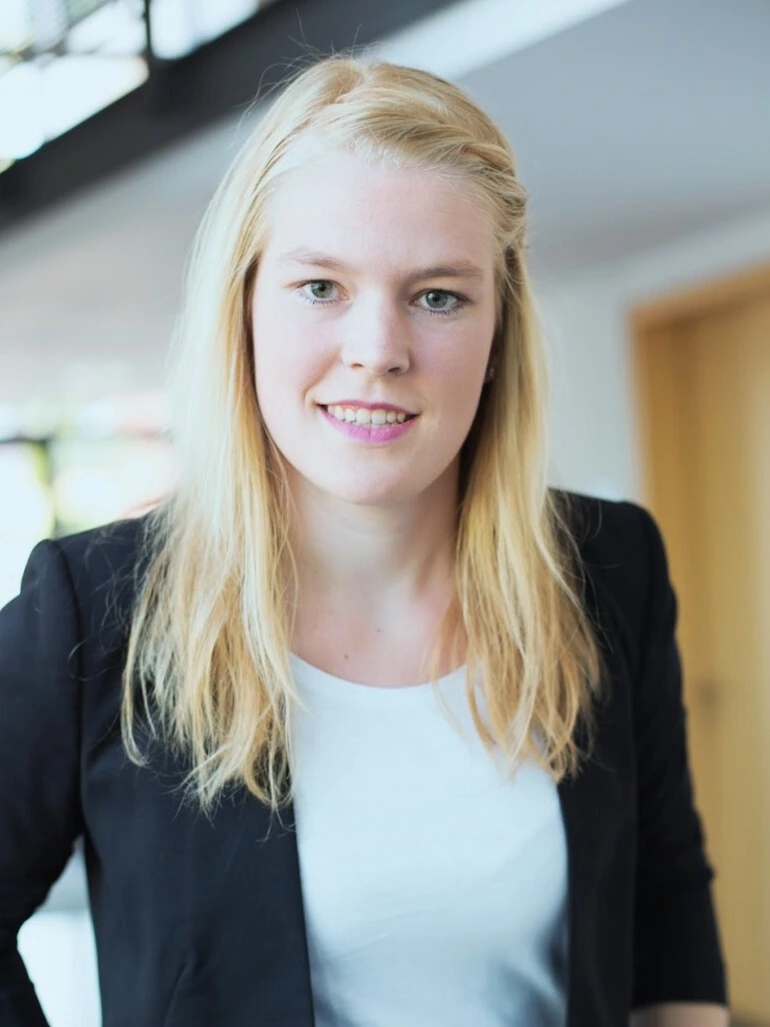
Hello and welcome to today's webinar. Thank you for joining us. My name is Till and I will be your moderator today. Before we go into details about what you could do when brands are not chosen by humans any longer, but more and more by AI, I want to give a brief introduction of Trusted Shops since we are your host today. Trusted Shops is at home in Europe with more than 800 employees in five offices. And since we started our operations back in 1999, our headquarters are in Cologne and we are still based there in the heart of Europe. We have been building trust between companies and consumers for more than 25 years now, and we do this at high scale. Right at the moment we are really in a very interesting point in time because we are basically in the same shoes as you are.
We are right in the transformation of our trust infrastructure into the age of AI. What does this mean? Our trust infrastructure right now or in the past, was built to connect consumers and companies in confidence. And right now with the AI agents, we have a third party at the table. So today we are going to show you how AI agents and brands verify each other and what you need to do in order to stay visible – then machines start making decisions and no longer the humans themselves. So what are we going to do today? First we have a presentation of around 30 minutes by help by Sabrina, Alex and Oli.
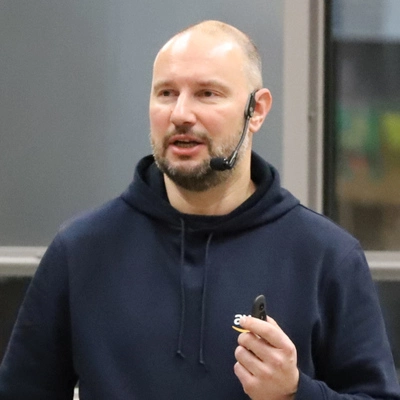
After that we will have a Q&A session. So we have the opportunity to answer some of the questions you might want to ask. You can post your questions in the chat and you can also upvote questions. If someone posted a question you find interesting, you can just upload it. So this makes it easier for us to pick those questions which are most relevant for a broader audience. So then I want to go ahead and introduce our three speakers today. First, it's Alexander Günsche. Alex is a cloud data and AI expert with more than 20 years of experience across various industries. He has led extensive transformation initiatives and successfully grown both his own business units and those of his clients.
As a Senior Solutions architect at Amazon Web Services, he helps your European software providers develop advanced cloud data and AI products. Number two is the Sabrina Engling leads the AI solutions team at Trusted Shops, and she drives AI adoption and innovation across the entire company. Her focus is on scalable AI solutions, AI operations, and agentic commerce. She combines technical expertise with strategic business acumen, bringing both perspectives from the architecture of scalable AI systems to business value. In her volunteer work, she serves as chairwoman of Tech Labs e.V. – an NGO dedicated to digital education and as an AWS Community Builder for AI engineering.
Last but not least, I'm very happy to also have Oliver Wehrens with us. Oli is product and engineering manager at Trusted Shops, and he is also developing digital products for more than 20 years now. And he enters Teams are working on the #trstd and on the TSAI protocol. So really the products we are talking about today. So then I just want to hand over to you Sabrina and Alex and Ollie and just for everyone in the audience, post your questions and we will answer them afterwards. Thank you. Thank you very much. So in our last Webinar we covered the topic AI visibility. But today the core question is when AI start searching, comparing and buying on behalf of people.
How does your website know which agents it should trust and when the next visitor is a machine - How do you stay visible without losing control? So today we often still think in terms of ads, ranking, clicks and human conversions. But AI driven journeys work differently, so AI agents can search across many options, compare reputation, price and recommend a short list, eventually trigger action on behalf of the user. And historically, the answer was often to keep these bots outside, but in the agentic web, some automated traffic may represent valid customers. So future visibility and real revenue.
So our goal is not to make every bot disappear because we also want to be visible as a brand, an AI searches. Our goal is to understand which agents should get which level of access and why that matters for trust, visibility, control and revenue. And this is why the #trstd narrative is so important. Unverifiable brands risk becoming invisible brands, and if AI system can only recommend a limited number of options, they will increasingly prefer brands they can verify. So trust moves from being a marketing layer to becoming a trust infrastructure. And if that still sounds a little future facing, let us look at the traffic reality of today.
So this chart is kind of wake up call, because automated traffic is no longer a side effect of the web. It is becoming the web's default mode. So for years the simple business rule was bought equals risk. Bot scrape, bots create fake accounts, bots have stolen credentials. Bots create costs without creating value. And that is still true for a lot of automation – But AI agents introduce a second category automation, that may represent real customer intent. An agent looking for hotel or trying to buy a ticket on behalf of a real person. And still some automated traffic will still be scraping, fraud, scalping or abuse.
So the question changes. It is no longer how do we block bots? It becomes which machine should we trust, for which action and at which level of risk. So this is not theoretical. More than 53% of a web traffic is now automated. It has overtaken human traffic and that number has grown for seven years. Automations already the default state of web and at the same time, bad bots are now around 40% of internet traffic. That means websites are already operating in an environment where machine activity is normal, not exceptional. But this is the opportunity side of the story. It is not only about bad bots.
Forecast for a agentic commerce vary because the market is still emerging and each analyst defines the market slightly differently, but the strategic signal is consistent. AI agents could influence, initiate, or complete a meaningful share of future commerce. McKinsey estimate that a agentic commerce, but orchestrate 3 to $5 trillion globally by 2030. Juniper forecast $1.5 trillion in global agentic commerce spent by 2030, and Bain and Morgan Stanley see hundreds of billions in the US alone. Multiple analysts McKinsey, Uniper, Bain - project agentic commerce at somewhere between 1 and $5 trillion by 2030, and the exact number matters less than the direction.
This is happening at scale and faster than most brands are prepared for. So agentic traffic is coming to your platform whether you are ready for it or not. And so the question for brands is not only how do we stop bots, it becomes how do we welcome trustworthy agents without welcoming abuse? And that is exactly our protocol addresses. And let's make it tangible. Whenever high demand meets limited access, automation shows up. First example concert tickets. So the business creates the demand, the artist creates the moment and the platform manages the experience. But bots and scalpers can capture part of that value and move it into secondary markets.
That is not just unfair for fans, it is a real business problem. It damages trust in the platform and redirect value away from the intended channel. An example is Taylor Swift Era tour sale where Ticketmaster was overwhelmed by the bot request. Or the second example: Sneaker drops. A product launch is supposed to create excitement, community loyalty. But if automation hits the system faster than real customers even could they experience changes and the drop becomes a race against machines. And as an example here, Nike sneaker sales have 10 to 50% bot entries. And as a third example, hardware launches.
So for example, the Steam controller of Valve the pattern repeats: scarves, inventory solds out, frustration rises, and the same product reappear elsewhere the higher price. So we have different industries but same pattern. And that is already a problem today. Now at trustworthy AI agent into the same traffic stream. And that is why bot and humans no longer enough as a differentiation. In addition, bots can also exploit security issues. So this creates the dilemma. Option one: block everything – that feels safe. But in the AI era, safe can also mean invisible, because if you block every agent, you may also block valid agent mediated customers, and you may block AI search visibility, you may block recommendations, you may block revenue.
And option two: allow everything – that feels open. But open without trust is just exposure. And you invite scraping, scalping, fraud, infrastructure costs, inventory abuse. But this is exactly what we currently see because everyone wants to be visible in AI searches and open their website for all agents. So both extremes hurt. Block everything and you lose visibility. Allow everything and you lose control. And that is the business tension our protocols are designed to resolve. Not by saying all the bots are bad and not by saying all agents are good, but by creating a third option. Verify first, then decide.
And this is where #trstd fits into the bigger picture. So the simple way to remember it is one trust infrastructure, three directions: for people #trstd Login helps people verify brands. So answering the questions: Am I on on the real website? Is this an authentic brand? Can I trust what I see? For brands TSAI helps brands verify AI agents Who is this agent? Can I trust it? What is allowed to do.? And for AI, the #trstd helps AI systems verify brands. Is the site real? Are these trust signals verified? Is it safe to recommend? So #trstd is not one isolated feature. It is a trust infrastructure for the AI era, because trust now has to work for humans and for machine and trust has to work both ways.
So trust speed directional. On one side, the brand has the question, can I trust this agent for this action? Can it read product data, can it check availability? Can it start a transaction? That is the side question. And Alex will go deeper into that in a moment. On the other side, the agent has a question: can I trust this brand enough to recommend it to a user? Is the shop real? Are the reviews verified? Is this offer safe? Is the trust signal? Yeah. Self estimated or self-assessment? Or is it really proven? So that is the #trstd question. And Oli will take the closer look at that part later.
And the big idea is TSAI lets brands verify agent. The #trstd lets agent verify brands. And these are two layers or two directions one trust problem, one trust infrastructure vision. And it is like a loop. The agent does not guess trust. It can verify and share trust signals and that is the shift from assumption to proof. So before handing over to Alex. So what changes for a brand? The answer is simple. Access becomes a policy decision, not a binary bot decision. And a trusted agent may get appropriate access to product data availability, checkout, maybe even account actions depending on the trust level and unknown agent does not need to be rejected immediately.
Maybe it gets public content, maybe rate limits, maybe monitoring, maybe challenge, and a risky or untrustworthy agent can be restricted, degraded, or even blocked. And that is the business value. You stay open to trustworthy agent mediated demand, and you protect inventory margin and customer experience and reward, treating every machine and age in the same way. So the core message of this part is: trust must become machine readable or in the trusted language, trust is no longer a promise, it is a proof. And with that, I will hand over to Alex, who will show you how TSAI works and what it means.
Thank you. Sabrina. So I think these numbers we've seen on Sabrina's slides previously are very impressive. So the general current share of a agentic traffic or bot traffic and also the projection where it's going. So this is a significant development that we see. But I think we need to take a step back first understand what is that actually that agents are going through the web and doing business on behalf of their users. And what does that mean for assumptions that we have as humans about trust in e-commerce interactions? So let's take a step back and rewind to what we know and how we perceive online shopping.
So let's say: I want to do a weekend trip to Paris. So typically I would go to different websites like a let's say tool or website for hotel bookings. I might look for restaurants that I can visit on the evenings, and I could, for example, look for concert tickets. So this is just my work of going through those websites and seeing what's available there. In a typical e-commerce funnel, you have those typical steps. They might look a bit different, but you as a merchant, you have a certain assumption about what people do there. And you may be have an understanding of what kind of risks are there, and you can mitigate them at some points.
But let's make them clear for us what can happen in several stages that are prone to exposure. So let's say, of course the customer will first find the shop, browse websites like article enter personal details, go to payment and finally confirmation and shipping. But a evil user or an agent with evil intent could exploit such several stages. For example, when we talk about browsing the website, it could come to spread prices, and that is what many bots do. But also it could go to your inventory, put articles to cart, and deplete your stock. And this is a attack that would be seen if you have Scots resource A your, your, your competitor could go and say I will put all the things in the cart, so other customers can buy it.
It could try to make an order with a fake identity. And then the fake identity is in your database and this bit of your problem. And then you could even use a stolen credit card to make it checkout. So these are all attack vectors that undermine the trusted relationship that you have with your customers. And of course, you have some technical mitigations, but ultimately these are risks that you accept. There's a small percentage of transactions that are fraudulent and you will have to deal with that. That's just a reality. But overall your business model, you can probably absorb that. Now when agents enter that constellation, some mechanics change.
So first let's understand what is an agent in the first place. An agent is actually (or an AI agent) is actually nothing super special. It's an application. It is a computer program. And this would be basically stand between your intent – to book a trip to Paris, let's say – and to different tools you would be using yourself. The new thing about AI agents is that the agents we are talking about are using large language models to make decisions. So those tools that you would operate yourself, typically they are given to the agent and with that the agent gets a task. And then the agent iterates over the tools until the point where it has solved the task.
This sounds trivial. It's not exactly rocket science, but it is a complete paradigm shift and how you can use it to work on your behalf. It is not really deterministic. There's still some autonomy in what the agent does, but it can solve much more complex tasks than traditionally a programmer would have done with just algorithmically setting up rules for certain things to happen, because the agent can observe its environment and make decisions based on the data it sees in real time, and so act on the intent of the user much broader than a deterministic program. So when customers send agents to do shopping for them, it introduces a third party into the relationship between the user and the service provider.
Service provider being a merchant here now, in order to, as Sabrina said, distinguish the legitimate agents that act on behalf of a real user with a real purchase intent from the ones that are just bots with malicious intent and trying to exploit resources at scale. Whatever exploit means in terms of the different attacks we have seen previously, you as the service provider, you as the merchant, need to get confidence about who the agent is, who operates it, and on what user's behalf it is operating. And for that purpose, we are introducing a so-called trust authority. And that trust authority is an arbitrator between the agent and the service provider.
And when now an agent comes, it needs credentials from a trust authority, and we'll see what they are in a second and can then when the user invokes it, forward those credentials to the service provider or shop. And the shop can then verify those credentials and see if the agent is legitimate. Now you could argue, of course, everybody can create an agent, get some credentials from the trust authority. But the interesting question is what are these credentials? Where do we come from. And that is essentially what we are working on together as AWS infrastructures together. It's an initiative we call Sci.
And these are trust signals for a genetic interactions. So the trust authority in this case trust has information about the agent and its operator and will allow the agent to present them to service provider when it acts on behalf of user. That's the whole idea here and increases massively the trust. So let's see at examples of what those trust signals can be. So the important thing before we go into the details of those trust signals is there are different layers of trust. So some transactions don't have a high risk. And the only thing you might need here is just the basic identity to understand who is the agent.
But more is at stake. The more risk a transaction has, like a e-commerce transaction, but also like a transfer of medical records of a person. For example, if you interact with your doctor or your agent on behalf of yourself with the doctor, the higher the stake is, the higher the risk is. The more of trust signals you need in order to have a reliable and risk calibrated interaction with an agent you haven't seen before. So there's a tiered model, as we call it, that allows you to find the right degree of trust credentials for the interaction. Now let's have a look at what those trust signals are.
There's a lot out there that we can say about an agent operator, and I don't expect you to read all of those points, but we can categorize them and say there are some signals about the identity of the agent, the agent operator. So first, trusted jobs will give them an identity token, an agent identifier. It can try to find out who is behind that agent or will find that out. But it can also make a statement about one whose behalf does the agent operate. What's important to understand here that side protocol does not mandate to review the identity of the customer. So there's also strong notion of privacy embedded here.
That's the protocol. And this little constellation cares about the agent's operator. Now you as a merchant of course need to know who the customer is, but that relation is owned by you. We do not interfere with that. So but if you go beyond identity, there are reputation signals such as how did this agent behave in the past? How much positive interactions did it have? But also can we see a consistent behavior because agents are not? It might be that they have some behavioral, biases. So those are signals. We look at their reputation. But then for the most critical transactions, we can even go into certain constraints like the guarantee of a trust execution environment, which means that we not only allow the agent to present its own credentials, but the whole interaction between an agent and a service provider would happen in a sandbox environment that is observed, governed, and controlled by an execution environment that the shop can trust.
And those are the measures we can take in the face of this explosion of the genetic traffic. So this is the direction from the agent to the merchant to present. It's trustworthy. But trust goes in both ways. And this is where Oliver will come in. Yes, Alex. Thank you. So again, this is like the picture from the merchant side or the service provider side. Now, let me flip it around. How does it look like from the agents coming to websites? And today, if you look at it, I mean, the trend is clear. Consumers are already using chatbots every day, and we're moving more and more like in a future. Let's see what exactly going to be.
But we're not at the point yet where, agents completely on a on their own purchase or complete purchases. This is just starting. And also, to be fair, it's mostly in the US, but agents are already helping today people to shop. So they are being used for conversational commerce right now. So for instance, a customer can say, buy me a pair of running shoes or buy me a laptop, or give me some recommendation of a laptop and the agent comes back with a list, shops, product prices, where to buy that. And that interaction is already happening today millions of times. And it's only accelerating. So people using that more and more.
So the question here is and of course, so how does an agent choose the jobs and the products it recommends. So where does it get a trust signal. So how does it know that this really good price, which you just found is like not coming from a fake shop. And of course everyone needs that help because, I mean, the problem is just getting worse. I mean, fake shops are also scaling with AI. If you look at humans, I mean, 70% of online shoppers have encountered a fake shop in the last two years and the same tools which make our business more productive. Also, fraudsters spin up like a convincing front, those forefront like in an afternoon or even our or even faster than that.
So if you're a human, well, you have some chance. Here. You can look carefully at the UL. You can really impress them. You can use your own judgment or if like some gut feeling maybe, and you can check whether this shop really belongs to the domain or whether, of course, you can ask a trusted source like trusted shops to confirm that the shop is real. But how would the agent protect the consumer there in this kind of scenario? I mean, the agent doesn't have any intuition, it doesn't have a bad feeling or a concrete between the lines, and especially when you come when it comes to like sensible operations, like really strongly recommending things or even the future buying things, it works best when it can rely on facts and structure, verifiable context.
So human. I mean, if it gets fooled by a fake shop, it makes one mistake and bad, but it's just one mistake. If an agent goes there, you probably if it detects the same pattern, he can do the same mistake like thousands of times. So it's really there acts as a scale. So it operates as a scale. So if a fake shop can really generate this convincing storefront, then it can also generate those convincing trust signals like really nice reviews, five star or 5.8 to 4.8 star rating. And it can all be fabricated. So to an agent reading a page like the fabricated trust and the real trust, I mean, they look identical.
So there's of course some things like there are structured data already there. So usually this is like Json-ld and that says like I'm trustworthy and I have like these kind of properties. And this is true. And the Json-ld format is really structured data and it's really useful. It's great for sale and also for geo generative engine optimization. But the main problem is anybody can write it so anybody can stay here. You know I'm the best that the best the best products, which means every fake shop can do it as well in claiming like I have really good rating and 10,000 happy customers and things like that.
So it's like more like a it's a claim, it's not trust. So and if you look from the agent operator perspective, I mean, we believe trust decides who wins the agenda gauge. So every agent platform, OpenAI, perplexity, Google, and even the ones we haven't heard of yet which will still coming, they're competing for the same thing. Can the consumer rely on the on the information which comes back from the from the answers? We know I'm can do a chat bot, do some hallucination and everybody is working on to improve it. So the recommendation is only as useful as the as the trust behind it. So agents that really send people to real shops and real products, they will earn this trust, but people will come back to them and then maybe even the future will go from what we are now like, help me find it to go ahead and buy it.
So that's the platform which will be able to do that will be a big winner of the next decade of e-commerce. The agent that gets fooled and like even just sometimes recommends the wrong thing. If there's like one high profile case of such a thing, then the consumers will pull back and stop trusting their recommendations. So it's not really like a feature or something like that. It's like the main point is like the platform that solves that trust problem because it will be so big. This will be like the will define the agenda. Commerce, the ones that don't have that trust. I think there will be history.
So what happens then? So for what does that mean for merchants? I mean if the agent cannot verify your shop, the agent doesn't block you. It doesn't really penalize you, but it simply doesn't recommend you. So the consumer will never see you. You'll never compare your price, never read your reviews or to to them. You don't exist. So this is not an, a minor seal problem or something like you are disappearing from the conversation. You shop your brand, you will be invisible to the layer where like which now, is now choosing for the consumer. So they are not actively seeing like 10,000 choices. But usually it's like just a short list of that.
So you will be disappearing from them. So the question now of course what can we do here. So and this was also something in the beginning. That's what's the reason we built the trusted protocol. So this really gives the agent signals that it needs to verify trustworthiness. So in those signals that come from a source they can trust reviews ratings insurances verification centers. And I want to emphasize trusted source because this is what we do. We've been collecting reviews and ratings for 25 years, and we have verified purchases and verified data. And this is really the data we have. And we have an independent authority in saying that this shop is trustworthy.
How does it work? So you see here there's like we're really one simple line to to include in your web page. And this is it. So and with that, every trusted protocol enabled agent can request the trust signals about your shop. And it comes back with two parts there. First we have like the signals. Those are the hard facts about the shop. So which we have from our verification process the real address legal entity behind it, reviews which are actually verified purchases by real customers. And the second part is like assessment. So this is a summary written for the agents. So really a concise, machine optimized judgment that lets the agent answer the only question that really matters at the end.
Is it safe to shop here. Can I trust this website. So this is important part. And of course we make sure that this can't be faked. So this the whole message is cryptographically signed. So the agent itself can verify that signature. So it cannot be faked. It cannot be tempered with. And the most important part it cannot be copied onto a fake shop. So the signature of that message is like bound to like the the verified shop. So the your domain your and us as an issuer. So for us I can fake many things like fake reviews, copy your brand logo whatsoever, but it cannot produce the same valid cryptography signature from trusted shops for a shop we never verified.
So this is like I put their demo, but it's not really demo. But to give you an impression how the how would it look like? So I took the trusted protocol response for a shop offering like laptops. I look look for laptops and this is like the structured JSON and put it into ChatGPT do have like a better, nicer overview how it would look like. And there the agent received the signals, read the assessment, and now tells the customer with some justification why it's actually safe place to buy there. So this is a very fine signed answer from a trusted source from trusted shops. So of course, I mean everybody watching the agent space, the space is moving and it's not standing still.
It's quite the opposite. It's evolving fast. So there are new agents, new consumption patterns, new emerging standards, like every few months or so. And if you would stick with it, what we have there, that would not be so useful. So a lot of our work right now is exactly that keeping pace with the space. So the trusted protocol we built the trust is to evolve. So the agents change how they reason about trust. And the protocol adapts to that so that we that the answer is useful for them. So concrete I mean that means that we're talking to major providers of my perplexity and others to understand how the agents works, how they consume trust signals, and how to optimize the answers for those.
And the underlying signals are still saying the same. And we have these, verified and signed, signed data from 25 years of our work. And this is what stays. We just change and I expect to change like the the packaging a bit where we optimize it for each and every agent. So as the space moves, we will move because we're still early in that game and we want to be one of the first doing so. So to sum it up, and we built all of that because I think our goal is simple. For 25 years, when a human wanted to know if a shop can be if a shop can be trusted, they could come to us. But in the age, the agent should be able to do exactly the same thing, instantly verifiable at scale.
So on the trusted protocol, it's exactly that trust source for the agenda gauge. If you go to this web page and also later in communication, we can also paste it into the chat. Then you can register for our free beta program. We are starting to roll that out and getting into conversation also with you, what kind of ideas you have and will roll it out with all of our customers later in the future. Great! Thank you, thank you, thank you Alex. This has been, I think, great insights and thank you for for sharing that with us. So, I learned two things today, like, first, yeah, we need to have the good ones in.
Leave the bad ones out. This is probably something to to really keep in mind. And, and what I also learned is I raced for, for buying a limited wristwatch last Friday. It was released last Friday. And and now I know that I probably also competed with what's not just from not just with humans from around the world. So this is really interesting. First of all, before we start the Q&A session, we also posted the link, if you want to sign up for the better program, you can just do. So I think we will post again the link in the link section here. So this is the first thing. And also because it came up in the chat, of course you will receive an email after this webinar.
And you get also the recording of the webinar as well as the slides. So this is it. First of all, thank you all very much for, handing in your questions. I've already seen a few, and I want to probably start with the first one, which came up very in the beginning, I think. Alex, you already started answering it in the chat because when the question came up. Okay, how can I make sure that bots are kept out? Someone was bringing up the robots, but, if I got it correctly, you say that it does not work for evil agents. Plus it it tends to like, get out all the robots. Is that correct? Or, how does this compare to the solution we were talking about today?
I mean, robots takes is a standard to tell robots what to expect of them, but it doesn't help against evil. What's so it is like putting a son in law. Please do not break in. So if you have the intention to break and you will do it anyway. And there are other mechanisms, but it comes down to actually needing to understand what is about profile. There's some very trivial bots that impersonate humans and you can start to easily. But the honest answer it is an arms race these days. Bots are agents are very good at impersonating users. You would basically be able to have them use a browser as you do and move a mouse around.
You can still find out what a bot is, but it's very costly. But a sentence also very costly for both operators or agent operators to impersonate that. So sometimes the bot operator when something's the agent operator. And this is really premise of this protocol, we don't want to have this arms race. We want to see there are good bots impersonating legitimate users, and they are welcome. And the others we will detect and then block. Okay, cool. And there was another question which came up in the questions area. And basically there it was about assuming that I'm not taking those measures right now.
So this goes probably into your direction, Olly, assuming I'm not doing the right measures right now in order to be found or recognized by the agents or the bots. How long will it take if I take those measures until I will be recognized again? I think this probably plays a bit into the direction, like the old, zero thing. So if I do something for search engine optimization, it's not there immediately, but it takes some time. Do we already know or can we already tell, how long it takes? If I do some optimizations on my website, for instance, with a trusted protocol, how long it will take until it.
Yeah, it really shows some, some some some results. For the solution to that problem, I would rather go for like, sales that you can be found. I would rather go with Json-ld if. Make sure that you have that really structured there. The trusted protocol will help. And also, to be honest, I saw some other chats there. Once it's really picking up. And as I mentioned, we are talking to different customers, with different providers and trying to understand how they earn trust. And this is changing at the moment. This is going to be used, but not at this moment in a way that we think this should be, the most useful part.
So for really make sure that you really I would rather go as I mentioned also, this is really great with going with Jason and and for zero and for the protocol will help you later on if you really comes to buying decisions. That is what we are looking for. Maybe I can add a thing to that. So when you look at being found by a large language model, or being in an output of a large language model gives us an answer to what the user asks, there are two aspects. First, the training data, and this is when the crawlers of the LM to kind of train the model, go through the web like a normal web crawler.
This has a delay of 1 to 2 years. So the models that are now being published have a learning cut off one year in the past. Roughly whatever you do today will be reflected there in a year. And there is the real time such an agent can do is discussed that agents can use tools, and web search is one of those tools. And so if an agent goes away, it will be able to access that. There's also things like perplexity. They use a mix of that. So rather using the training data of the language model. They have access to a database and query the database in real time. But this also has a delay. So it depends for what which of these discovery mechanisms optimizing.
Typically you will optimize similar ways as for bots, but more with the focus of semantic discoverability. Because large image models are based on the human language. And another point to that we will there's like a new standard, emerging web MCP, which gives like agents a much more dynamic way of discovering capabilities of websites. Once that hit the market, the protocol is out by Google and Microsoft like a few months ago. Once that is out, we will adapt to that ability. And I expect with that point it will be much easier to also detect like those kind of things and then much more in real time.
So then this will not be any more like Alex said, like the knowledge cut off from certain date. But agents will get there. Ask the capabilities of the set and then you can provide this information a much, much better way. And there this is what I meant with like we will move with with the pace of the agent commerce place. So we will adapt to that. I totally can see that coming. But the industry, the landscape is not there yet. Give it another three, three, four months. That's my gut feeling at the moment. Yeah, I mean, it's really crazy. We wouldn't have seen anything of this like a year ago. So this is also what we need to keep in mind.
And I'm probably the good news also for use your sitting here today in this webinar. And I think, I think you'll still are way ahead of, of many of other people in your industry. Maybe one more question we can take. I think that was asking it. And he asked if there's a weighting behind the evaluation criteria when it comes to those trust indicators. I think for the, for the trusted protocol. So are all those factors treated equally or does, for instance, a higher number of reviews automatically translate into greater trustworthiness? I think audio this also goes into your direction again. It I don't know, it's not that hard to not not not so easy to answer because, I mean, there's like a high number but all bad reviews.
Of course it's not good. A low high number is a low number of high ratings. Also not so good. So they have some algorithm. There is like some type of point, but I don't know top of my head where the messages. And also to be honest there I mean if you have a bad rating you will not be participating in this kind of thing. So, I cannot give you a definite answer where it is at the moment. I would have to look it up where the point is. Maybe I can add some aspects to it. So it's not only about the rating, it's also the what is mentioned in the reviews, for example, especially when it also comes out that our data about buyer protection and so on.
We also have their, historical data about refunding, withdrawal and also order order delivery issues. But also if we see, okay, there's increasing mention of delivery issues or some kind of signals that there might be an issue or an upcoming intervention. So this is a more complex, calculation, I would say I totally agree. And but just to give you. Yeah. The idea that is not about just rating because that would be too simple. And we also go level deeper and to see okay what's the about okay. Thank you. Maybe to to sum it up, or on the other hand, I've seen some questions which were more or less the direction of AI visibility.
So, what can I do if I've got the feeling or even data that I'm not visible to AI agents? Maybe. Sabrina, you can can give us some more insights on what might cause this topic. And secondly, of course, this is probably the more interesting part what we can do in order to be visible, for the for the AI agents. Yeah. We also had an webinar about it. So there's also a recording available where we dive deep into this topic. But we also have an AI trust you can use for free that you can assess your yeah, visibility or AI visibility readiness. But in general, there's a lot about structured data, but also quality of your website and content.
So it's not about journalistic content, it's really about facts, data points, information that is helpful to answer the questions user may ask. Okay. So again things we learned for like SEO is not something which is completely off. So this might also help, but it also goes into a different direction. So if we can probably some it sum it up that way. Yeah. It makes even the structured data, the schema and so on even stronger and mandatory. Okay. I will have a last look at the questions we haven't answered yet. Maybe the last the last answer could be, to the first question, because Andreas asked how the beta will work.
And of course, it's a beta. So, there's always some kind of a surprise in a bit. So first you sign up. Of course. But maybe Oli and Sabrina, you can give us a small heads up at least. What to expect if I sign up for the beta or what's what's going to happen there and what to expect. I mean, two parts, of course. It depends a bit. Type protocol. Trust the protocol. We will contact you. So which one is which? I think that cipher is for bringing in the good parts and leave out the bad bots. Okay. Yeah. So mean both. You can sign up and I see we can talk about it. And usually a beta program, we will talk to our customers very closely.
We will have a selected few in the beginning and then start rolling it out, learning from your needs. And also also we want to learn together with you and evolve it from your needs to a point where we can read it to the general public. So this will take you have to see how, how, how fast we moving a few months to two, three, four months or so. And then we will have it as a better product later on. So again if you register we will contact you and talk to you what what your specific needs are, what your use cases are for that. How can we help you to actually also improve the product? Okay, so it's like I would say still highly individual to really see to build a case that fits for the for the specific consumers needs.
Could I also use in this beta phase, the Tie protocol in parallel with the trusted protocol? Or do I have to decide if I want to use one or the other? You can use one or the other or both together. It will all work. Also, we're building in support for all of those in our plugins. This will also take a bit of time, but this is also coming. So if you're using plugins of trusted shops you will get this automatically. Okay, so maybe just for for you not that familiar with our plugin family. This are mainly shop software plugins. So if you're for instance use the Trusted Shops products. For instance on Shopify we have our Shopify plugin you are most likely using.
And then you will get this automatically once it's integrated in the plugin there. So no more work for you to do. Great. I think that, took us to the end of the, of the webinar. I'm looking to the chat one more time. You are very fast and typing, and I'm not that that fast in reading. But nevertheless, I think we answered most of the questions. And, yes. First of all, I want to want to thank Alex and Ali for really sharing this very important and very interesting topic for us though. Thanks for doing this one more time for everyone who's been in the webinar. Also, thanks to you for spending your time with us on this Monday afternoon.
As I already mentioned, you will receive an email, with a recording of the session, and you will also find the link for registering for the better phase in there. And we still have the link here in the webinar. So thank you everyone for your time. Have a great rest of the week, and I'm looking forward to seeing you in our next webinar.
The way Brands are discovered is changing. AI agents increasingly influence which websites, products and services People encounter. That raises a new question: will AI choose your Brand?
In this webinar, experts from Trusted Shops and Amazon Web Services explain how Brands and AI agents can verify each other, why conventional visual trust signals are no longer enough and what Brands can do to remain visible when machines start making decisions.
Speakers


The choice Brands face
AI agents are becoming a new gateway to the web. They search, compare, recommend and increasingly act on behalf of People.
For Brands, simply accepting or blocking all agent traffic creates a difficult choice.
Block everything?
You may exclude legitimate AI agents and lose customers whose decisions are increasingly mediated by AI.
Accept everything?
You expose your website to scrapers, fraud bots, uncontrolled traffic and rising infrastructure costs.
Choose a third option
Brands need a way to distinguish legitimate AI agents from malicious or unverifiable traffic and apply appropriate access policies to each interaction.
Verifiable trust for agentic interactions
TSAI, Trust Signals for Agentic Interactions, is an open protocol for verifiable agent trust, co-developed by AWS and Trusted Shops.
As part of the #trstd protocol, it enables AI agents to present verifiable information such as identity, operator, intent and relevant mandates. Brands can use these signals alongside behavioural evidence and their own policies to decide whether to allow, limit, challenge or deny an interaction.
Trusted agents receive appropriate access. Malicious or unverifiable agents can be restricted.
What you will learn
In the webinar, the speakers explore:
- how AI agents are changing Brand visibility and customer access
- why blocking or accepting all agent traffic is not a sustainable answer
- how Brands and AI agents can verify each other
- how verifiable identity and behavioural evidence support policy decisions
- how #trstd and TSAI contribute to trust infrastructure for the AI era
- what this shift could mean for visibility, access and revenue