A large number of reviews is a major factor for AI.
22/09/202637:35E‑commerceAI

The audio player is provided by Letscast, which sets cookies.
E‑commerce is changing fast: customers expect good products, fair prices and a smooth experience, while AI and agentic commerce change how people discover and buy products. Bastian Kolmsee, COO of Trusted Shops, talks to David Rissmann, Head of Strategy and Chief of Staff at Flaconi, about the beauty retailer's path from start-up to international e‑commerce company.
Comment onYouTube (opens in a new window)
Original language: German
In this episode: Dr. Bastian Kolmsee, David Rissmann (Flaconi)
Transcript
# Community of Trust — flaconi
David Rissmann: Customers genuinely expect samples.
Bastian Kolmsee: I was just about to say that. Before our conversation, I scrolled through your reviews, and samples are clearly a hot topic.
David Rissmann: Absolutely. And if there's one sample too few in the box, people notice immediately.
That's also one of those areas where we keep improving continuously. At some point we said: okay, customers will get two random samples in every parcel.
Bastian Kolmsee: You've now collected more than one million reviews on the Trusted Shops platform. Congratulations again.
David Rissmann: I think that's a fantastic milestone.
At the moment, around 75% of our revenue comes from returning customers. That shows that focusing on a strong value proposition, customer satisfaction and trust really pays off.
Platforms such as Trusted Shops are obviously very relevant for us in that context as well.
Bastian Kolmsee: Are you already looking at agentic commerce in the broader sense? And because you're Head of Strategy, is this a strategic topic for you?
David Rissmann: Absolutely.
Our view is that AI will actually help e‑commerce even further and that e‑commerce will continue to gain ground compared with physical retail, simply because AI makes e‑commerce even more accessible.
If I have an agent that can either shop for me or give me genuinely good advice, then that agent takes over some of the functions that until now might have been provided by a physical store.
So fundamentally, we see a major opportunity in this development.
Bastian Kolmsee: Welcome to a new episode of our podcast, Community of Trust.
My name is Bastian Kolmsee and I'm the COO of Trusted Shops.
Trust is one of the most important success factors in e‑commerce. At the same time, it is becoming increasingly difficult for retailers to build trust and to maintain it.
That makes it all the more interesting to talk about a company that has managed to build trust with millions of customers over many years, continue strengthening that trust and expand into new markets.
My guest today is David Rissmann. He is Head of Strategy and Chief of Staff at flaconi.
Welcome, David.
David Rissmann: Thank you. I'm very happy to be here.
Bastian Kolmsee: As I mentioned, flaconi is a well-known brand and one of the leading beauty e‑commerce companies.
You operate internationally across a number of markets, serve millions of customers and, if I'm not mistaken, have around 50,000 products from more than 1,000 brands in your assortment.
Before we dive into the individual topics such as customer reviews, trust and of course AI, introduce yourself briefly. Who are you and what do you do?
David Rissmann: Gladly.
I've been at flaconi for around four and a half years now. I look after the whole strategy area.
Around three years ago, we developed our current strategy, called Beauty in Your Pocket.
It's a mobile-first strategy. The idea is to become something like the mobile beauty companion for our customers.
That includes topics such as internationalisation, which you already mentioned, but customer retention and existing customers are also major parts of it, along with a few other areas.
We're now driving the implementation of that strategy forward.
Alongside that, I have a few other responsibilities. One of them is customer feedback.
Around three years ago, we started taking that topic very seriously, sorting the different feedback channels we have and using them systematically so that we can learn from them continuously.
On the one hand, that means improving ourselves. On the other hand, it also means using customer feedback to build trust, especially with new customers.
Bastian Kolmsee: That sounds like a very varied job.
David Rissmann: It definitely is. There's always something new. No boredom.
Bastian Kolmsee: Definitely not.
Let's look a bit more closely at your day-to-day work.
You just said that it ranges from questions such as how you want to address customers on mobile or other devices all the way through to customer feedback.
What does your working day actually look like?
David Rissmann: It's genuinely different all the time.
If we break it down a little, we have the strategic topics where we check in regularly and review where we are: are we progressing in the right direction, and are we still on track?
I already mentioned internationalisation. We have a clear roadmap and plan there.
This year alone, we opened another seven countries, and we're now active in 19 European markets.
That shows fairly well that over the last few years we've found an approach that allows us to launch and build up new countries quickly and efficiently and then move them into both growth and profitability.
That's one major topic.
Another area is existing customers and returning customers. We want to stay in contact with them, through social media for example or other channels, but of course we also want to create new reasons for them to buy again — through email newsletters, CRM and so on.
Then, as a retailer, retail media is obviously a major topic for us and something we're investing a lot in.
We've just founded the flaconi Media House as a separate company so that we can offer our partners a larger and more professional portfolio of retail-media services.
And then there is the whole area of customer reviews.
For us, that includes review platforms such as Trusted Shops.
It includes our internal NPS survey, where we regularly check how customers are doing and where we've just had it confirmed that we have a leading score — actually the best score among beauty retailers, at least according to our partner Zenloop, which we work with on this.
Then of course we have product reviews.
By now we have a very large base of product reviews and we keep enriching that data. That's becoming particularly relevant again in the context of AI.
And naturally, there are reviews on all kinds of other platforms, such as app reviews.
So there are several feedback areas that we monitor.
As I said at the beginning, there are really two objectives.
The first is to keep learning from the feedback, improve continuously and repeatedly identify areas where we can make the customer experience even better.
The second is to use those reviews externally as proof of what we deliver.
Bastian Kolmsee: Absolutely.
Before we go deeper into those individual topics, let's stay with you personally for a moment.
Why did you end up in the beauty industry?
David Rissmann: That's a good question. It wasn't necessarily planned.
But flaconi is simply a very interesting company.
Before joining, I worked at Google, among other places, and flaconi was actually one of our customers. So I already had some insight into how the company worked, and I found it very exciting.
The story is fascinating too.
I was really pleased to see here in Cologne that so many posters from our current birthday campaign are everywhere.
Bastian Kolmsee: You really can't avoid them here.
David Rissmann: Exactly. The whole city is covered in them. There are actually more here than in Berlin, which I thought was great.
I think flaconi is simply a cool company with a great story.
It started around 15 years ago with the idea: why shouldn't premium beauty be sold online as well?
And I think one of the founders' major achievements was convincing brands such as Dior and Chanel, which were understandably very cautious and very protective of their image and prestige, that their products could also be sold online in a premium environment.
That's a great story.
And beauty is also a very attractive industry for e‑commerce in general.
You have products with relatively high value that are also relatively small and light.
That means logistics costs are quite reasonable compared with the value of the goods.
Returns are also much lower than in fashion, which is obviously very helpful.
And there isn't the same kind of seasonality in the sense that products suddenly become unusable or unsellable after a certain point. That's another difference from fashion.
So there are many attractive characteristics in the category.
On top of that, we work very closely with the brands and our partners, which I think also makes the business special.
For me personally, it has been an extremely exciting journey over the last few years.
Bastian Kolmsee: Understood.
You just said flaconi has been around for roughly 15 years. I believe you were founded in 2011 and made quite a splash from the beginning. It's a great success story.
What actually differentiates you from competitors — whether they're mint-coloured or use other colours?
David Rissmann: First of all, the success, I'd say.
We've discussed differentiation a lot, especially in the context of our current strategy, and we revisit the question regularly: how do we actually differentiate ourselves?
But from our perspective, the key issue isn't really differentiation. The key issue is the value proposition for the customer.
In our case, that's very simple.
We have a strong assortment of relevant, attractive premium products from great brands. Customers get them from us at competitive prices, and we deliver them reliably.
And to be completely honest, that's exactly what the customer wants.
It's not as if the customer expects a retailer to entertain them with a huge amount of additional effort.
What the customer expects is for their need to be fulfilled.
That's what we do, and that's what drives customer satisfaction for us.
Bastian Kolmsee: I understand.
flaconi started as a start-up and today I'd probably describe it as a very large scale-up.
Often, companies grow very quickly at the beginning — particularly when there's venture capital behind them or a lot of media spend to build brand awareness — and then after four or five years they reach a point where structures need to change and they have to work through the growing pains.
A lot of companies fail at that point.
How have you managed, over the last seven or eight years — including Covid — to keep that growth going so consistently?
It's impressive, especially because it seems to be accelerating again right now.
David Rissmann: It's definitely been a journey.
Fifteen years is already a meaningful period of time.
You mentioned Covid. On the one hand, it was a major e‑commerce boost, including for us.
On the other hand, beauty was a mixed story during Covid because there are certain categories you mainly use when you meet other people. Make-up and fragrances, for example, declined for a while.
So it was an up-and-down period for us as well.
But especially since our current leadership team came in around three years ago and we introduced the current strategy, I think we reset the course in the right direction and then drove the company strongly upwards again.
That came partly from the strategic topics I've already mentioned, but I think another major factor was a very clear focus on having the right people on board with the right mindset.
It's probably still much more of a start-up mindset than a corporate mindset.
We try to put things like speed of execution and courage at the centre.
That means genuinely having the courage to try things, test things regularly, test them live with customers, see what works and what doesn't, and then build on the results.
Bastian Kolmsee: That's an interesting point.
At Trusted Shops, just like many SaaS companies and e‑commerce businesses, we talk a lot about product-market fit, the offering and how to bring it to customers in the best possible way.
You just said that experimentation, agility and being allowed to make mistakes are effectively part of your DNA.
How did you actually manage to embed that in the organisation?
David Rissmann: It starts with having the right people.
They need to bring that mindset with them to a certain extent from the beginning.
You have to ask: where is the fit, and where isn't it?
That starts with recruiting, but it can also include things like performance management, where you regularly need to ask whether these are the people who will move the company forward.
And then there is a lot of work on the culture itself.
Our culture includes a healthy, positive sense of competition.
A lot of people here are passionate about sport, and we regularly do fun things together.
Next week, 250 of us will be taking part in the B2Run company race in Berlin.
Bastian Kolmsee: Very good. We had that in Cologne yesterday.
David Rissmann: Exactly. Two weeks ago, we did an obstacle race together.
I think that gives you a bit of a sense of the culture.
And we've also introduced some interesting things around values over the last few years.
We have something called the Value House concept.
We took our five company values and turned them into houses — a bit like Harry Potter or Game of Thrones.
Every employee is assigned to one of the values, and throughout the year there is a friendly competition between the different houses to keep those values alive.
Bastian Kolmsee: So people collect points and compete against one another?
David Rissmann: Exactly.
Bastian Kolmsee: Hourglasses full of gems?
David Rissmann: Something like that — just a little more digital in our case.
Bastian Kolmsee: Very good.
So when you're organised internally like that, and you have this Beauty in Your Pocket strategy you mentioned earlier, that obviously didn't come out of nowhere.
It presumably came from a lot of insights and good ideas.
How do you recognise when customer expectations and customer needs have changed?
David Rissmann: "Changing customer needs" is one of those phrases you can always use, of course.
But fundamentally, it is a continuous development process.
Fifteen years ago, we started with a website. Then relatively quickly, mobile became important and eventually the app came along.
Then you try different channels and realise, for example, that TikTok can be a useful channel at least for creating awareness and promoting certain products.
Bastian Kolmsee: But presumably you also have a systematic process for identifying those changes.
At some point, you receive feedback and think: perhaps we should look at how to solve the problem that's being articulated here, or how to fulfil this new need.
David Rissmann: Exactly.
One thing that helps us is that we're still not an enormous company.
We still operate in a way that is relatively start-up-like, which means we're able to bring different sources and pieces of information together.
On the one hand, e‑commerce gives you this wonderful playground in the form of an online shop or an app.
You can test constantly, run A/B tests regularly, and use hard data to show what works and what doesn't.
On the other hand, you have all the customer feedback we discussed earlier, and a lot of inspiration comes directly from there.
Customers regularly tell us, for example, whether they're satisfied or dissatisfied with a particular delivery provider.
And then there is one story I often tell: samples.
That's something that comes directly from the traditional beauty retail environment.
If you walk into a perfumery and buy a fragrance, you're used to getting a few samples in the bag as well.
At the beginning, we thought: okay, our value proposition is online, convenient, good prices — surely customers don't expect samples on top of that.
But they do.
Bastian Kolmsee: I was just about to say that. I looked through your reviews before this conversation, and the topic of samples is clearly a hot one.
David Rissmann: Absolutely. And if there's one sample too few in the parcel, customers notice immediately.
So that became another area of continuous improvement for us.
We started by saying: okay, every customer gets two random samples in the package.
Of course, that didn't satisfy everyone either. Some customers wanted more choice.
Today, customers can choose between surprise samples, a specific sample, or no samples at all.
There are also customers who say they don't need samples and aren't interested in them.
But to be honest, we still receive feedback every day from customers who would like more choice, more samples or higher-quality samples when they place a larger order.
So there is still more to improve.
We keep working on it because we can see that samples genuinely matter to customer satisfaction and therefore also influence whether customers come back to us.
Bastian Kolmsee: How do you handle all that feedback? Do you read every individual review, or do you use tools to identify patterns?
David Rissmann: Both.
I'd say it's now a combination of human intelligence and artificial intelligence.
Our tools provide us with regular daily exports, for example of the most critical reviews, and we genuinely read those.
That helps us build a feel for what is a normal critical review and what may be a new issue that is starting to emerge and that we haven't seen before.
At the same time, on a monthly basis we look at the feedback in aggregated form.
Then, of course, you can run all of the reviews through AI and ask it to identify the major topics and show how they have changed compared with the previous month.
Bastian Kolmsee: I asked because I think that's a great topic and perhaps something we can return to later.
You've now collected more than one million reviews on the Trusted Shops platform, so congratulations again.
I think that's a fantastic milestone and clearly reflects the strong customer orientation you've described, because you're actively asking customers for their feedback.
When you look at the reviews, you also get a lot of love back.
There are some critical reviews, of course — that's completely normal — and those are useful because you can learn from them.
But there are also some wonderful ones.
I looked at one earlier from one of our members. It was almost a declaration of love. It said something like: "It's such a lovely experience shopping with you. Big smiley and thumbs up. It's always a pleasure. The products are simply beautiful. When a parcel is on the way, I'm in a good mood, and everything arrives very quickly and beautifully packaged. Great seller, great team. For me, the best platform. Thank you." And then roughly 948 smileys and thumbs-up emojis.
That really reflects what you just described.
So reviews aren't only a valuable source of ideas; they're probably also quite motivating for the team.
How do you make sure you also pick up trends quickly?
I saw, for example, that your site has picked up topics such as K-Beauty and similar trends.
How quickly can you adapt when you notice customers talking about something or when it becomes popular on influencer channels? Do you monitor that systematically as well?
David Rissmann: It depends a little on which area we're talking about.
When it comes to assortment, we regularly look at which products and brands are relevant in the market and ask whether we need them at flaconi and whether they fit our positioning.
Demand is obviously one factor: are customers buying it, is it currently a trend, as with K-Beauty for example?
But on the other hand, we also ask whether it makes financial sense for us.
Part of the financial success we've had over the last few years comes from being more critical about brands and our assortment.
We say very clearly: either we can make money with it and it makes sense for us, in which case we list it, or it doesn't.
That discipline also protects you from chasing every trend and losing focus.
Where trends are absolutely central, of course, is social media.
We play with that a lot.
I think the team has done a fantastic job over the last few years moving away from the very traditional social-media approach you might expect from a beauty retailer — beautiful product photos, make-up tutorials and so on — towards something much more innovative and entertaining.
It's more self-ironic, more humorous.
We have our own series that's loosely inspired by The Office or Stromberg and shows a bit of what happens behind the scenes.
Bastian Kolmsee: So you're effectively building your own community through that?
David Rissmann: Exactly.
And you can really see that there are hardcore fans who wait for the next episode every week.
Bastian Kolmsee: How many views do those videos get?
David Rissmann: That's a good question. I'd have to check, but some of the episodes have become really popular.
Bastian Kolmsee: We're seeing the same thing with various other companies.
The content doesn't even have to be highly polished. It often works best when it feels authentic and, as you said, entertaining.
Then suddenly a video has hundreds of thousands of views and you realise you've reached people through a completely different channel in a way that would be very difficult through traditional advertising, email or similar channels.
David Rissmann: Exactly.
That's still the power of social media.
People keep debating what role social media plays and whether it should become a direct sales channel or where exactly it fits into the funnel.
For us, it's primarily a way to stay in conversation with customers and remain in contact with them in an entertaining way.
Bastian Kolmsee: Very nice.
Let's move into the topic that sits at the heart of this podcast: trust.
I can imagine that trust plays a major role in beauty — trust in the product itself and trust in the company selling it.
If I buy a fragrance and it doesn't meet expectations, or I put something on my face and the result is unpleasant, that can be a serious issue.
How do you address trust in the product and the authenticity of the product across your platform and channels?
David Rissmann: It's an extremely important point.
Yesterday, I was talking to one of our partners in the skincare sector. The founder's principle was essentially: "I don't put anything on my skin that I wouldn't also be willing to eat."
That's obviously an extreme formulation, but the point is valid.
These are sensitive products to a certain extent. It's different from buying, say, a cleaning product or something similarly functional.
I think there are two levels here.
First, trust in the product itself. And second, trust in the retailer.
To some extent, the two are connected, because unfortunately there are also retailers in our industry that sell products that aren't authentic, or that have reached the retailer and ultimately the customer through somewhat questionable channels.
So trust is very closely linked to authenticity.
What we see is that customers have built up much more knowledge and expertise around products over the last few years.
AI probably helps with that as well. Today, you can ask an AI to build a personalised skincare routine for you, for example.
A large proportion of the customers who come to us already know exactly which product they want.
That's an advantage for us, because otherwise people often ask: how do you actually sell fragrances online when customers can't smell them?
The answer is that most customers already know what they want.
And then the second point is trust in the retailer.
In Germany, over our almost 15-year history, we've built up both trust and strong brand awareness. That's obviously a major asset.
But against the background of the international expansion we've discussed, we're constantly reaching new customers as well.
At the moment, I think around 75% of our revenue still comes from returning customers.
That shows that the focus on a good value proposition, customer satisfaction and trust pays off.
But international expansion naturally brings in a much larger share of new customers.
So the ability to signal externally that flaconi is a trustworthy shop is extremely important for us.
We do that in the shop itself, but platforms such as Trusted Shops are also highly relevant for us.
Bastian Kolmsee: Especially in beauty and fragrances, there are lots of imitations that may look right from the outside but don't match the quality of the original.
I know you've invested a lot in combating that. Is it still a major topic in your industry?
David Rissmann: Yes.
On one side, you have outright imitations. Then you have the grey market, where you don't always know exactly where the goods originally came from.
If you look at price-comparison sites for popular products, you'll often find retailers you've never heard of offering surprisingly low prices. As a customer, you need to look carefully at that.
Then there's another level that's discussed a lot in our industry: so-called dupes.
That's where a fragrance is essentially recreated based on a well-known original and then sold, for example, through drugstores or under other brands.
We've positioned ourselves quite clearly on that.
We said: that's not something we want in our assortment.
For us, the original matters, as does our commitment to our partners and to original products.
So communicating that we sell authentic products is extremely important.
You see that regularly in our shop, and it's also great when customers reflect that back in their reviews.
Bastian Kolmsee: Absolutely.
David Rissmann: Whether that's in product reviews or in reviews on platforms such as yours.
It's something we always want to emphasise in our communication because we believe it genuinely matters to customers.
Bastian Kolmsee: That's the product side.
The other side is something we've seen increasingly often recently, especially with high-priced fragrances: products being offered through shops that are less trustworthy, or even through complete fake copies of existing websites.
So essentially a copycat site that may be hosted somewhere but isn't actually the genuine retailer.
Has that already been an issue for you?
It can range from a copy of the entire shop to a fake social-media profile. How do you deal with it?
David Rissmann: We actually have a pretty good setup for detecting these things regularly and then initiating the steps needed to get them taken offline.
Fraud detection in the broadest sense, and dealing with all kinds of fraud, is definitely relevant for us.
And I think the bigger and more relevant you become as an online shop, the more you become a target.
Bastian Kolmsee: Normally being copied is the biggest compliment. In this case, it definitely isn't.
It's genuinely damaging to the business and, above all, to reputation, even though the legitimate company hasn't done anything wrong.
And as you say, it creates a lot of work because customers may contact you afterwards, believing they bought from you.
David Rissmann: That happens, yes.
Sometimes that's actually how we first hear about a case.
Bastian Kolmsee: Understood.
You also said you're expanding strongly.
You have a large number of repeat customers, which is a fantastic sign of customer satisfaction, but if you want to keep growing at this speed, you need new markets.
You mentioned Southern Europe, Northern Europe and Eastern Europe — essentially expansion across the continent.
When you enter a new market where the flaconi brand doesn't yet have the same presence or reputation it has in Germany and the DACH region, how do you build trust quickly as a retailer?
David Rissmann: If I had to answer in one sentence, I'd say: through positive customer experiences.
But your point is absolutely valid.
In Germany, we're in the fortunate position of having more than 50% brand awareness, built over many years through TV advertising and other activity. And right now we have our current out-of-home campaign as well.
We don't have that advantage in other countries.
But since we've accelerated internationalisation under our current strategy, we've seen that brand awareness may not actually be the most important thing in the first step.
What matters is communicating the value proposition I mentioned earlier: good assortment, good price, good delivery, good overall experience.
And that genuinely works.
That's a large part of why international expansion is working so well for us.
Our approach has essentially been to copy what we do in Germany one-to-one and only adapt the things that absolutely need to be localised in a particular country — delivery, payment methods and similar topics.
Then we let the model run.
We're seeing extremely high growth rates, and because the setup is relatively lean and fast, the countries can also become profitable quite quickly.
From the customer perspective, the question is of course whether people are willing to buy from what appears to them to be a new retailer.
You can see that in the reviews as well.
The customers who do take that step are satisfied, they come back, and hopefully they tell other people about us. That's how the cycle starts to build.
And then of course there are platforms and other ways of signalling externally: we're a trustworthy shop; we've already satisfied other customers.
Bastian Kolmsee: So you're effectively transporting the positive reputation you've built over the last 15 years into new markets as social proof.
David Rissmann: Exactly.
If someone is interested in a specific product and lands on one of our product-detail pages, they can see product reviews not only in aggregate, but also reviews from Germany.
For our top-selling products, we sometimes have several thousand reviews.
That gives customers another signal: other people have bought this before, it's clearly an authentic product, and it's clearly a good product.
Bastian Kolmsee: Do you also work with local influencers in the individual markets to help build awareness of the brand across different channels, or do you mostly bootstrap that growth organically from your own strength?
David Rissmann: I think "bootstrapping" is actually a very good description of the major change we made in our internationalisation approach.
Our old approach was probably a little over-engineered.
When I joined flaconi, we had just launched France, and I think that was the result of a two- or three-year process that tied up a lot of people inside the company and required a huge amount of work.
At some point we said: we can't continue like this.
We need a simple playbook that we can essentially repeat for every new country.
And that's exactly what we do today.
So yes, bootstrapping describes it quite well.
Bastian Kolmsee: Understood.
Let's talk about AI as well — as we apparently have to in every podcast these days.
You mentioned that you use AI internally for analysis and efficiency improvements, and presumably generative AI for marketing and other areas.
Can you briefly explain how you're using it and where, including perhaps customer-facing applications such as personalisation?
David Rissmann: There are a lot of possibilities.
If we zoom in on reviews, trust and related topics, the internal perspective is what we already discussed: AI helps us analyse reviews, understand where we currently stand and see how different topics are developing.
On the customer side, we're already using AI in some areas, and I think that will expand further.
One feature I find genuinely valuable is review summarisation.
You already have that on your profiles, for example.
We're now introducing the same thing in our shop for product reviews, so customers can read an AI-generated summary of what other customers are saying about a product.
I think that's highly relevant.
Then there is the huge area of advice and consultation.
So far, we've consciously decided not to take a first-mover approach there, simply because of what I said earlier: a large proportion of our customers already know what they want to buy.
So advice isn't actually one of the biggest drivers for us.
That said, we're currently building capabilities internally and will probably offer some form of AI-supported advice at some point.
Bastian Kolmsee: As you said, unlike fashion or perhaps eyewear, where virtual or augmented try-on can work very naturally, fragrances are much harder to translate into a digital experience.
David Rissmann: Fragrances are difficult, yes.
You can still offer a form of consultation, and many customers are probably already doing that independently with the AI tool of their choice.
With make-up, of course, you have things like virtual try-on, and those solutions are becoming pretty good now.
But even there, a large proportion of our customers already have a fairly clear idea of what they want to buy.
Bastian Kolmsee: Are you already looking at agentic commerce in the broader sense?
Over the next two or three years, this will probably arrive step by step, especially for products where I already know exactly what I want.
So it's less about browsing and then making a selection and more about saying: I've been buying this fragrance for 20 years, I just want to buy it quickly and easily.
Because you're Head of Strategy, is that a strategic topic for you?
David Rissmann: Absolutely.
It's strategically very relevant and also a fascinating question.
I'm really interested in the debate, because you hear everything from "agentic commerce will essentially kill e‑commerce" to the opposite view.
Our belief is that AI will actually help e‑commerce further.
We think e‑commerce will continue to gain ground compared with physical retail because AI makes e‑commerce even more accessible.
If I have an agent that either shops for me or provides genuinely good advice, then it takes over some of the functions that until now may have been provided by a physical store.
So fundamentally, we see agentic commerce as a major opportunity.
But for me, it is a spectrum.
At one end, a customer receives advice from AI, perhaps has products put into a basket, but still makes the final purchase themselves.
At the other end, you have an AI agent that actually goes out independently and buys on the customer's behalf.
We're following developments across that spectrum and watching what happens in the market.
For the first half of that spectrum, I think we're very well positioned.
One reason is that we have such a large volume of ratings and reviews, which are already an important input factor for AI.
So we'd certainly hope that flaconi appears when customers ask an AI system for advice about fragrances or skincare, for example.
When it comes to a genuinely autonomous agent that actually buys on behalf of the customer, I'm curious to see how widely that model will really establish itself.
We regularly talk to partners building the relevant protocols and platforms.
But even there, I'm relatively relaxed about our position because our value proposition is attractive not only to a supposedly subjective human customer, but probably also to a somewhat more objective AI.
Bastian Kolmsee: So the way people shop may change, but the fragrance can still come from flaconi.
Whether I go to your shop myself or tell my LLM, "Please go to flaconi and buy it for me," I still want to receive the product from you.
Let's finish with something a little more personal.
A few short questions, with short answers if possible.
Price or trust — which is more important?
David Rissmann: Trust.
Bastian Kolmsee: Brand or reviews of the brand?
David Rissmann: Reviews of the brand.
Bastian Kolmsee: Do you prefer to buy online or offline?
David Rissmann: Online.
Bastian Kolmsee: AI advice or human advice?
David Rissmann: These days, honestly, usually AI.
Bastian Kolmsee: Very good, thank you.
One final question.
This is Community of Trust, so what does trust mean to you personally?
David Rissmann: For me, trust ultimately means having the good feeling that what I'm doing is the right choice — the right option.
That can be about shopping, but it can also be about other decisions and actions in life.
I think it's the reassurance that your own action, or the particular course of action you've chosen, is the right one.
Bastian Kolmsee: Very good.
David, thank you very much for the conversation and for all the insights into flaconi — where you're heading, how you're driving internationalisation forward and what matters to you.
I think there were a lot of interesting insights for everyone listening or watching.
Thank you very much for the conversation.
David Rissmann: Thank you. See you soon.
Share this episode
Get in touch with our team

Because you listened to »A large number of reviews is a major factor for AI.«
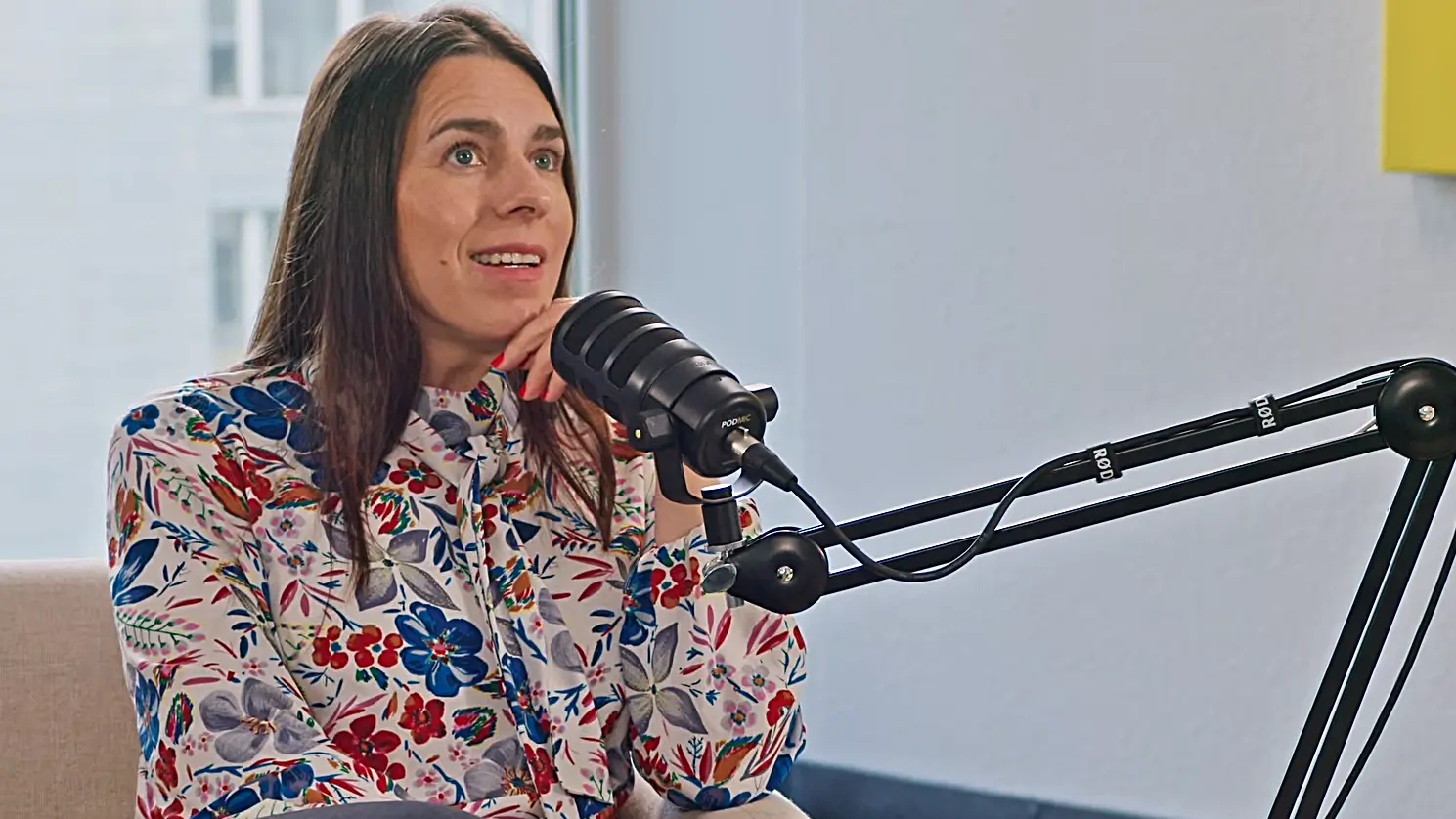
 We require transparent AI. Trust cannot be built without transparency.29/09/2026. Artificial intelligence has long been more than hype – and yet agentic AI is far from reality everywhere. In conversation with Sabrina Engling, Valentina Kerst of the German AI Association (KI Bundesverband) explains where companies stand today, which topics are underestimated and why good data foundations are decisive for the next stage. Kerst sees the biggest gap in data governance: companies need to know which data they have, where it lives, who may access it and how it is structured. Only a reliable data foundation makes it possible to use AI agents meaningfully.We require transparent AI. Trust cannot be built without transparency.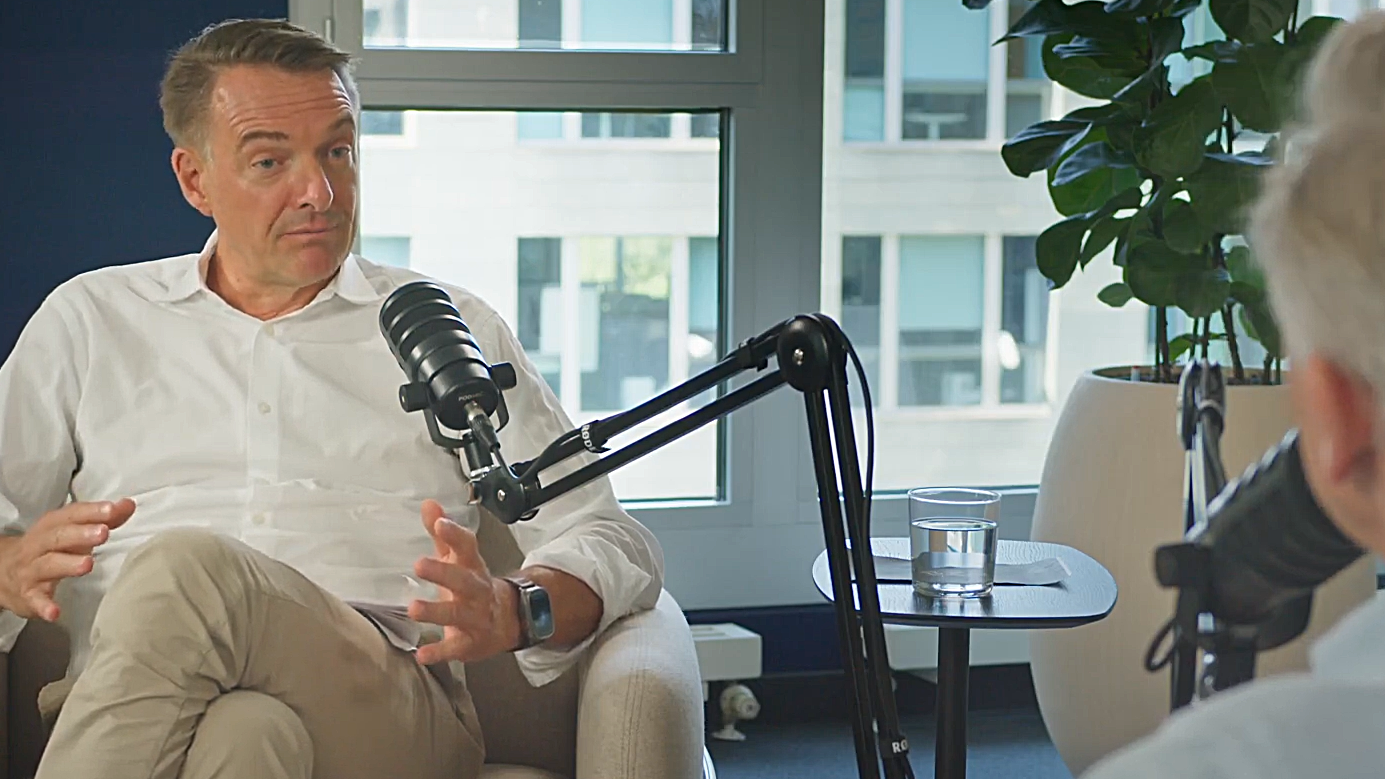
 Customer feedback is our main learning source.25/08/2026. 10,000 reviews, AI and a new course in e‑commerce: from fashion brand with physical stores to modern omnichannel retailer, More & More has gone through a full digital transformation. Jean-Marc Noël, CEO and founder of Trusted Shops, talks to Thomas Forstpointner, Head of E‑Commerce at More & More, about the challenges along the way and how trust works digitally.Customer feedback is our main learning source.

 Hard lessons in logistics, drop-shipping and agency red flags.28/05/2026. Made to measure, down to the centimetre: what DIY stores can't do, Grimberg GmbH turned into a business model. Maurice Grimberg and his sister Leonie run the family company from Sievern, started by their father in 2004 in a hallway, as a modern e‑commerce business with more than 130,000 customers in Germany and the Benelux. How do you notice that an agency doesn't really understand your product – and when do you act on it?Hard lessons in logistics, drop-shipping and agency red flags.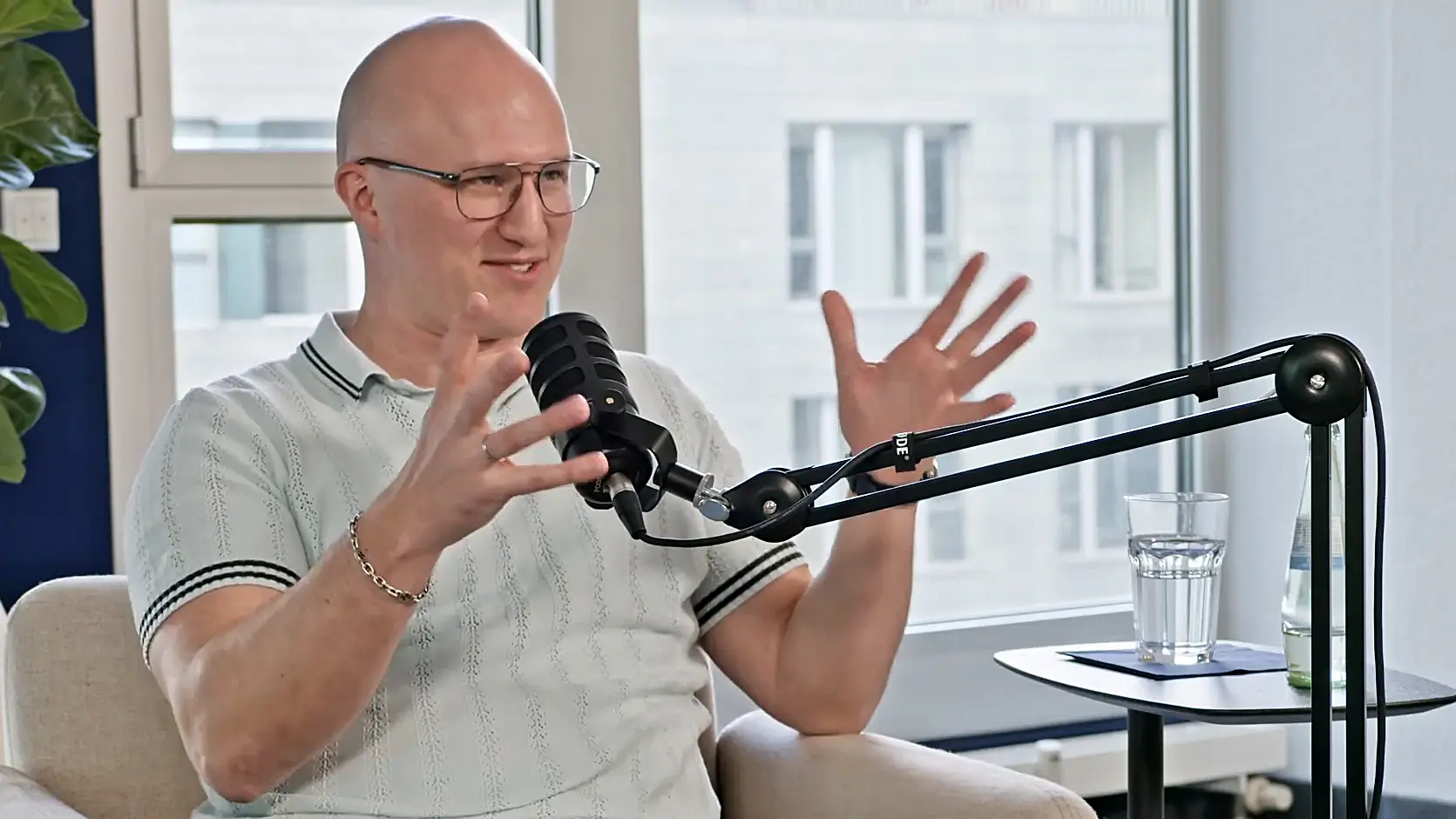
 Differentiating the indifferent for a 20% conversion uplift.14/04/2026. Electricity and gas are invisible products. That's exactly why trust at E wie Einfach is not a phrase but a conversion strategy. Roman Philippi tells Jean-Marc Noël how the Cologne-based E.ON subsidiary brings innovation, customer focus and measurable trust signals together in a highly regulated market – and what difference a trustmark really makes at checkout.Differentiating the indifferent for a 20% conversion uplift.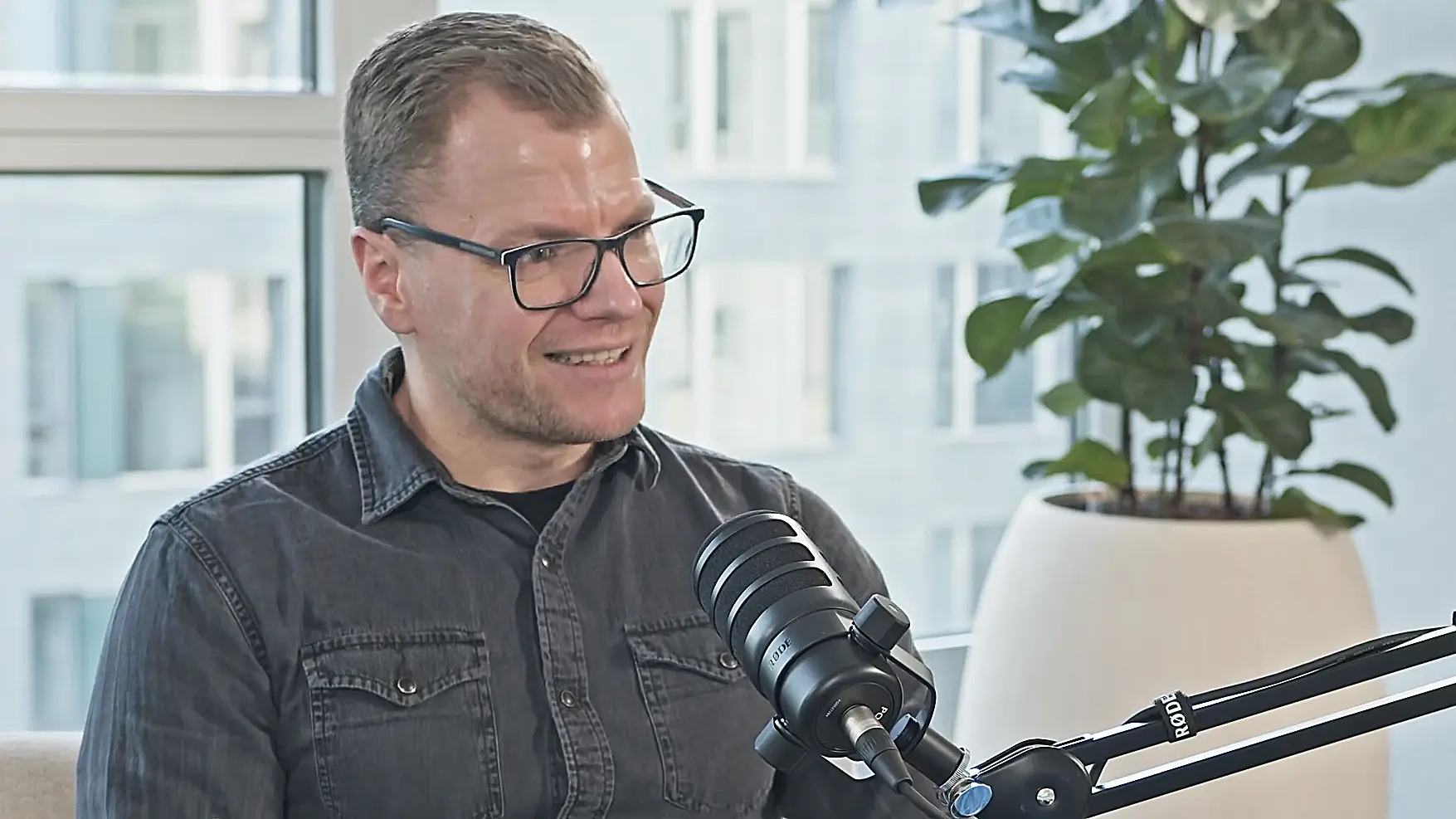
 Trust rocks the cradle: crowdfunding and D2C from scratch.11/03/2026. Starting from zero with a completely unknown product, you need one thing above all: trust. Hendrik Mahncke, founder of Rock My Sleep, knew that from the start. He tells Jean-Marc Noël how a crowdfunding campaign and an idea on a sheet of paper became a serious e‑commerce business, and how an unknown brand earns the trust of parents.Trust rocks the cradle: crowdfunding and D2C from scratch.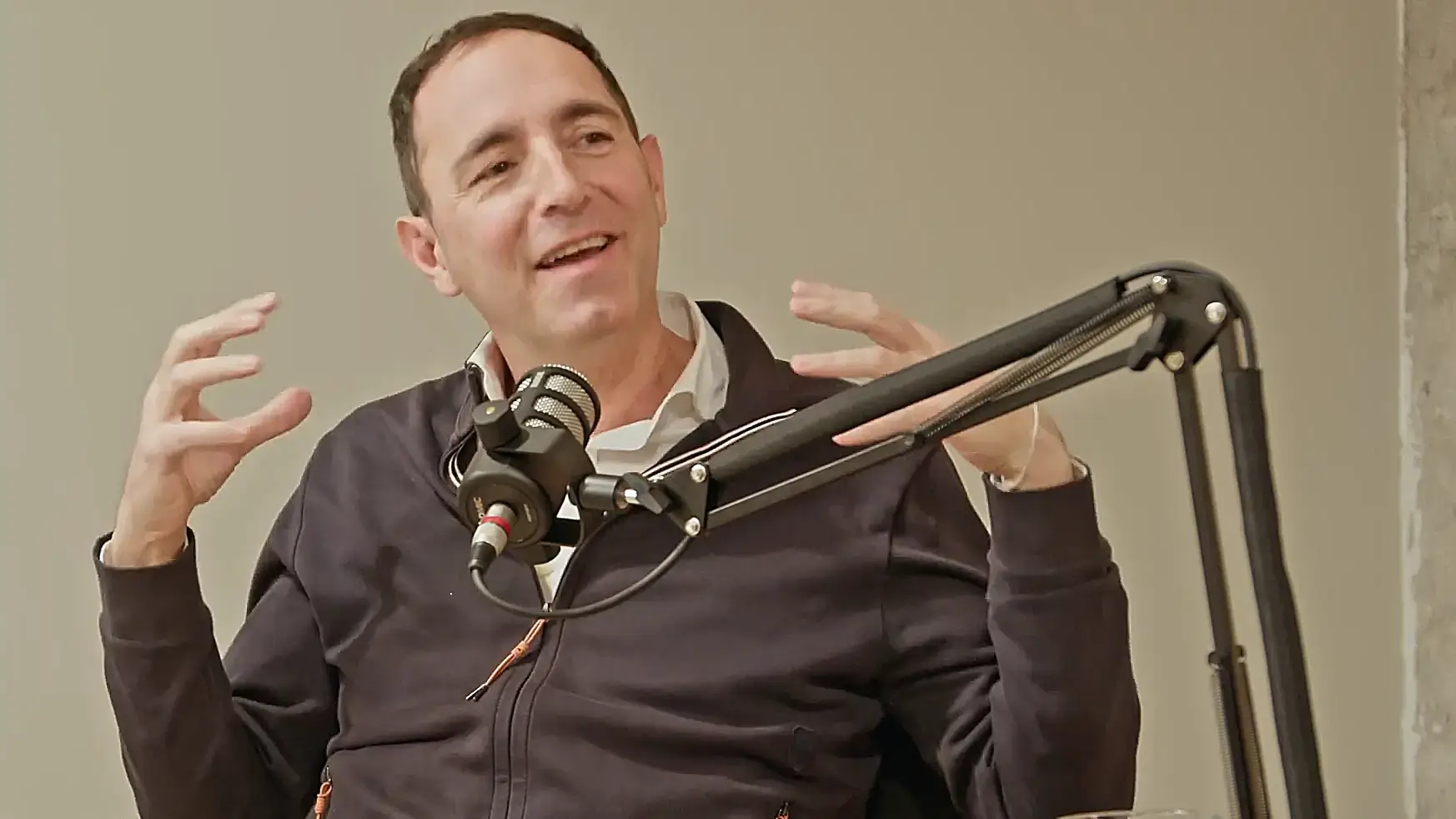
 Market realities: navigating regional differences and subscriptions.12/01/2026. “There are moments when you feel like giving up – and that's often when it becomes clear whether a business will truly grow.” Jean-Marc Noël talks to Marius Rossel, founder and CEO of the Spanish e‑commerce agency TRILOGI, about 25 years of entrepreneurship, technological change and why trust is a decisive success factor in the Spanish market.Market realities: navigating regional differences and subscriptions.
 From negative reviews to pure anticipation: rewriting the customer experience through feedback.03/11/2025. How do you build trust in a market where products need explaining – and scale internationally with it? Kevin Föllmer, Head of Sales at DF Automotive, describes the journey from the first unique selling point (“Which part fits my car?”) to a buying experience that systematically removes uncertainty.From negative reviews to pure anticipation: rewriting the customer experience through feedback.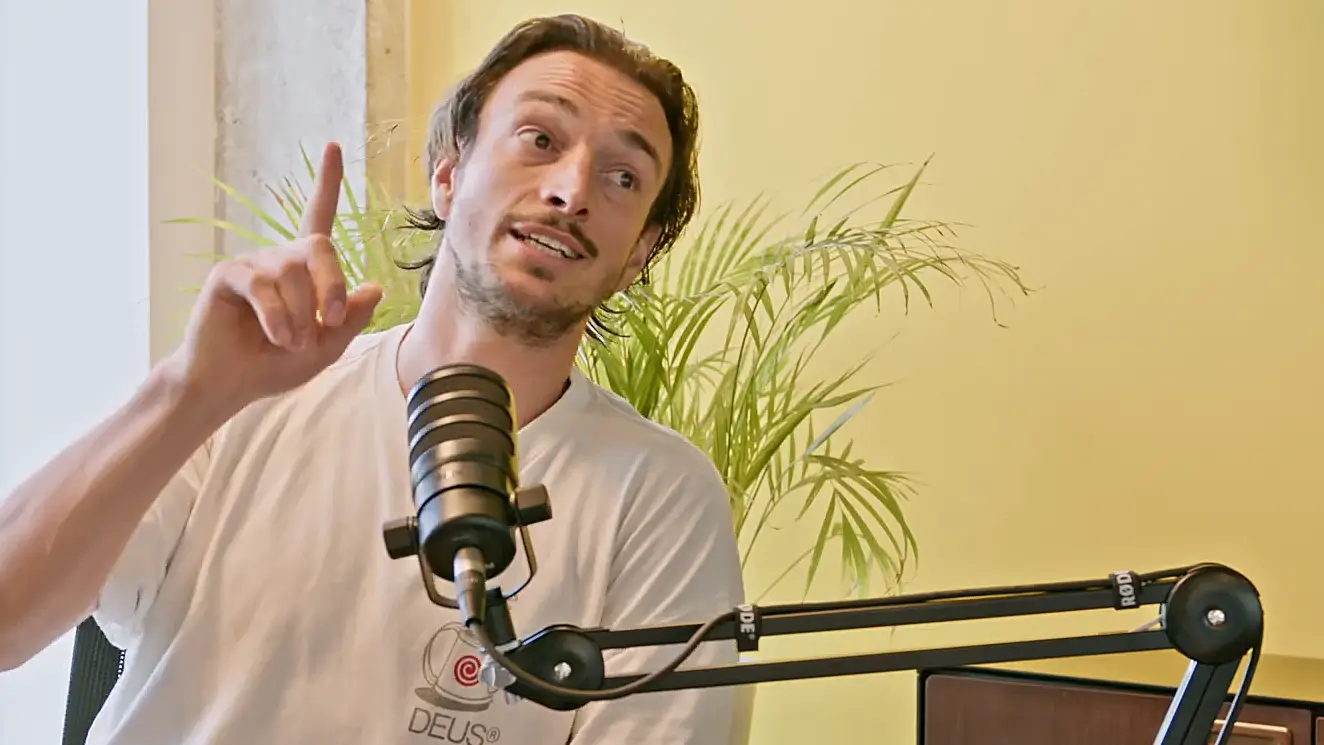
 Meraki in e‑commerce: how radically authentic storytelling beats a falsified market.24/07/2025. It all started with a few bottles of olive oil and a dream: as a student, Floris Reurts brought fresh olive oil from Crete to the Netherlands – and soon realised he was onto something bigger. Today Gkazas.com is a growing online brand. Floris tells Jean-Marc Noël how he built it by focusing on origin, transparency and trust.Meraki in e‑commerce: how radically authentic storytelling beats a falsified market.
 Screw the manual: why zero‑budget success demands your own unconventional path.21/05/2025. Carolin Handschuh started her online shop missforty germany in 2020, out of a personal crisis and without much starting capital. She talks to Jean-Marc Noël about bold decisions, honest marketing and building a strong community – why she made returns chargeable on purpose and what role TikTok plays in building her brand.Screw the manual: why zero‑budget success demands your own unconventional path.
 Be the exact fit when it matters: how precision products win through precise UX.03/04/2025. Custom-made sheet metal, an online configurator and more than 10,000 orders a year: Kantfuchs24 shows how a seemingly simple product can change B2B e‑commerce. The real success factor? Trust. Frank Schulz, COO and co-founder, tells Jean-Marc Noël how speed, precision and customer focus made the company a pioneer.Be the exact fit when it matters: how precision products win through precise UX.
More from #trstd casts
- We require transparent AI. Trust cannot be built without transparency.29/09/2026. Artificial intelligence has long been more than hype – and yet agentic AI is far from reality everywhere. In conversation with Sabrina Engling, Valentina Kerst of the German AI Association (KI Bundesverband) explains where companies stand today, which topics are underestimated and why good data foundations are decisive for the next stage. Kerst sees the biggest gap in data governance: companies need to know which data they have, where it lives, who may access it and how it is structured. Only a reliable data foundation makes it possible to use AI agents meaningfully.We require transparent AI. Trust cannot be built without transparency.
- Customer feedback is our main learning source.25/08/2026. 10,000 reviews, AI and a new course in e‑commerce: from fashion brand with physical stores to modern omnichannel retailer, More & More has gone through a full digital transformation. Jean-Marc Noël, CEO and founder of Trusted Shops, talks to Thomas Forstpointner, Head of E‑Commerce at More & More, about the challenges along the way and how trust works digitally.Customer feedback is our main learning source.
 Unfortunately, those who play by the rules are the ones who lose out.13/08/2026. Fake shops and manipulated reviews harm not only consumers but the whole of online retail. Dr. Carsten Föhlisch talks to Stephan Tromp, Deputy Managing Director of the German Retail Federation (HDE), about the growing threat of online fraud and why trust has become the most important currency in e‑commerce.Unfortunately, those who play by the rules are the ones who lose out.
 When emotions play a role, rationality goes out the window.28/07/2026. Why do we often trust a website within seconds? And why is a professional design often enough to switch off our critical thinking? Dr. Carsten Föhlisch talks to Michael Rasimus, head of the eye-tracking lab at DHBW Karlsruhe, about the psychology behind fake shops and online fraud, and what eye tracking reveals about where people really look.When emotions play a role, rationality goes out the window.
 Fake shops with AI: highly professional, fast-rising fraud.29/05/2026. Fake shops can hardly be told apart from real ones any more – AI makes it possible, and the numbers show online fraud is rising sharply. Dr. Carsten Föhlisch talks to Isabelle Rosière, Managing Director of Deutschland sicher im Netz e.V. (DsiN), about the rapid professionalisation of online fraud and what it means for consumers.Fake shops with AI: highly professional, fast-rising fraud.
- Hard lessons in logistics, drop-shipping and agency red flags.28/05/2026. Made to measure, down to the centimetre: what DIY stores can't do, Grimberg GmbH turned into a business model. Maurice Grimberg and his sister Leonie run the family company from Sievern, started by their father in 2004 in a hallway, as a modern e‑commerce business with more than 130,000 customers in Germany and the Benelux. How do you notice that an agency doesn't really understand your product – and when do you act on it?Hard lessons in logistics, drop-shipping and agency red flags.
 76,000 fake shops uncovered: the industrial scale of global e‑commerce fraud.18/05/2026. When Matthias Marx started investigating open data leaks on the internet, he came across something he couldn't place at first: thousands of professionally designed web shops on the same technical base, with hidden code to skim credit card data. What followed was the discovery of BogusBazaar, a criminal network of more than 76,000 fake shops, run like a real company from China.76,000 fake shops uncovered: the industrial scale of global e‑commerce fraud.
- Differentiating the indifferent for a 20% conversion uplift.14/04/2026. Electricity and gas are invisible products. That's exactly why trust at E wie Einfach is not a phrase but a conversion strategy. Roman Philippi tells Jean-Marc Noël how the Cologne-based E.ON subsidiary brings innovation, customer focus and measurable trust signals together in a highly regulated market – and what difference a trustmark really makes at checkout.Differentiating the indifferent for a 20% conversion uplift.
- Trust rocks the cradle: crowdfunding and D2C from scratch.11/03/2026. Starting from zero with a completely unknown product, you need one thing above all: trust. Hendrik Mahncke, founder of Rock My Sleep, knew that from the start. He tells Jean-Marc Noël how a crowdfunding campaign and an idea on a sheet of paper became a serious e‑commerce business, and how an unknown brand earns the trust of parents.Trust rocks the cradle: crowdfunding and D2C from scratch.
- Market realities: navigating regional differences and subscriptions.12/01/2026. “There are moments when you feel like giving up – and that's often when it becomes clear whether a business will truly grow.” Jean-Marc Noël talks to Marius Rossel, founder and CEO of the Spanish e‑commerce agency TRILOGI, about 25 years of entrepreneurship, technological change and why trust is a decisive success factor in the Spanish market.Market realities: navigating regional differences and subscriptions.
- From negative reviews to pure anticipation: rewriting the customer experience through feedback.03/11/2025. How do you build trust in a market where products need explaining – and scale internationally with it? Kevin Föllmer, Head of Sales at DF Automotive, describes the journey from the first unique selling point (“Which part fits my car?”) to a buying experience that systematically removes uncertainty.From negative reviews to pure anticipation: rewriting the customer experience through feedback.
 A shop for a beloved brand has to carry its DNA.18/09/2025. Iconic football pictures turned into a complete shop: the 11FREUNDE shop sells wall art, retro jerseys, accessories, books – and tickets. Shop manager Mattias Benesch explains to Jean-Marc Noël why trust in e‑commerce is more than a nice-to-have, and how to sell high-priced products online to a community that is critical of consumerism.A shop for a beloved brand has to carry its DNA.