Differentiating the indifferent for a 20% conversion uplift.
14/04/202632:38Verifiable trustE‑commerce

The audio player is provided by Letscast, which sets cookies.
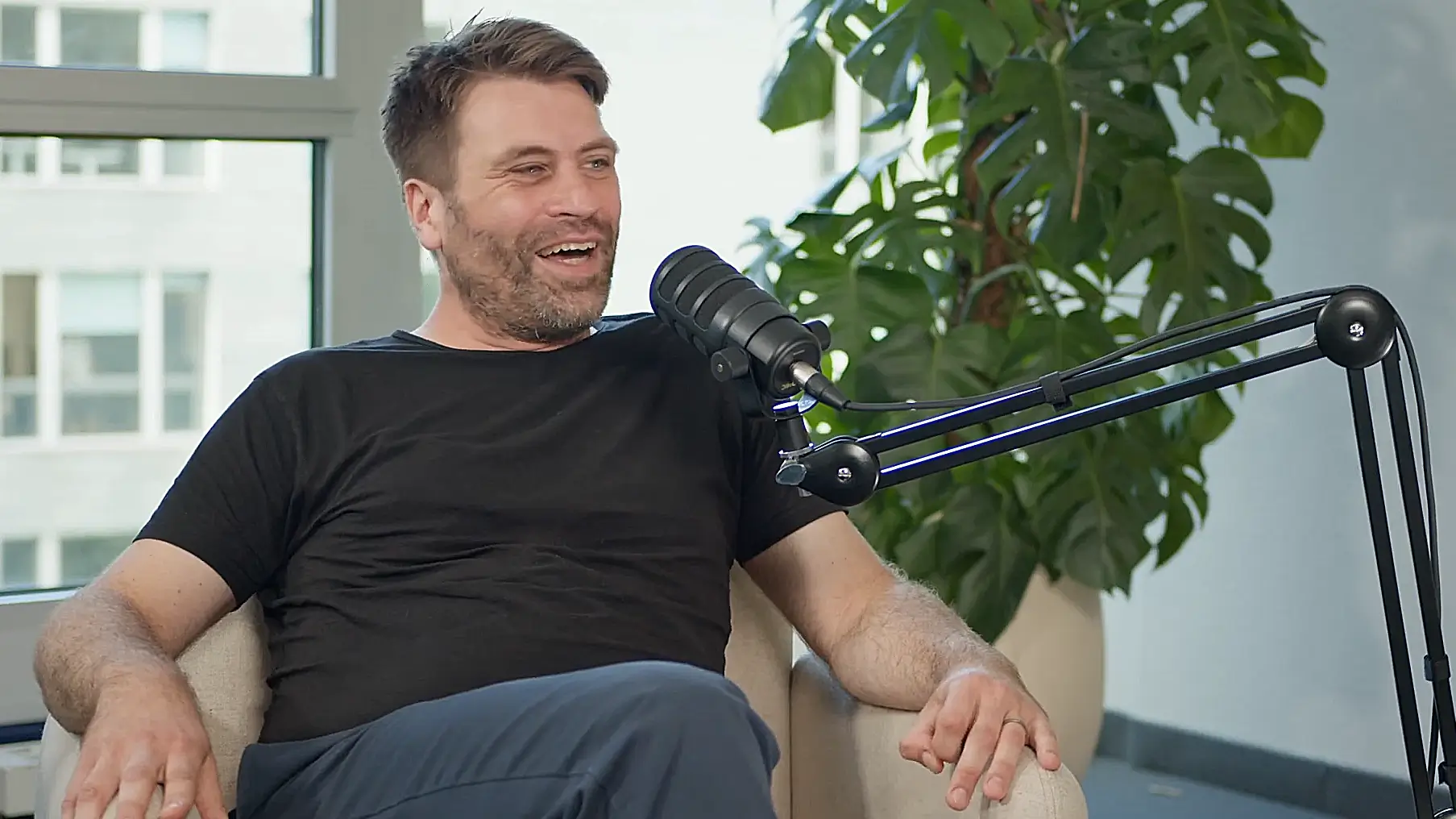
Electricity and gas are invisible products. That's exactly why trust at E wie Einfach is not a phrase but a conversion strategy. Roman Philippi tells Jean-Marc Noël how the Cologne-based E.ON subsidiary brings innovation, customer focus and measurable trust signals together in a highly regulated market – and what difference a trustmark really makes at checkout.
Comment onYouTube (opens in a new window)
Original language: German
In this episode: Jean‑Marc Noël, Roman Philippi (E wie Einfach)
Transcript
# Community of Trust — E wie einfach with Roman Philippi
Jean-Marc Noël: How do you want to differentiate yourselves from the others? What are your secret ingredients, so to speak?
Roman Philippi: We actually run A/B tests with the Trustmark and without the Trustmark. We tested that a few years ago as well.
And we genuinely saw a conversion uplift from it. You have to say that very clearly.
I think it was just over 20% conversion uplift.
Jean-Marc Noël: Wow. Okay.
Community of Trust, the podcast. Today with Roman Philippi, Senior Digital Manager at E wie einfach.
Welcome to Community of Trust, the podcast where successful online businesses share practical experience and proven strategies to help you take your e‑commerce business to the next level.
I'm Jean-Marc Noël, co-founder and CEO of Trusted Shops, and today I'm speaking with Roman Philippi.
You're Senior Digital Manager at E wie einfach, a brand that stands for transparent, uncomplicated and customer-oriented energy solutions.
Roman, thank you very much for joining us today on Community of Trust.
Tell us a little about E wie einfach. What exactly is the company, and what challenges do you face in the energy market? These are obviously very topical issues.
Roman Philippi: Yes, exactly.
We're a wholly owned subsidiary of E.ON and we're basically in the classic retail business for electricity and gas.
We're based just around the corner here in Cologne.
Jean-Marc Noël: A Cologne company. Home game. Very good.
Roman Philippi: Exactly.
At the moment we have around 60 employees driving the company forward.
We're always looking for new ideas to make a traditional electricity contract a little more attractive than simply what comes out of the socket.
Jean-Marc Noël: So what do you actually sell? Electricity and gas are the core products?
Roman Philippi: Exactly. That's our core business.
Around that, we sometimes offer rewards — for example a PlayStation 5.
At the moment, we also have a major cooperation with Sky where customers can get 12 months of Sky together with an electricity tariff.
It's about making the whole thing a little more attractive for the target group.
And E wie einfach — as the name says, "easy" — is mainly sold via the internet.
Jean-Marc Noël: Explain a little how you use the website and which channels you use for sales.
Roman Philippi: My area of responsibility is the website. I'm the Product Owner for the website and part of the go-to-market team.
Together with my colleagues, we make sure conversion optimisation and UX optimisation on the website keep moving forward, because the website is one of our main channels.
The classic contract-signing process is central.
Of course, we also have customer-service processes on the website, such as cancellations or product changes.
But the main part is signing the contract, and that has to be as easy, fast and transparent as possible so the target group can click through quickly and understand the price.
Alongside that, there are other channels, such as traditional affiliate partners, although the actual contract is still completed through our website.
Then there are price-comparison portals that everyone knows, such as CHECK24 and Verivox.
They play a very important role, including for brand awareness.
People go there to get information, and perhaps then come to our own website and complete the contract there because they want to compare.
And we also still have classic door-to-door business.
Jean-Marc Noël: That still works?
Roman Philippi: Yes, that really does still work.
And because we're talking about digital here, the people at least have a tablet in their hands now.
But it works well.
Jean-Marc Noël: The geopolitical situation is obviously tense, especially when it comes to energy. What does that mean for you?
Roman Philippi: It creates enormous chaos in pricing.
We also have to procure the electricity and gas.
If the geopolitical situation is complicated, the procurement prices are bad.
We don't set those prices ourselves. We buy the energy, add our margin and the services we provide, and then sell it on to customers.
If the starting price is already high, it naturally reaches the end customer at an even higher price.
That's not satisfying for us either, because we want to keep things simple and transparent.
A few years ago we had the major energy crisis and the energy price cap introduced by the government.
That was also incredibly complicated to implement from a process perspective.
But we managed it somehow.
Those are the challenges you face, and you have to react to them.
Jean-Marc Noël: I can imagine.
Electricity is something you sign up for online and it simply has to work.
But it's incredibly difficult to differentiate yourself.
If I buy electricity from provider A or provider B, the electricity has no colour.
How do you differentiate yourselves? What are your secret ingredients?
Roman Philippi: We try to make energy a little more tangible.
And especially for a younger target group, we try to explain what electricity actually does.
As you said, it has no colour. It simply comes out of the socket and things work.
But what does that really mean?
Every smartphone would stop working without electricity, and almost everyone has a smartphone in their pocket or their hand.
Classic doomscrolling wouldn't work without electricity either.
Jean-Marc Noël: Until the battery dies.
Roman Philippi: Exactly. And then you realise: okay, I need to think about electricity.
We really try to stay close to the customer.
Over the last one or two years, for example, we've positioned ourselves at festivals.
We were at Parookaville, for example, and set up a Powerhouse.
It had a small dance floor to keep the festival mood going, but also seating areas where people could simply plug in a charging cable and recharge their phones.
For us, that was obviously strong brand placement with the Powerhouse.
And for people, it was immediately understandable what it was for.
Jean-Marc Noël: Of course. You make videos, your battery runs down, and that's exactly when you remember that you need something to do with electricity.
We're seeing massive change everywhere at the moment.
We've talked about the geopolitical situation, but there's also technological change.
AI is playing a role everywhere.
What role does AI play for you? In which areas are you already using it or planning to use it?
Roman Philippi: I don't think a single day goes by without someone mentioning AI.
It genuinely affects us in all areas.
From my side, on the website, vibe coding is an interesting topic.
How quickly can we build a prototype for an A/B test?
How can we build new modules for the website?
That's one side of it.
Jean-Marc Noël: Which tools do you use for that? Is there anything where you say: this worked really well?
Roman Philippi: Privately, for example, I've tried Lovable, and that works quite well.
Within the company, we're currently looking more closely at Claude.
But all of that is only now being integrated.
You don't necessarily have to retrain developers, but you have to work with them to develop a concept for how to integrate it.
You can't simply let the AI run on its own.
You need quality assurance around it and someone with common sense who orchestrates the whole thing.
But we're working on that.
And of course, we also want customers to benefit from AI in customer service.
We're experimenting with a few agent ideas and have already built the first prototypes for certain customer processes.
Jean-Marc Noël: Which ones, for example?
Roman Philippi: A classic example is submitting a meter reading.
To create a proper bill, we need the customer's meter reading so we can see their consumption and then generate the bill.
Jean-Marc Noël: And where does AI come into that?
Roman Philippi: It's basically the next development stage of the classic bot.
In the past, that was more of a decision tree. You could interact with it and handle very simple processes.
With the intelligence you can now add through AI, it can interact with the customer much better and move more naturally left and right within the dialogue.
Those are the kinds of simple processes we're working on.
Jean-Marc Noël: What role does trust play for your website?
You mentioned that you're in a highly regulated market. Data protection also plays an enormous role.
How do you handle that, and what challenges have you faced?
Roman Philippi: There are lots of electricity providers.
You can position yourself through your brand identity, and that naturally goes hand in hand with trust.
We try to position ourselves around this experiential side — making electricity and energy in general more tangible.
But of course we also have to prove something.
We have to prove to customers that they can trust us.
We understand them.
We try to make everything as easy as possible for them.
That's already reflected in the name.
And that's also why we work with Trusted Shops.
We deliberately position the Trustbadge with the review display and stars directly on the site.
That signals to the customer: you're in safe hands with us.
Many customers before you have already left positive reviews.
That naturally creates trust.
And we actually run A/B tests with the Trustmark and without the Trustmark.
We tested that a few years ago.
Jean-Marc Noël: Okay.
Roman Philippi: And we genuinely saw a conversion uplift.
I think it was just over 20% conversion uplift.
Jean-Marc Noël: Wow. Okay.
I think we were too cheap when we sold you the Trustbadge.
Roman Philippi: We also tested differences between desktop and mobile.
On mobile, there is now the small badge that disappears as you scroll.
We tested that against the older version, the top bar.
I don't want to advertise the old version, but that worked better for us.
We still use it because the badge at the bottom disappears too quickly when people scroll, whereas the top bar remains visible.
The first thing you see is at the top of the page, so the customer has already noticed it.
Jean-Marc Noël: Okay, I'll pass that on to our product team. Thank you.
We've talked about AI.
Traffic is no longer coming only through Google.
Bots such as ChatGPT and Gemini are now being used by many customers.
How visible is E wie einfach to these systems, and what are you doing to improve that visibility?
Roman Philippi: We can actually see that normal generic traffic is declining somewhat.
You can feel that.
And that's interesting.
For 25 years, Google has obviously been right at the top, and suddenly that's no longer automatically the case.
When people talk about Google AI and changing search results, I've attended a few webinars on the subject because you have to keep up with what's happening.
One of the basic lessons is that if you're already doing good SEO, you're initially also in a decent position for AI search.
Structured HTML, good content and everything being crawlable are important for AI too.
We use Conductor as our SEO tool.
They've now expanded into AI Search as well.
In the same way that you used to track keywords — and of course still do — you can now track prompts.
You can group prompts around specific keywords.
You can write your own prompts and monitor how successful you are with them.
And you can read the AI responses directly in the tool and see whether they fit, whether you're cited, whether you're actually mentioned by name.
For us, that's definitely still something we can improve.
There's a lot more we can do.
We're taking the first steps now and monitoring the first prompts.
But that's the direction.
Jean-Marc Noël: And we can see that AI doesn't care as much about slogans or brand emotion.
The data you make available play a huge role.
The more structured the data, the better.
I think you've also tried our AI Trust Audit.
I would recommend that tool to anyone who wants an initial idea of what they can optimise on their website.
What was your experience with it? What did you take away?
Roman Philippi: Yes, exactly.
I think the email came at the beginning of December, and I tried it immediately.
Jean-Marc Noël: Pioneer.
Roman Philippi: Exactly.
I thought it was interesting and obviously important.
We saw that our score was already at around 60%.
That was okay because we had already created the technical foundation.
Last year, we did a complete website redesign and moved entirely to Material Design.
That already gives you much more structured HTML, and that probably paid off in that moment.
Jean-Marc Noël: I'd like to follow up on that.
You just said you moved to Material Design.
How did you do that in practice?
Did you discuss it with your agency?
I think this is interesting for a lot of people because Google has done fantastic work around these topics, and some people probably wonder how to approach it.
Maybe you can share a few tips.
Roman Philippi: For us, it was clear that we needed to revise our corporate design online.
Then we discussed back and forth how to do it.
At some point, someone said: let's take a look at Material Design.
The structure is already very good.
The UX elements are defined.
It covers things like how buttons work, hover effects and lots of small details.
Google has tested those things up and down.
So from a UX perspective, you're basically state of the art.
At that point it was clear for us: that's what we'll use.
We'll take this library.
And you also get the technical advantages because the HTML tags and structure are already very easy for Google to recognise.
Then, when accessibility became a big topic over the summer, that helped us immediately too.
Because of the structure, a lot of the foundation was already there.
Jean-Marc Noël: Exactly.
And you also had an accessibility report done for the site.
I always think it's great when that's available and you can use it directly.
Accessibility belongs to trust too.
You want people to be able to use the site properly.
Otherwise, you immediately create friction.
There are lots of studies on this.
You arrive at a page expecting something to work in a certain way, and then it doesn't.
That's a form of cognitive dissonance, and it's a problem.
So it plays a very important role.
Let's stay with these changes around visibility and AI for a moment.
It's not only chatbots anymore.
AI agents and bots will increasingly come to your site.
Have you already had any experience with that?
Bots don't always want the best for your website.
How do you handle that?
Roman Philippi: Because we're part of a large corporate group, we already have very strict IT-security guidelines that we have to follow.
We use Cloudflare, which also checks which bots are coming to the site.
We have actually been the victim of something like a brute-force or traffic attack before, where so much traffic came in that the site briefly went offline.
Jean-Marc Noël: Tell us about that. We had something similar ourselves years ago.
What happened, and what did you do?
Roman Philippi: We have a functioning recovery process.
We were able to switch directly to backup servers.
That wasn't a problem, and our agency did a good job there.
The impact was minimal.
We also don't store customer data on the website itself, so that wasn't affected.
Cloudflare blocks a number of things for us.
But we deliberately allow certain AI bots.
We also use IP whitelisting for partners where we know bots need to access the site because they have to check tariffs or prices.
We allow those.
But it is very important.
As I said, the group has strict IT-security rules that we follow.
Sometimes you may feel they're a bit much, but these days it's better to have too much than too little and then lose or damage data.
Jean-Marc Noël: Especially in your case.
Data around electricity or gas usage can obviously be sensitive as well.
Looking at the website as a whole, what are your tips?
What are things that worked extremely well for you?
And what are things where you say: we got that completely wrong?
Roman Philippi: I have an interesting example.
Before AI was really a topic, we once implemented an invoice scan.
We worked with OCR technology — Optical Character Recognition.
You could take a photo of your bill.
Through an API, I think it was from Microsoft, we extracted the name, address and other information from the bill, including consumption.
Based on that, we could create an offer and pre-fill much of the contract-signing process.
With today's AI, that's obviously no problem at all.
ChatGPT can do that in two seconds.
But five or six years ago, it was still relatively new and a little too complicated for that moment.
If the photo was slightly blurred, the recognition quality dropped immediately.
Then suddenly the customer was no longer Schmidt but Müller or something like that.
So the idea itself was very good.
It may simply have been a little ahead of its time.
Today, you could do it much more easily.
So I wouldn't say we completely messed it up — it just wasn't the right timing.
But that's our ambition: we want to use new technologies to make things easier for customers.
Something that did work very well was a campaign where we put personalisation at the centre.
Instead of the classic price calculator where you enter your postcode and consumption, we made it more extensive.
You filled out a short questionnaire with your name and what you're personally interested in.
Are you interested in music?
Are you more interested in mobility?
Then, in my case, you might get the Roman electricity tariff, with a reward that fitted your interests — perhaps a Share Now voucher or a Bluetooth speaker.
The underlying product was still electricity or gas.
But the personalisation — having your own name in the tariff — worked really well.
Unfortunately, these were workaround processes because our SAP system in the background is naturally a little slower and less flexible.
That's why it's no longer in the portfolio.
But it was a really good thing.
Jean-Marc Noël: That sounds good.
And personalisation, especially with AI, is certainly going to be an important topic.
In our earlier conversation, you mentioned an idea around contracts that I found very innovative.
Maybe you can share what you're thinking about and where AI could come into play.
Roman Philippi: We talked about vibe coding.
So maybe you could call this Vibe Contracting.
Instead of selecting products in the classic way and entering all your data into a contract form, you could do the whole thing through a dialogue with an AI.
It would be much more playful.
You'd effectively have an energy adviser with you the whole time, helping you through the contract.
Those are the kinds of things we're thinking about.
Something like that has to come.
ChatGPT already works in that direction.
A lot of people ask it: which electricity provider is relevant for me?
So integrating something like that directly into your own website is an obvious next step.
Jean-Marc Noël: I think that really is the next development stage.
You don't sign an energy tariff every day.
You might do it when you move house or perhaps think about it once a year.
So you want it to work.
And I genuinely wouldn't know exactly how to approach it now because my last contract was so long ago.
Being able to enter into a direct dialogue and get meaningful feedback would make sense.
Have you already tested it? Do you have prototypes underway?
Roman Philippi: Let's say we have the vision.
The discussions are happening and preparations are underway.
There is definitely a proof of concept.
But a lot still needs to happen.
It will take a little longer before we have a real prototype.
But we're definitely working on it.
Something like this has to come.
At the same time, people are already using AI systems such as ChatGPT.
There have already been the first tests where customers can complete purchases directly inside ChatGPT.
So on the other side, the customer may no longer even come to the e‑commerce shop.
They stay inside ChatGPT and buy their shoes there.
Jean-Marc Noël: Absolutely.
And that's also why we at Trusted Shops are looking closely at this.
We believe we're moving into a future where there may be billions of AI agents.
Everyone may have their own agent, or specialised agents.
And then the two things we've just discussed become very important.
As a provider, you may not want to allow every AI agent.
You want to know which ones are good and which ones are less good.
And on the other side, the AI agent wants to know: E wie einfach — good company, strong reviews, genuine reviews.
Those kinds of signals become very important.
We call them trust signals.
The idea is that my agent can buy from you on my behalf.
And for that, we're building infrastructure at Trusted Shops.
We announced this last year, and there will be a lot more information about it in the coming days.
I'm very interested to see whether this will be relevant for you as well.
We call it #trstd <protocol> and #trstd Login.
I think everyone should really be looking at this now because these are becoming very important topics.
Looking back, you've been at E wie einfach for quite a few years.
What would you do differently?
And conversely, what are the things where you say: that was absolutely the right decision?
Roman Philippi: Looking back over the years, I would probably put much more budget into digital development.
Of course budgets are always limited and you have to prioritise.
There are legal requirements.
But I think we spend a lot of time thinking about innovations and coming up with good ideas, and then they often fail because of internal politics or other constraints.
We are already brave.
But I think we need to bring even more of that courage onto the road and test far more things.
The problem is that we're in a regulated market.
There are many legal requirements we have to fulfil in the online contract process.
For the sake of technological progress, I think we sometimes need to make greater use of the grey areas.
That's obviously difficult because you don't want to cross legal boundaries.
But I think we need to do more and simply dare to try things.
Jean-Marc Noël: What about marketing?
We've seen a lot of developments over the last few years.
Social media plays a huge role.
Influencers play a role.
Are there things where you look back and think: I wish we'd done more of that?
Or things in your marketing toolbox where you say: that worked extremely well?
Maybe something that could be useful for people who are currently building a brand.
Roman Philippi: Material Design is a good example again.
You don't have to reinvent everything.
You can absolutely use existing methods and established approaches.
Before that, we built all the UX concepts ourselves.
But if there are already proven UX concepts, why not use them?
With Google, for example, they have so many opportunities through Android devices to test these things.
To get statistically meaningful results in an A/B test, you also need enough users on the website.
Depending on the market situation, you may have more or fewer users, and then an A/B test can easily run for more than a month.
That means the insight into what works better can take quite a long time.
So use what has already been learned.
Look left and right.
And sometimes look outside your own industry.
That's always important.
Jean-Marc Noël: Where do you personally get inspiration? What are your sources?
Roman Philippi: I can't really name one specific source.
We exchange a lot internally within the group.
We have large digital expert circles across the entire group where we discuss these topics.
That's very useful internally.
There are lots of impulses from colleagues.
Jean-Marc Noël: Are there trade fairs or events where you feel you've learned particularly much?
Roman Philippi: Big events can be useful, but for me personally, especially when it comes to web development, they can sometimes be too broad and too marketing-heavy.
A lot of it still comes down to doing your own research online and keeping up with trends.
Jean-Marc Noël: Were there any specific events in the last six months that you found particularly useful? K5, for example?
Roman Philippi: We were at K5 together.
I did take away one or two useful masterclasses there, including on AI and where it's going.
I think AWS had an interesting talk.
One key insight was that today, AI systems usually come to your website, crawl everything and then that's basically it.
But ideally, AI should be able to communicate directly with a technical interface.
For example, you could make your content available directly — or in our case, pricing interfaces.
We have a particular problem today.
AI can't really see our prices because the customer has to enter their postcode and consumption before a price is shown.
It's not like a normal online shop where a pair of trainers simply shows a €50 price on the product page.
So theoretically, we would need to open up our interfaces so an AI can access that information much more quickly.
Jean-Marc Noël: Yes.
Roman Philippi: Which is obviously difficult.
There are legal and technical issues to solve.
But those are the kinds of things we're working through.
Jean-Marc Noël: There's plenty left to do.
Roman, thank you very much.
We're already at the end of today's episode.
I hope listeners have been able to take away concrete and practical tips from Roman that they can apply directly in their own online business.
If you enjoyed the episode, please subscribe to the podcast and leave us a review.
That helps us reach even more online retailers.
You'll find more insights and resources at Trusted Shops.
Become part of our community.
Thank you for listening.
We'll hear each other again in the next episodes.
Roman, thank you very much for being here.
This was a really interesting look into your business and the topics you're working on.
Roman Philippi: Thank you very much for the invitation.
Jean-Marc Noël: And good luck with your online business.
Community of Trust. Subscribe wherever you get your podcasts.
Share this episode
Get in touch with our team

Because you listened to »Differentiating the indifferent for a 20% conversion uplift.«

 From negative reviews to pure anticipation: rewriting the customer experience through feedback.03/11/2025. How do you build trust in a market where products need explaining – and scale internationally with it? Kevin Föllmer, Head of Sales at DF Automotive, describes the journey from the first unique selling point (“Which part fits my car?”) to a buying experience that systematically removes uncertainty.From negative reviews to pure anticipation: rewriting the customer experience through feedback.
 Meraki in e‑commerce: how radically authentic storytelling beats a falsified market.24/07/2025. It all started with a few bottles of olive oil and a dream: as a student, Floris Reurts brought fresh olive oil from Crete to the Netherlands – and soon realised he was onto something bigger. Today Gkazas.com is a growing online brand. Floris tells Jean-Marc Noël how he built it by focusing on origin, transparency and trust.Meraki in e‑commerce: how radically authentic storytelling beats a falsified market.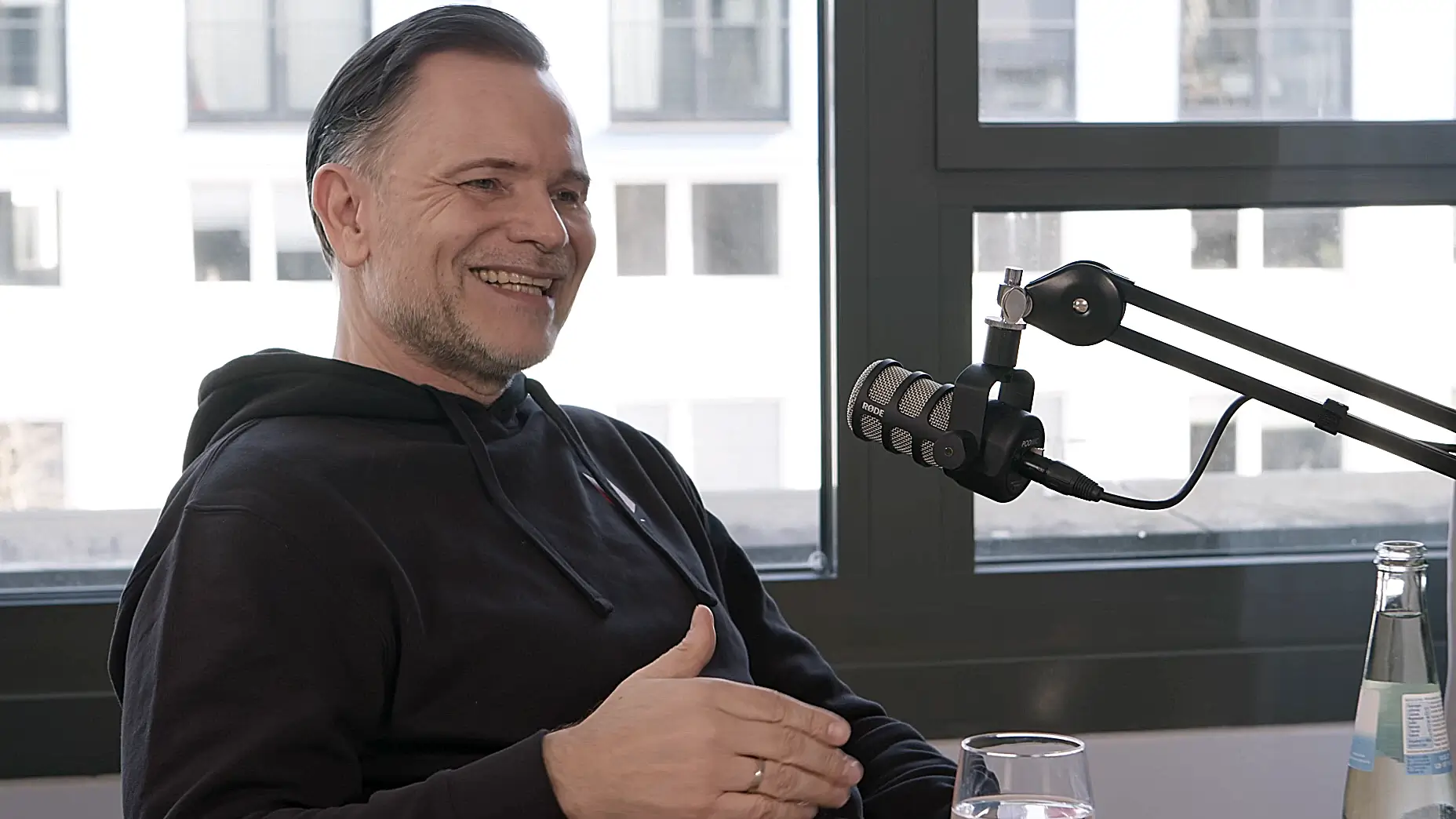
 Be the exact fit when it matters: how precision products win through precise UX.03/04/2025. Custom-made sheet metal, an online configurator and more than 10,000 orders a year: Kantfuchs24 shows how a seemingly simple product can change B2B e‑commerce. The real success factor? Trust. Frank Schulz, COO and co-founder, tells Jean-Marc Noël how speed, precision and customer focus made the company a pioneer.Be the exact fit when it matters: how precision products win through precise UX.
 We require transparent AI. Trust cannot be built without transparency.29/09/2026. Artificial intelligence has long been more than hype – and yet agentic AI is far from reality everywhere. In conversation with Sabrina Engling, Valentina Kerst of the German AI Association (KI Bundesverband) explains where companies stand today, which topics are underestimated and why good data foundations are decisive for the next stage. Kerst sees the biggest gap in data governance: companies need to know which data they have, where it lives, who may access it and how it is structured. Only a reliable data foundation makes it possible to use AI agents meaningfully.We require transparent AI. Trust cannot be built without transparency.
 A large number of reviews is a major factor for AI.22/09/2026. E‑commerce is changing fast: customers expect good products, fair prices and a smooth experience, while AI and agentic commerce change how people discover and buy products. Bastian Kolmsee, COO of Trusted Shops, talks to David Rissmann, Head of Strategy and Chief of Staff at Flaconi, about the beauty retailer's path from start-up to international e‑commerce company.A large number of reviews is a major factor for AI.
 Customer feedback is our main learning source.25/08/2026. 10,000 reviews, AI and a new course in e‑commerce: from fashion brand with physical stores to modern omnichannel retailer, More & More has gone through a full digital transformation. Jean-Marc Noël, CEO and founder of Trusted Shops, talks to Thomas Forstpointner, Head of E‑Commerce at More & More, about the challenges along the way and how trust works digitally.Customer feedback is our main learning source.
 Unfortunately, those who play by the rules are the ones who lose out.13/08/2026. Fake shops and manipulated reviews harm not only consumers but the whole of online retail. Dr. Carsten Föhlisch talks to Stephan Tromp, Deputy Managing Director of the German Retail Federation (HDE), about the growing threat of online fraud and why trust has become the most important currency in e‑commerce.Unfortunately, those who play by the rules are the ones who lose out.
 When emotions play a role, rationality goes out the window.28/07/2026. Why do we often trust a website within seconds? And why is a professional design often enough to switch off our critical thinking? Dr. Carsten Föhlisch talks to Michael Rasimus, head of the eye-tracking lab at DHBW Karlsruhe, about the psychology behind fake shops and online fraud, and what eye tracking reveals about where people really look.When emotions play a role, rationality goes out the window.
 Fake shops with AI: highly professional, fast-rising fraud.29/05/2026. Fake shops can hardly be told apart from real ones any more – AI makes it possible, and the numbers show online fraud is rising sharply. Dr. Carsten Föhlisch talks to Isabelle Rosière, Managing Director of Deutschland sicher im Netz e.V. (DsiN), about the rapid professionalisation of online fraud and what it means for consumers.Fake shops with AI: highly professional, fast-rising fraud.

 Hard lessons in logistics, drop-shipping and agency red flags.28/05/2026. Made to measure, down to the centimetre: what DIY stores can't do, Grimberg GmbH turned into a business model. Maurice Grimberg and his sister Leonie run the family company from Sievern, started by their father in 2004 in a hallway, as a modern e‑commerce business with more than 130,000 customers in Germany and the Benelux. How do you notice that an agency doesn't really understand your product – and when do you act on it?Hard lessons in logistics, drop-shipping and agency red flags.
 76,000 fake shops uncovered: the industrial scale of global e‑commerce fraud.18/05/2026. When Matthias Marx started investigating open data leaks on the internet, he came across something he couldn't place at first: thousands of professionally designed web shops on the same technical base, with hidden code to skim credit card data. What followed was the discovery of BogusBazaar, a criminal network of more than 76,000 fake shops, run like a real company from China.76,000 fake shops uncovered: the industrial scale of global e‑commerce fraud.
 Trust rocks the cradle: crowdfunding and D2C from scratch.11/03/2026. Starting from zero with a completely unknown product, you need one thing above all: trust. Hendrik Mahncke, founder of Rock My Sleep, knew that from the start. He tells Jean-Marc Noël how a crowdfunding campaign and an idea on a sheet of paper became a serious e‑commerce business, and how an unknown brand earns the trust of parents.Trust rocks the cradle: crowdfunding and D2C from scratch.
 Market realities: navigating regional differences and subscriptions.12/01/2026. “There are moments when you feel like giving up – and that's often when it becomes clear whether a business will truly grow.” Jean-Marc Noël talks to Marius Rossel, founder and CEO of the Spanish e‑commerce agency TRILOGI, about 25 years of entrepreneurship, technological change and why trust is a decisive success factor in the Spanish market.Market realities: navigating regional differences and subscriptions.
 Always remember what makes you unique – it’s what makes you grow.07/07/2025. Every bag one of a kind, made from real fire hose – that's the idea behind Feuerwear. CEO Robert Klüsener talks to Jean-Marc Noël about sustainable production, building a direct-to-consumer shop and how e‑commerce works when every product exists only once – and why reviews and the Trusted Shops trustmark matter.Always remember what makes you unique – it’s what makes you grow.
 Screw the manual: why zero‑budget success demands your own unconventional path.21/05/2025. Carolin Handschuh started her online shop missforty germany in 2020, out of a personal crisis and without much starting capital. She talks to Jean-Marc Noël about bold decisions, honest marketing and building a strong community – why she made returns chargeable on purpose and what role TikTok plays in building her brand.Screw the manual: why zero‑budget success demands your own unconventional path.
 AI creates opportunity only if customers trust what you do with it.11/03/2025. Data protection, artificial intelligence, influencer marketing – e‑commerce is changing fast. Pixum has been a leader in photo products for 25 years, but competition is tougher than ever. Pixum CEO Daniel Attallah talks to Jean-Marc Noël about how transparency, data security and the Trusted Shops trustmark keep customers' trust.AI creates opportunity only if customers trust what you do with it.
More from #trstd casts
- We require transparent AI. Trust cannot be built without transparency.29/09/2026. Artificial intelligence has long been more than hype – and yet agentic AI is far from reality everywhere. In conversation with Sabrina Engling, Valentina Kerst of the German AI Association (KI Bundesverband) explains where companies stand today, which topics are underestimated and why good data foundations are decisive for the next stage. Kerst sees the biggest gap in data governance: companies need to know which data they have, where it lives, who may access it and how it is structured. Only a reliable data foundation makes it possible to use AI agents meaningfully.We require transparent AI. Trust cannot be built without transparency.
- A large number of reviews is a major factor for AI.22/09/2026. E‑commerce is changing fast: customers expect good products, fair prices and a smooth experience, while AI and agentic commerce change how people discover and buy products. Bastian Kolmsee, COO of Trusted Shops, talks to David Rissmann, Head of Strategy and Chief of Staff at Flaconi, about the beauty retailer's path from start-up to international e‑commerce company.A large number of reviews is a major factor for AI.
- Customer feedback is our main learning source.25/08/2026. 10,000 reviews, AI and a new course in e‑commerce: from fashion brand with physical stores to modern omnichannel retailer, More & More has gone through a full digital transformation. Jean-Marc Noël, CEO and founder of Trusted Shops, talks to Thomas Forstpointner, Head of E‑Commerce at More & More, about the challenges along the way and how trust works digitally.Customer feedback is our main learning source.
- Unfortunately, those who play by the rules are the ones who lose out.13/08/2026. Fake shops and manipulated reviews harm not only consumers but the whole of online retail. Dr. Carsten Föhlisch talks to Stephan Tromp, Deputy Managing Director of the German Retail Federation (HDE), about the growing threat of online fraud and why trust has become the most important currency in e‑commerce.Unfortunately, those who play by the rules are the ones who lose out.
- When emotions play a role, rationality goes out the window.28/07/2026. Why do we often trust a website within seconds? And why is a professional design often enough to switch off our critical thinking? Dr. Carsten Föhlisch talks to Michael Rasimus, head of the eye-tracking lab at DHBW Karlsruhe, about the psychology behind fake shops and online fraud, and what eye tracking reveals about where people really look.When emotions play a role, rationality goes out the window.
- Fake shops with AI: highly professional, fast-rising fraud.29/05/2026. Fake shops can hardly be told apart from real ones any more – AI makes it possible, and the numbers show online fraud is rising sharply. Dr. Carsten Föhlisch talks to Isabelle Rosière, Managing Director of Deutschland sicher im Netz e.V. (DsiN), about the rapid professionalisation of online fraud and what it means for consumers.Fake shops with AI: highly professional, fast-rising fraud.
- Hard lessons in logistics, drop-shipping and agency red flags.28/05/2026. Made to measure, down to the centimetre: what DIY stores can't do, Grimberg GmbH turned into a business model. Maurice Grimberg and his sister Leonie run the family company from Sievern, started by their father in 2004 in a hallway, as a modern e‑commerce business with more than 130,000 customers in Germany and the Benelux. How do you notice that an agency doesn't really understand your product – and when do you act on it?Hard lessons in logistics, drop-shipping and agency red flags.
- 76,000 fake shops uncovered: the industrial scale of global e‑commerce fraud.18/05/2026. When Matthias Marx started investigating open data leaks on the internet, he came across something he couldn't place at first: thousands of professionally designed web shops on the same technical base, with hidden code to skim credit card data. What followed was the discovery of BogusBazaar, a criminal network of more than 76,000 fake shops, run like a real company from China.76,000 fake shops uncovered: the industrial scale of global e‑commerce fraud.
- Trust rocks the cradle: crowdfunding and D2C from scratch.11/03/2026. Starting from zero with a completely unknown product, you need one thing above all: trust. Hendrik Mahncke, founder of Rock My Sleep, knew that from the start. He tells Jean-Marc Noël how a crowdfunding campaign and an idea on a sheet of paper became a serious e‑commerce business, and how an unknown brand earns the trust of parents.Trust rocks the cradle: crowdfunding and D2C from scratch.
- Market realities: navigating regional differences and subscriptions.12/01/2026. “There are moments when you feel like giving up – and that's often when it becomes clear whether a business will truly grow.” Jean-Marc Noël talks to Marius Rossel, founder and CEO of the Spanish e‑commerce agency TRILOGI, about 25 years of entrepreneurship, technological change and why trust is a decisive success factor in the Spanish market.Market realities: navigating regional differences and subscriptions.
- From negative reviews to pure anticipation: rewriting the customer experience through feedback.03/11/2025. How do you build trust in a market where products need explaining – and scale internationally with it? Kevin Föllmer, Head of Sales at DF Automotive, describes the journey from the first unique selling point (“Which part fits my car?”) to a buying experience that systematically removes uncertainty.From negative reviews to pure anticipation: rewriting the customer experience through feedback.
 A shop for a beloved brand has to carry its DNA.18/09/2025. Iconic football pictures turned into a complete shop: the 11FREUNDE shop sells wall art, retro jerseys, accessories, books – and tickets. Shop manager Mattias Benesch explains to Jean-Marc Noël why trust in e‑commerce is more than a nice-to-have, and how to sell high-priced products online to a community that is critical of consumerism.A shop for a beloved brand has to carry its DNA.