From negative reviews to pure anticipation: rewriting the customer experience through feedback.
03/11/202531:54Verifiable trustE‑commerce

The audio player is provided by Letscast, which sets cookies.
How do you build trust in a market where products need explaining – and scale internationally with it? Kevin Föllmer, Head of Sales at DF Automotive, describes the journey from the first unique selling point (“Which part fits my car?”) to a buying experience that systematically removes uncertainty.
Comment onYouTube (opens in a new window)
Original language: German
In this episode: Jean‑Marc Noël, Kevin Föllmer (DF Automotive)
Transcript
# Community of Trust — DF Automotive with Kevin Föllmer
Kevin Föllmer: And that can really mean: solve the problem, and react to the feedback.
Looking through the customer's eyes is the most important thing. And then people talk positively about it.
And that's where I have to say: with your platform, you have the tool that allows real customers to report positively about their experience. That's a synergy effect I can only recommend to everyone.
Jean-Marc Noël: Community of Trust, the podcast. Today with Kevin Föllmer, Head of Sales at DF Automotive.
Welcome to Community of Trust, the podcast where successful online retailers share their real experiences and proven strategies so that you can take your e‑commerce business to the next level.
I'm Jean-Marc Noël, founder of Trusted Shops, and today I'm speaking with Kevin Föllmer, Head of Sales at DF Automotive.
Welcome, Kevin.
Kevin Föllmer: Thank you very much for the invitation, Jean-Marc. I'm happy to come down a little from the far north towards the south, and I'm really pleased to be here.
Jean-Marc Noël: I'm very pleased too, because you have a great story to tell.
I noted that back in 2006, Daniel Jonas and Felix Lemke — so DF is obvious, Daniel and Felix — thought about how tuning accessories could be sold simply and clearly online.
After initially selling on eBay, I believe, they very quickly built online shops such as Sportfahrwerk-billiger and Sportauspuff, and later the well-known Felgenshop.
So in this episode we'll talk about building an online shop, about trust and about customers.
Together with Kevin, we'll look step by step at how DF Automotive developed into what it is today, which challenges you overcame, and what other businesses can learn from that.
So, Kevin, what made Felgenshop so special in the first place?
Kevin Föllmer: Daniel and Felix were already looking ahead very strategically at the time.
They basically solved a problem they themselves had faced.
Back then, you had to leaf through catalogues to find out which accessories actually fitted your vehicle — technical approvals, TÜV documents and all the other issues that existed around that.
The shops were designed to solve exactly those problems.
The first USP was product–vehicle matching: which product actually fits my vehicle?
That was already one of the things that made the shop successful.
We called it the three-step vehicle selection.
The customer arrives at the shop, enters the relevant vehicle attributes, and then only sees the products that actually fit.
That made a big impact even back then.
It's the same as going into a shop and saying: I need an XL shirt. You don't want to search through everything yourself and wonder what might fit.
That was really the foundation of the company's DNA: what problem does our customer have, and how can we solve it?
Jean-Marc Noël: Absolutely.
Back in 2006, with eBay and so on, what were the biggest challenges?
Kevin Föllmer: I can't really say what the biggest challenge was on eBay itself.
But from the shop perspective, the first challenge was definitely gaining the customer's trust.
The internet wasn't what it is today.
So creating trust was certainly one of the biggest challenges, especially because these products are highly safety-relevant.
You don't want to install something in your car and wonder whether it's safe.
That was exactly the challenge: how do we create trust online without having a person sitting opposite the customer explaining everything?
Jean-Marc Noël: And how did you do that?
You start small, you don't yet have the structures you want, and at some point you develop enormously.
Today the company has around 120 employees in Flensburg.
How did you get there?
Kevin Föllmer: One of our biggest visions has always been to create the best purchasing experience for everything that moves you.
How do we do that?
You have to know the customer's problem. You have to solve it transparently and safely.
The shop managed that through experience on eBay and other marketplaces.
We could reliably say what fits the customer's vehicle.
It was shipped to the right place at the right time.
And from very early on, we focused heavily on customer feedback.
Our two owners, in typical founder fashion, virtually called every customer: how was it? What was missing? What was good? What wasn't so good?
They also selected employees who shared that passion, and some of those people are still with the company today.
That's something I can only recommend to everyone as a key to success: put on the customer's glasses.
Don't ask where you can squeeze out a little more. Ask: how do I solve this customer's problem?
Jean-Marc Noël: Let's go into that in more detail.
You said that at the beginning you literally called every individual customer.
How do you do that today?
And how do reviews or Trusted Shops help you identify what needs to change?
Kevin Föllmer: Let me give you a small example from behind the scenes. It's not even that old.
We don't only sell exhaust systems, suspension systems, lowering kits and wheel spacers. We also sell tyres and wheels, including ready-to-fit complete wheel sets.
That's been our flagship since 2015 through Felgenshop.
Customers can buy not only the wheels but also additions such as wheel locks, wheel cleaner and so on.
We also include fitting material, such as wheel bolts, if the standard bolts can't be used.
Every now and then, a customer wrote in a Trusted Shops review: "I couldn't find that. It wasn't included."
But we had put it inside the wheel, partly to save on shipping, and attached a sticker saying: "Your wheel bolts are inside here."
Maybe Mr Müller opened the wheel packaging and threw that part away.
You read that once and think: okay.
You read it two or three times, and that's when our machinery starts.
We sit down and ask: how can we make this better in future?
Of course, we could send the fitting material separately, but that isn't our standard.
Instead, we developed a system based on customer feedback that improves the customer experience.
After a wheel has been assembled and packed by our experts, it is photographed.
That photo is then sent to the customer in advance by email together with the tracking numbers.
It says something like: "Hello Mr Müller, these are your wheels."
And then you can already see everything in the picture.
The fitting material is here. This is what the sticker looks like. Here's your cleaner. There's the wheel lock.
Nothing can go wrong anymore.
And what happens now?
Mr Müller no longer writes: "I couldn't find it."
Instead, he writes: "What a great experience."
It creates real anticipation.
For me, that's what creating a purchasing experience means — an experience the customer wants to return to and tell other people about positively.
That's the synergy effect.
We create the best shopping experience, and you provide the platform where customers can talk positively about it.
It sounds simple, but that's success for the customer.
Jean-Marc Noël: Absolutely.
And as you say, it's an ongoing process.
You notice two or three reviews pointing to the same issue, and then you change something.
That's an important lesson: solve the customer's problem, watch the feedback and actually use that feedback.
You've also become active in many countries beyond Germany.
Tell us about the internationalisation of the business.
Kevin Föllmer: Felgenshop.de went online in 2015, and at the same time we secured the Austrian domain and started selling to Austria.
That was essentially the foundation for internationalisation.
Jean-Marc Noël: Are Austrian customers very different from German customers?
Kevin Föllmer: Not really.
There were also organisational reasons why Austria made sense.
For example, TÜV regulations in Germany and Austria are close enough that the wheels can often use the same technical approvals to obtain road approval.
Then, in 2021, our owners decided that we no longer wanted to keep our technological progress and our philosophy of creating the best purchasing experience to ourselves.
We wanted to expand into other European markets.
Like many companies, we started with France, knowing that it was a challenge.
One thing was very clear to us: we didn't want to simply translate the German shop with a Chrome extension.
We used our technology, but we launched what was effectively a completely new product for France.
It uses the same underlying resources — we still produce everything in Flensburg — but it is designed around French needs.
So you really have to think of it as a new shop.
Jean-Marc Noël: And you built all of that yourselves internally?
Kevin Föllmer: Exactly.
It starts with creating a company.
And even if it sounds like a cliché: a French customer doesn't necessarily want to call Germany.
So we have a telephone number in Paris.
There is a company in Paris, and there are French-speaking employees and experts in the field.
The French customer may not even notice at first that the company behind it is German.
And the shop itself is adapted to the French market — product assortment, payment methods and so on.
There are credit cards and payment options in France that we don't use here.
And financing methods that we consider normal in Germany may not yet be established in the same way in France.
Jean-Marc Noël: So you really dealt with the local market rather than simply translating one-to-one.
It's localisation in the real sense of the word.
What were the results, and what were the biggest challenges?
Kevin Föllmer: The biggest challenge was effectively founding another startup inside the existing company.
That is incredibly expensive.
E-commerce lives heavily from performance marketing, so that alone costs a lot.
Then you have the people and all the other resources.
It's a major investment.
Jean-Marc Noël: You hired people specifically for that market as well.
Kevin Föllmer: Exactly.
And then you have to understand the market.
Our products require a lot of explanation.
It's different from selling T-shirts or socks. With those, you know your size, there is a list, done.
And the time to conversion is very different too.
For a €20 or €30 product, it may be fast.
With us, you're often talking about €1,500 and upwards.
Ten to twelve days can pass before the customer makes the final decision.
Being present with the right measures throughout that time costs money.
And then we come back to trust.
It sounds like a cliché, but trust is extremely important in France, and we noticed that very quickly.
Pick up the phone and speak English — they hang up.
Jean-Marc Noël: They hang up.
Kevin Föllmer: Exactly.
So we spoke with you relatively quickly about how we could create the necessary trust there.
I found it interesting that in one of your other podcast episodes, someone said that theoretically their shop didn't really need external trust.
I can understand that in some markets.
In France, it was completely different.
There, I absolutely need your trust and your brand to give us that initial trust boost.
It allows us to say: we don't only have a properly certified shop here, we also have Buyer Protection.
And please, customer, tell us what you think so that we can improve.
That helped us penetrate the market relatively quickly.
And from there, we've expanded into eight more European countries.
Jean-Marc Noël: Tell us more about that.
You first did France, learned from it and saw that localisation worked.
What happened next?
Kevin Föllmer: We did the same thing again.
We looked at the data — very data-driven — and asked which markets made the most sense based on our capabilities.
The Scandinavian market was obvious in some ways because we're in Flensburg, right on the Danish border.
Denmark only has around five million inhabitants and may not be the most car-focused market, but geographically it made perfect sense.
The same goes for Sweden.
Then we continued with the Netherlands, which is an incredibly tuning-oriented market.
Of course, we don't only want to serve tuners.
If my mother drives an Opel Meriva and googles "buy wheels online", we want her to land in our shop as well.
But the Netherlands is still a very tuning-heavy market.
At this point, we've repeated the same model often enough that it has become nicely scalable.
We can take our technological progress and our philosophy and use them to succeed in the markets we choose.
One thing is always clear: we want to create the best purchasing experience.
Jean-Marc Noël: You describe that very vividly.
And it shows how powerful that customer focus is for an online retailer or e‑commerce entrepreneur.
It's not something you do once and then it's finished. It's continuous.
You told me a small story earlier about the early days, when you'd built your headquarters but Google hadn't photographed it yet.
Tell us about that.
Kevin Föllmer: It's a great story.
We grew relatively quickly through Felgenshop, and at some point we had to build a proper assembly line, logistics hall and office building.
But there was a period when none of that was visible yet on Google Maps.
If a customer then didn't get a response for two days, they looked at Google Maps and saw what appeared to be empty industrial land.
Everything looked dead.
And then they started worrying that perhaps they'd ordered from a fake shop.
Jean-Marc Noël: That's quite an anecdote.
Kevin Föllmer: Today, of course, Google has the photos.
Anyone can see how large everything is now. You can see it and verify it.
It's been an incredible development story.
But of course there are always new challenges.
Jean-Marc Noël: What are some of the areas where you would say: that was a real problem, a major challenge, perhaps something where you made mistakes and learned from them?
Kevin Föllmer: A lot of it comes from the market itself.
The automotive market is shrinking or at least stagnating.
It's partly influenced by politics, but also by changes in consumer behaviour.
We're dependent on registration figures and changes of vehicle ownership.
We're also affected by how OEMs sell their wheels because we only sell accessories.
You can't buy original BMW wheels from us, for example.
So one of the constant challenges is: how does the market react? What is demand doing? How is consumer behaviour changing?
Did people spend more money on holidays this year or on other luxury goods?
Do people currently need wheels?
Those are the kinds of daily challenges that can certainly cause a sleepless night or two.
Every online retailer will say something similar.
There isn't one single challenge. It's always a combination.
Just look outside at the weather.
We're in winter-tyre season.
If there were heavy frost right now, I might not even be sitting here. I'd probably be at the company helping everyone and pushing full speed.
That makes a huge difference.
So one of our challenges is the market itself — all the way through to climate change.
Jean-Marc Noël: And electromobility.
Kevin Föllmer: Exactly.
Electric vehicles are heavily optimised for range.
You can't simply fit every wheel to them.
Exhaust systems disappear entirely as a category.
But that brings us back to our DNA.
We don't really care what the product is.
If customers one day want propellers because their cars can fly, we'll be the first to sell them — with a smile on our faces.
Jean-Marc Noël: Very nice.
You've also grown significantly as an organisation.
For listeners in a similar situation, looking back, what worked particularly well?
What are the things companies should perhaps start thinking about earlier?
Kevin Föllmer: Structure.
If you're growing quickly, you should start thinking about leadership relatively early.
We have the big advantage that we handle everything in-house.
We do our own marketing and our own IT.
We build our shops completely ourselves.
Jean-Marc Noël: That's interesting.
Many companies use agencies, but you've deliberately chosen to do a great deal internally.
Why, and what do you see as the main advantage?
Kevin Föllmer: First of all, it means retaining ownership of the knowledge and the entrepreneurial thinking.
Some employees who were there around the founding in 2006 are still with us today.
That's a huge advantage.
And it changes my day-to-day work.
If I have a problem, I walk over to the desk opposite and sort it out.
Then we go to the next person.
I'm not criticising agencies at all. They're absolutely useful for some businesses.
I can only say that for us, the best way to maintain the quality standard our owners expect is to do everything ourselves.
And honestly, it's also a lot of fun.
I'm Head of Sales, but I still talk to someone from IT or walk over to project management.
I hear a lot from C-level, customer service and logistics.
There have even been times when someone asked: who's willing to help in the warehouse?
Then I went downstairs and cut cardboard.
Those kinds of things bond a company together incredibly strongly.
That passion spreads to the employees.
And the Christmas party is more fun when 100 people can tell all those shared stories.
Jean-Marc Noël: Your products are also relatively expensive.
How do you approach marketing?
Do influencers play a role, for example?
Kevin Föllmer: Marketing is definitely one of our strengths.
Our Head of Marketing could philosophise about it with you for hours.
One of his principles is to diversify as broadly as possible.
Don't rely only on Google Ads.
Be active everywhere.
Social ads, Meta, TikTok, Pinterest — I've even seen us advertise in Mozilla Firefox.
We use Kleinanzeigen as well.
We use everything.
And yes, we've also worked with influencers, including some well-known ones.
Jean-Marc Noël: Has that worked well for you?
As Head of Sales, do you say: yes, let's continue?
Kevin Föllmer: I'll tell you that off camera.
No, seriously, it always depends on the goal.
If an influencer promotes us and says: here's a code, order through this, how likely is it that somebody watching — perhaps 16, 17, 18 or older — suddenly thinks: I'll spend €2,000 on a new set of wheels?
Wheel spacers are cheaper, of course.
But I think the most important thing is content diversity, as Meta calls it.
We need content because we want to show customers what they can do and which problem we solve.
You have a car.
What's one of the simplest ways to change the way it looks?
The wheels.
You're probably not going to wrap the whole car or buy a completely new car.
With new wheels, you can immediately change the car's appearance.
That's important from a content perspective.
Then in other areas, such as Google Ads and SEO, you need to react to customer needs.
What are customers searching for? What do they want?
Take 0% financing as just one example.
It's controversial.
Some people say: anyone who finances wheels has lost control of their life.
Others say: for me that's super convenient and easy.
And again the question for an online shop is: how much responsibility do you take on, and how many problems do you solve?
Those are very important marketing questions.
My advice is to position yourself as broadly as possible and keep looking at the feedback.
Jean-Marc Noël: So we're back to the same theme.
If you had to give our listeners your most important tips, what would they be?
Kevin Föllmer: Again: customer experience.
Put on the customer's glasses.
Create an environment where the customer feels comfortable, wants to come back and wants to tell other people positively about it.
And that can mean genuinely solving the problem and reacting to feedback.
Because you can always believe that you've solved the problem yourself.
I'll give you an example.
My son is seven.
Once a month we have a father-and-son day. We wash the car and then go to the hairdresser.
Every time we come home, my wife says: that doesn't look good, it's too short, it's too long.
And I say: I know — but I still go there.
Why?
Every time, there's a new magazine waiting for me.
My son gets a little bag of sweets, and I get my chai.
They're not the best hairdressers.
But the experience I have there is fantastic.
I love going there.
And now I'm telling you about it.
If somebody from my town asked me where they should go, I'd say: go there. You'll feel good there.
Yes, maybe the haircut isn't perfect, but you know what I mean.
Those are the things that have shaped me throughout my sales career.
Looking through the customer's eyes is the most important thing.
And people then talk positively about the experience.
That's where I have to say: you at Trusted Shops have the tool. You have the platform where genuine customers can actually talk positively about it.
That synergy is something I can only recommend to everyone.
Jean-Marc Noël: Are there any tools, books or other resources you would recommend?
Kevin Föllmer: I don't have a specific book recommendation right now.
But I can say: sit down with your Trusted Shops Key Account Manager.
You have experience from hundreds, probably thousands, of online shops and can give useful advice.
Build partnerships with your Key Account Managers at Google, Meta and TikTok.
That exchange is incredibly valuable.
Get invited to trade fairs.
Visit OMR — unpaid advertising here.
Those are the kinds of things that help you enormously in e‑commerce.
There are probably podcasts I'd recommend before books.
The important thing is to stay close to the market because it changes constantly.
Stay informed.
Jean-Marc Noël: Some listeners may want to learn more about you and DF Automotive.
Where should they go?
Kevin Föllmer: If you're interested in the DF Automotive group, go to df-automotive.de.
We've won several awards and have been recognised among the Top 100 employers in Germany.
We're strongly rooted in the region, but we also offer remote jobs.
So definitely take a look at the careers page.
And not only jobs in the assembly hall — although those are welcome too.
We have a wide range of roles in service, project management, IT and other areas.
Also check out our social media channels.
You'll see me there almost every day, or one of my colleagues.
And if you need products in the sporty automotive-accessories segment, try felgenshop.de and let us know what you think.
We have a photorealistic 3D preview.
You can sit on the sofa, configure your vehicle, see your own vehicle and effectively swipe through the options — and then order directly.
Jean-Marc Noël: Very good.
Kevin, thank you very much.
That's it for this episode of Community of Trust.
I hope you've received valuable and practical tips that you can apply directly to your own online shop.
If you enjoyed the episode, subscribe to the podcast and leave us a review. That helps us reach more online retailers.
You'll find more insights and valuable resources at Trusted Shops.
Become part of our community.
Thank you for listening.
And Kevin, thank you very much for this really enjoyable exchange — and also for travelling down from the far north to Cologne.
See you in the next episode, and good luck with your online shop.
Community of Trust. Subscribe wherever you get your podcasts.
Share this episode
Get in touch with our team

Because you listened to »From negative reviews to pure anticipation: rewriting the customer experience through feedback.«
 Differentiating the indifferent for a 20% conversion uplift.14/04/2026. Electricity and gas are invisible products. That's exactly why trust at E wie Einfach is not a phrase but a conversion strategy. Roman Philippi tells Jean-Marc Noël how the Cologne-based E.ON subsidiary brings innovation, customer focus and measurable trust signals together in a highly regulated market – and what difference a trustmark really makes at checkout.Differentiating the indifferent for a 20% conversion uplift.
 Meraki in e‑commerce: how radically authentic storytelling beats a falsified market.24/07/2025. It all started with a few bottles of olive oil and a dream: as a student, Floris Reurts brought fresh olive oil from Crete to the Netherlands – and soon realised he was onto something bigger. Today Gkazas.com is a growing online brand. Floris tells Jean-Marc Noël how he built it by focusing on origin, transparency and trust.Meraki in e‑commerce: how radically authentic storytelling beats a falsified market.
 Be the exact fit when it matters: how precision products win through precise UX.03/04/2025. Custom-made sheet metal, an online configurator and more than 10,000 orders a year: Kantfuchs24 shows how a seemingly simple product can change B2B e‑commerce. The real success factor? Trust. Frank Schulz, COO and co-founder, tells Jean-Marc Noël how speed, precision and customer focus made the company a pioneer.Be the exact fit when it matters: how precision products win through precise UX.
 We require transparent AI. Trust cannot be built without transparency.29/09/2026. Artificial intelligence has long been more than hype – and yet agentic AI is far from reality everywhere. In conversation with Sabrina Engling, Valentina Kerst of the German AI Association (KI Bundesverband) explains where companies stand today, which topics are underestimated and why good data foundations are decisive for the next stage. Kerst sees the biggest gap in data governance: companies need to know which data they have, where it lives, who may access it and how it is structured. Only a reliable data foundation makes it possible to use AI agents meaningfully.We require transparent AI. Trust cannot be built without transparency.
 A large number of reviews is a major factor for AI.22/09/2026. E‑commerce is changing fast: customers expect good products, fair prices and a smooth experience, while AI and agentic commerce change how people discover and buy products. Bastian Kolmsee, COO of Trusted Shops, talks to David Rissmann, Head of Strategy and Chief of Staff at Flaconi, about the beauty retailer's path from start-up to international e‑commerce company.A large number of reviews is a major factor for AI.
 Customer feedback is our main learning source.25/08/2026. 10,000 reviews, AI and a new course in e‑commerce: from fashion brand with physical stores to modern omnichannel retailer, More & More has gone through a full digital transformation. Jean-Marc Noël, CEO and founder of Trusted Shops, talks to Thomas Forstpointner, Head of E‑Commerce at More & More, about the challenges along the way and how trust works digitally.Customer feedback is our main learning source.
 Unfortunately, those who play by the rules are the ones who lose out.13/08/2026. Fake shops and manipulated reviews harm not only consumers but the whole of online retail. Dr. Carsten Föhlisch talks to Stephan Tromp, Deputy Managing Director of the German Retail Federation (HDE), about the growing threat of online fraud and why trust has become the most important currency in e‑commerce.Unfortunately, those who play by the rules are the ones who lose out.
 When emotions play a role, rationality goes out the window.28/07/2026. Why do we often trust a website within seconds? And why is a professional design often enough to switch off our critical thinking? Dr. Carsten Föhlisch talks to Michael Rasimus, head of the eye-tracking lab at DHBW Karlsruhe, about the psychology behind fake shops and online fraud, and what eye tracking reveals about where people really look.When emotions play a role, rationality goes out the window.
 Fake shops with AI: highly professional, fast-rising fraud.29/05/2026. Fake shops can hardly be told apart from real ones any more – AI makes it possible, and the numbers show online fraud is rising sharply. Dr. Carsten Föhlisch talks to Isabelle Rosière, Managing Director of Deutschland sicher im Netz e.V. (DsiN), about the rapid professionalisation of online fraud and what it means for consumers.Fake shops with AI: highly professional, fast-rising fraud.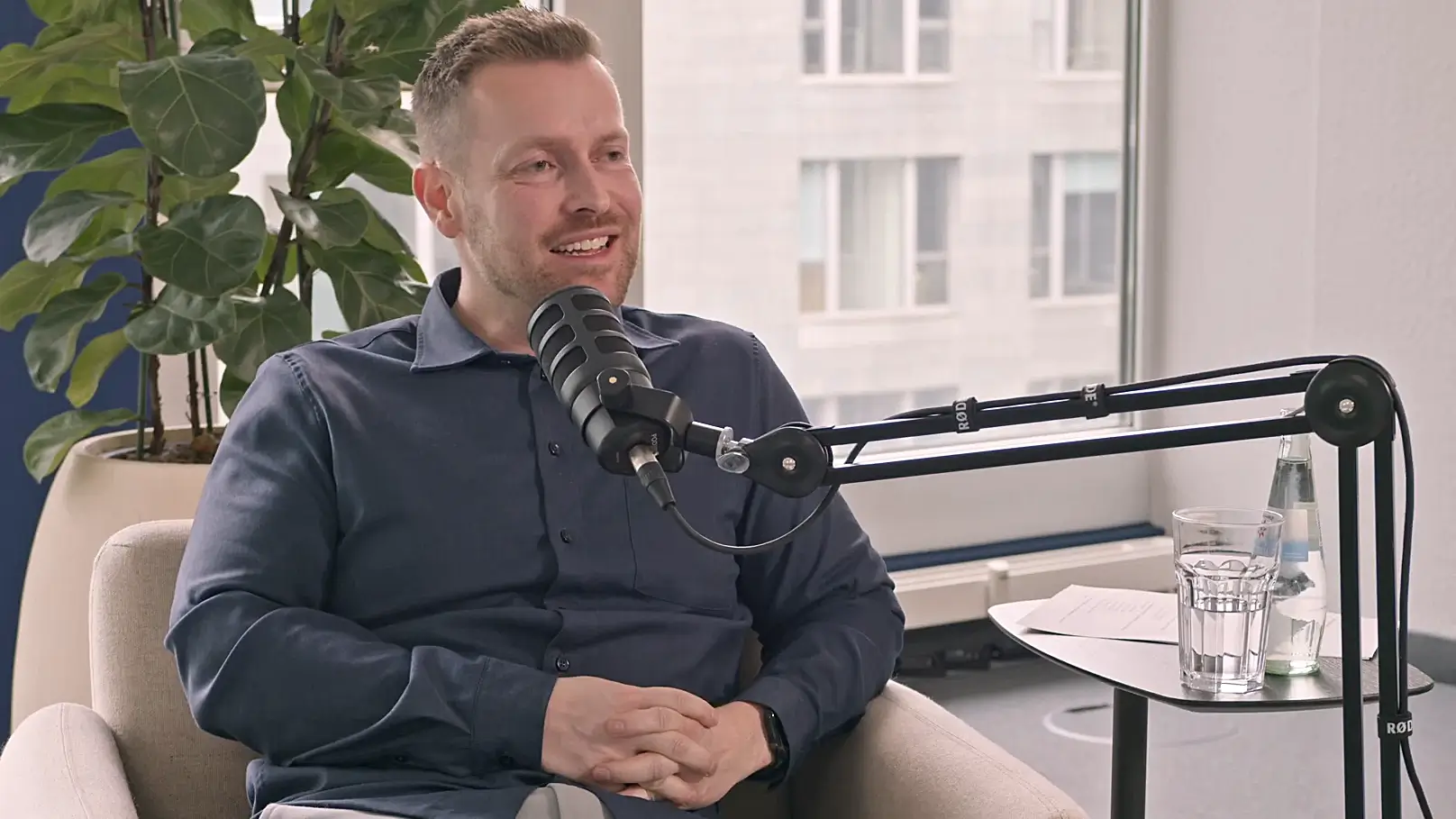

 Hard lessons in logistics, drop-shipping and agency red flags.28/05/2026. Made to measure, down to the centimetre: what DIY stores can't do, Grimberg GmbH turned into a business model. Maurice Grimberg and his sister Leonie run the family company from Sievern, started by their father in 2004 in a hallway, as a modern e‑commerce business with more than 130,000 customers in Germany and the Benelux. How do you notice that an agency doesn't really understand your product – and when do you act on it?Hard lessons in logistics, drop-shipping and agency red flags.
 76,000 fake shops uncovered: the industrial scale of global e‑commerce fraud.18/05/2026. When Matthias Marx started investigating open data leaks on the internet, he came across something he couldn't place at first: thousands of professionally designed web shops on the same technical base, with hidden code to skim credit card data. What followed was the discovery of BogusBazaar, a criminal network of more than 76,000 fake shops, run like a real company from China.76,000 fake shops uncovered: the industrial scale of global e‑commerce fraud.
 Trust rocks the cradle: crowdfunding and D2C from scratch.11/03/2026. Starting from zero with a completely unknown product, you need one thing above all: trust. Hendrik Mahncke, founder of Rock My Sleep, knew that from the start. He tells Jean-Marc Noël how a crowdfunding campaign and an idea on a sheet of paper became a serious e‑commerce business, and how an unknown brand earns the trust of parents.Trust rocks the cradle: crowdfunding and D2C from scratch.
 Market realities: navigating regional differences and subscriptions.12/01/2026. “There are moments when you feel like giving up – and that's often when it becomes clear whether a business will truly grow.” Jean-Marc Noël talks to Marius Rossel, founder and CEO of the Spanish e‑commerce agency TRILOGI, about 25 years of entrepreneurship, technological change and why trust is a decisive success factor in the Spanish market.Market realities: navigating regional differences and subscriptions.
 Always remember what makes you unique – it’s what makes you grow.07/07/2025. Every bag one of a kind, made from real fire hose – that's the idea behind Feuerwear. CEO Robert Klüsener talks to Jean-Marc Noël about sustainable production, building a direct-to-consumer shop and how e‑commerce works when every product exists only once – and why reviews and the Trusted Shops trustmark matter.Always remember what makes you unique – it’s what makes you grow.
 Screw the manual: why zero‑budget success demands your own unconventional path.21/05/2025. Carolin Handschuh started her online shop missforty germany in 2020, out of a personal crisis and without much starting capital. She talks to Jean-Marc Noël about bold decisions, honest marketing and building a strong community – why she made returns chargeable on purpose and what role TikTok plays in building her brand.Screw the manual: why zero‑budget success demands your own unconventional path.
 AI creates opportunity only if customers trust what you do with it.11/03/2025. Data protection, artificial intelligence, influencer marketing – e‑commerce is changing fast. Pixum has been a leader in photo products for 25 years, but competition is tougher than ever. Pixum CEO Daniel Attallah talks to Jean-Marc Noël about how transparency, data security and the Trusted Shops trustmark keep customers' trust.AI creates opportunity only if customers trust what you do with it.
More from #trstd casts
- We require transparent AI. Trust cannot be built without transparency.29/09/2026. Artificial intelligence has long been more than hype – and yet agentic AI is far from reality everywhere. In conversation with Sabrina Engling, Valentina Kerst of the German AI Association (KI Bundesverband) explains where companies stand today, which topics are underestimated and why good data foundations are decisive for the next stage. Kerst sees the biggest gap in data governance: companies need to know which data they have, where it lives, who may access it and how it is structured. Only a reliable data foundation makes it possible to use AI agents meaningfully.We require transparent AI. Trust cannot be built without transparency.
- A large number of reviews is a major factor for AI.22/09/2026. E‑commerce is changing fast: customers expect good products, fair prices and a smooth experience, while AI and agentic commerce change how people discover and buy products. Bastian Kolmsee, COO of Trusted Shops, talks to David Rissmann, Head of Strategy and Chief of Staff at Flaconi, about the beauty retailer's path from start-up to international e‑commerce company.A large number of reviews is a major factor for AI.
- Customer feedback is our main learning source.25/08/2026. 10,000 reviews, AI and a new course in e‑commerce: from fashion brand with physical stores to modern omnichannel retailer, More & More has gone through a full digital transformation. Jean-Marc Noël, CEO and founder of Trusted Shops, talks to Thomas Forstpointner, Head of E‑Commerce at More & More, about the challenges along the way and how trust works digitally.Customer feedback is our main learning source.
- Unfortunately, those who play by the rules are the ones who lose out.13/08/2026. Fake shops and manipulated reviews harm not only consumers but the whole of online retail. Dr. Carsten Föhlisch talks to Stephan Tromp, Deputy Managing Director of the German Retail Federation (HDE), about the growing threat of online fraud and why trust has become the most important currency in e‑commerce.Unfortunately, those who play by the rules are the ones who lose out.
- When emotions play a role, rationality goes out the window.28/07/2026. Why do we often trust a website within seconds? And why is a professional design often enough to switch off our critical thinking? Dr. Carsten Föhlisch talks to Michael Rasimus, head of the eye-tracking lab at DHBW Karlsruhe, about the psychology behind fake shops and online fraud, and what eye tracking reveals about where people really look.When emotions play a role, rationality goes out the window.
- Fake shops with AI: highly professional, fast-rising fraud.29/05/2026. Fake shops can hardly be told apart from real ones any more – AI makes it possible, and the numbers show online fraud is rising sharply. Dr. Carsten Föhlisch talks to Isabelle Rosière, Managing Director of Deutschland sicher im Netz e.V. (DsiN), about the rapid professionalisation of online fraud and what it means for consumers.Fake shops with AI: highly professional, fast-rising fraud.
- Hard lessons in logistics, drop-shipping and agency red flags.28/05/2026. Made to measure, down to the centimetre: what DIY stores can't do, Grimberg GmbH turned into a business model. Maurice Grimberg and his sister Leonie run the family company from Sievern, started by their father in 2004 in a hallway, as a modern e‑commerce business with more than 130,000 customers in Germany and the Benelux. How do you notice that an agency doesn't really understand your product – and when do you act on it?Hard lessons in logistics, drop-shipping and agency red flags.
- 76,000 fake shops uncovered: the industrial scale of global e‑commerce fraud.18/05/2026. When Matthias Marx started investigating open data leaks on the internet, he came across something he couldn't place at first: thousands of professionally designed web shops on the same technical base, with hidden code to skim credit card data. What followed was the discovery of BogusBazaar, a criminal network of more than 76,000 fake shops, run like a real company from China.76,000 fake shops uncovered: the industrial scale of global e‑commerce fraud.
- Differentiating the indifferent for a 20% conversion uplift.14/04/2026. Electricity and gas are invisible products. That's exactly why trust at E wie Einfach is not a phrase but a conversion strategy. Roman Philippi tells Jean-Marc Noël how the Cologne-based E.ON subsidiary brings innovation, customer focus and measurable trust signals together in a highly regulated market – and what difference a trustmark really makes at checkout.Differentiating the indifferent for a 20% conversion uplift.
- Trust rocks the cradle: crowdfunding and D2C from scratch.11/03/2026. Starting from zero with a completely unknown product, you need one thing above all: trust. Hendrik Mahncke, founder of Rock My Sleep, knew that from the start. He tells Jean-Marc Noël how a crowdfunding campaign and an idea on a sheet of paper became a serious e‑commerce business, and how an unknown brand earns the trust of parents.Trust rocks the cradle: crowdfunding and D2C from scratch.
- Market realities: navigating regional differences and subscriptions.12/01/2026. “There are moments when you feel like giving up – and that's often when it becomes clear whether a business will truly grow.” Jean-Marc Noël talks to Marius Rossel, founder and CEO of the Spanish e‑commerce agency TRILOGI, about 25 years of entrepreneurship, technological change and why trust is a decisive success factor in the Spanish market.Market realities: navigating regional differences and subscriptions.
 A shop for a beloved brand has to carry its DNA.18/09/2025. Iconic football pictures turned into a complete shop: the 11FREUNDE shop sells wall art, retro jerseys, accessories, books – and tickets. Shop manager Mattias Benesch explains to Jean-Marc Noël why trust in e‑commerce is more than a nice-to-have, and how to sell high-priced products online to a community that is critical of consumerism.A shop for a beloved brand has to carry its DNA.