Hard lessons in logistics, drop-shipping and agency red flags.
28/05/202632:27E‑commerceReputation

The audio player is provided by Letscast, which sets cookies.
Made to measure, down to the centimetre: what DIY stores can't do, Grimberg GmbH turned into a business model. Maurice Grimberg and his sister Leonie run the family company from Sievern, started by their father in 2004 in a hallway, as a modern e‑commerce business with more than 130,000 customers in Germany and the Benelux. How do you notice that an agency doesn't really understand your product – and when do you act on it?
Comment onYouTube (opens in a new window)
Original language: German
In this episode: Maurice Grimberg (Grimberg GmbH)
Transcript
# Community of Trust — Grimberg GmbH with Maurice Grimberg
Maurice Grimberg: What are the signals that make you say, "Now you really need to rethink your agency"?
If I start having to tell them what they should actually be paying attention to, then of course that's a problem. That's exactly the work I wanted to get off my desk.
And if you're already further ahead than some people at the agency, you quickly get the feeling: okay, they're not as deeply involved as I am.
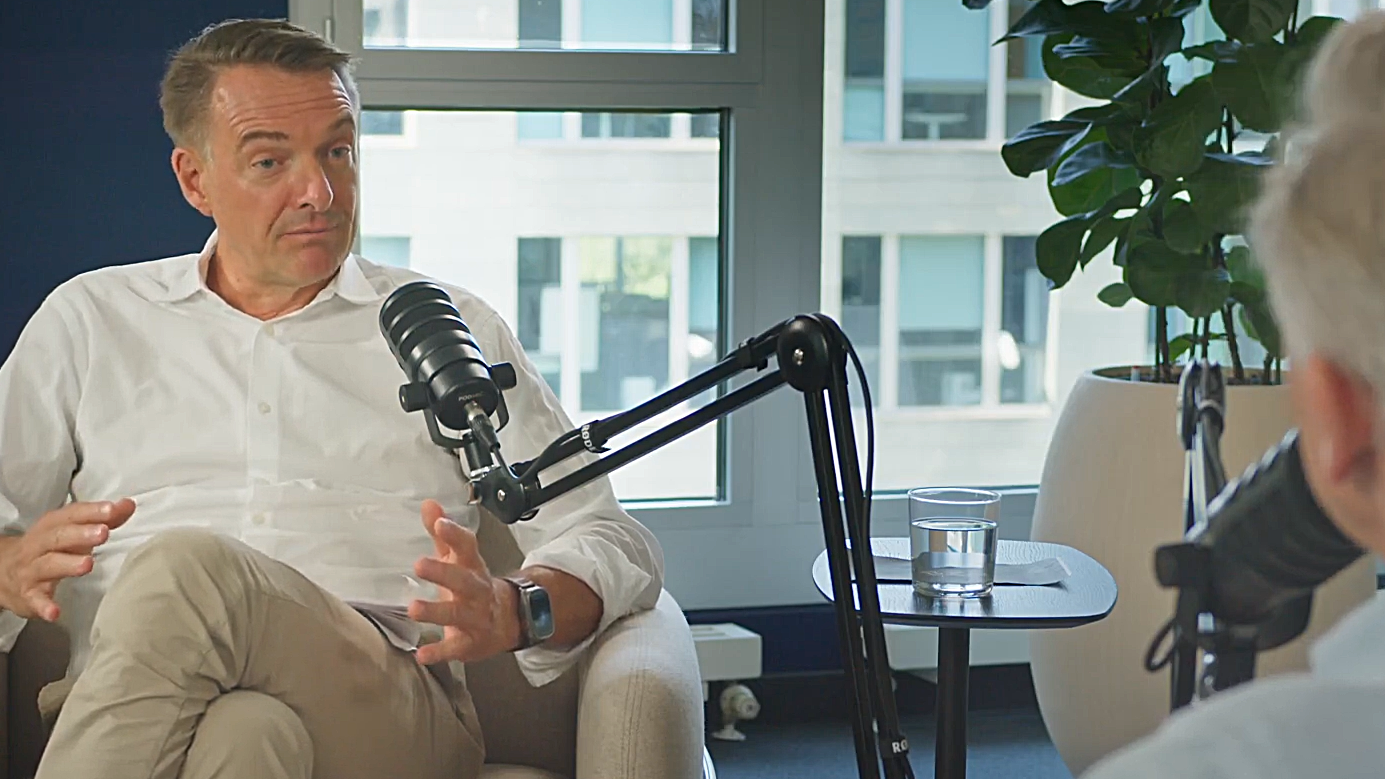
Jean-Marc Noël: Community of Trust, the podcast. Today with Maurice Grimberg, Managing Director of Grimberg GmbH.
Welcome to Community of Trust, the podcast where successful online businesses share practical experience and proven strategies to help you take your e‑commerce business to the next level.
I'm Jean-Marc Noël, co-founder and CEO of Trusted Shops, and today I'm speaking with Maurice Grimberg.
Maurice runs Grimberg GmbH in Zeven together with his sister Leonie. The company is a pure online retailer for roofing and wall materials.
Leonie unfortunately can't speak today because she's lost her voice a little. Leonie, I'm sorry you're not on camera today, but you're still very much part of this podcast.
Maurice, Grimberg GmbH is a family business from a fairly rural area that has developed into one of Germany's leading online retailers for roofing materials.
As an e‑commerce operator, you've also built experience in international expansion. I'm very interested in how the second generation — digital natives — has developed the business.
Welcome.
Maurice Grimberg: Thank you. I'm happy to be here.
That's right. Our father, Marcel, founded the company in 2004.
There's a story behind that. He was a Dutch soldier. There was a military base one town away from us, and it closed in 2004.
There was also a Dutch school and a whole Dutch community in the area. My sister and I grew up Dutch as well.
When the base closed, the question was: what do we do now?
We didn't want to move to the Netherlands. We wanted to stay in Germany.
Through contacts, my father had the address of a large company selling profiled metal sheets and rooflight panels. They wanted to expand into the Netherlands.
So in 2004, he simply started the business from the hallway of our home.
It was a hallway about one metre by three metres — really narrow.
He started selling roofing sheets on eBay and through other channels, and from there it gradually became bigger.
That's ultimately one of the reasons we stayed here.
Jean-Marc Noël: That's incredible.
And today you have more than 130,000 customers, a very large product range, you're active not only in Germany but also in the Benelux countries, and you've been with Trusted Shops for around 13 years.
Your father Marcel founded the company in 2004.
When you say it started in the hallway — were the roofing sheets actually stored there?
Maurice Grimberg: No, only the computer was there.
From the beginning, he used a drop-shipping model.
He sold the product, we purchased it from the supplier, and the suppliers handled delivery directly to the customer. That's still basically how it works today.
Jean-Marc Noël: When did it become clear to you and Leonie that you wanted to join the business?
Maurice Grimberg: Leonie trained in Germany and also spent a short time in the Netherlands.
Then, around 2008, the idea came up that what we were already doing in the Netherlands and Belgium could also work in Germany.
So Leonie and my father founded a second company to do the same thing in Germany.
That business naturally grew even faster because the German market is larger.
I joined in 2012. Before that, I had spent two years working for another company in England.
But even then I could already feel the pull of the family business and thought: I want to be part of this too.
I had heard the stories every day for years, so of course I wanted to get involved as early as possible.
Jean-Marc Noël: You basically grew up with it.
But let me ask about the products you sell.
We're talking about roofing sheets, trapezoidal sheets and multiwall sheets. Even the names sound heavy and bulky.
Maurice Grimberg: They are bulky products.
Jean-Marc Noël: How do you convince someone to order, say, 50 square metres of steel profile sheets online without touching them first?
Maurice Grimberg: The need is usually very specific.
Someone may need roofing for a carport or a shed, for example.
Our key differentiator is that we can cut products to the exact centimetre.
At a DIY store you might find a two-metre panel or a one-and-a-half-metre panel that you can take away immediately.
But if someone needs a sheet that is exactly 6.83 metres long, they can order that from us and have it delivered.
That combination — entering e‑commerce very early and offering this custom-cut service in the Netherlands, Belgium and Germany — helped us build a name very quickly.
Jean-Marc Noël: It sounds very easy when you tell the story like that.
But what were the biggest challenges? Logistics, preparation, fulfilment — what were the difficult parts?
Maurice Grimberg: When Leonie and I both became involved around 2012, one challenge was simply learning to work together.
Our father was still involved, our mother was involved, there were other employees, and first of all we had to figure out how to work as a family.
It worked, although naturally there was stress and the occasional argument.
But at the end of the day, we always knew that we were doing it to move the company forward and make it successful.
In the last few years, of course, there were many additional challenges.
Everyone remembers the COVID period.
At first, that was a huge challenge because nobody knew what would happen.
As terrible as the period was in general, from a purely commercial point of view it became a stroke of luck for us.
People couldn't do much else, so they started working on their homes. They built carports and sheds and took on renovation projects.
Our business really exploded.
The challenge then became that suppliers sometimes simply ran out of material because everything was selling so quickly.
So we broadened our supplier base and found additional suppliers that could reliably serve all three countries.
Jean-Marc Noël: Let's stay with that period for a moment.
You said it became an opportunity, but opportunity alone isn't enough. You also need to execute properly.
What did you do with the website and marketing that worked particularly well? And what would you perhaps do differently today?
Maurice Grimberg: The first thing that helped us enormously was the team.
We're extremely happy with every single person working with us.
Some employees have been with us for 15 years.
Without that team, we simply couldn't have handled the volume. There were many overtime hours during that period.
We got through it because we did it together.
Jean-Marc Noël: Was the website always the main sales channel?
Maurice Grimberg: Always the website.
We're purely e‑commerce.
Of course, someone occasionally rings the doorbell because they're nearby, but that's not really what we're set up for.
We're structured so we can handle everything online — enquiries by email, chat and phone — and that allows us to respond much faster.
Jean-Marc Noël: How did you build awareness? Which channels mattered most?
Maurice Grimberg: Google was the main one from very early on.
My father was already using it in the early 2000s.
Even today, Google Ads is still our largest channel.
We also use the Meta ecosystem — Instagram and Facebook — but roofing sheets aren't really products where someone is scrolling through a feed and suddenly thinks, "I could buy some new trapezoidal sheets."
Usually someone has a shed or carport project and actively searches for what they need.
That's why Google Ads remains the biggest advertising channel for us.
Jean-Marc Noël: Do you manage the keyword optimisation and campaigns yourselves, or do you work with an agency?
Maurice Grimberg: We've worked with a number of agencies over the years.
Some were good. Some, unfortunately, were bad.
At the moment, we do it completely in-house again.
What is often missing externally is the passion for the product and the complete product knowledge.
An agency naturally has many clients. We may get two hours of attention in their day.
That person will never know exactly how we operate, how our customers think, what is special about our products or what makes our offer different from buying somewhere else.
So we've brought it fully back in-house.
And AI is also making that easier because it's becoming much easier to collect and analyse all the data.
You still have to make the decisions yourself, of course.
Jean-Marc Noël: So you're actively using AI tools to support campaign management and development. How exactly?
Maurice Grimberg: It changes every day, which is what makes this development so exciting.
The tools are now able to connect to platforms such as Google Analytics, Google Ads, Search Console or SISTRIX and analyse the combined data.
We've been in the market since 2004, so we have a lot of historical data.
Going through all of that manually and comparing it would be extremely time-consuming.
And we have a seasonal business. January through December is not all the same.
With AI, we can put those data together and get suggestions such as, "You might want to do this or that."
Of course, you still need to think about whether the recommendation is correct and whether it fits the direction you want to take.
But the technology is developing incredibly quickly.
Jean-Marc Noël: Which tools do you use very specifically? What would you recommend to someone listening who has lots of data but still wonders what to do with it?
Maurice Grimberg: For advertising and visibility, SISTRIX is a very good tool.
It gathers a lot of data about you and your competitors, so you can compare them.
Another example is our email campaigns.
We use rapidmail, a German provider.
Then we combine that with AI tools that help us create and design images.
Working with those tools, you can now create very attractive newsletters in-house.
Jean-Marc Noël: And you really do all of that internally now?
Maurice Grimberg: Yes. We do all of it in-house.
The tools make it easier for the team as well.
For many tasks, you no longer need to be a programmer.
What you do need is genuine enthusiasm for the work. If someone really enjoys doing it, you can get very good results.
Jean-Marc Noël: Earlier you said Leonie built the German business together with your father.
Today you're both Managing Directors and have different roles.
How have you divided those responsibilities, and how did the handover from your father work?
Maurice Grimberg: Leonie and I were fortunate because we naturally liked different things.
So the division was relatively easy.
From the beginning, I felt at home in marketing and process optimisation.
I also came into the business with some different experience, so I could say, "Maybe we should change this or that to make it more efficient."
Leonie handles the accounting, a large part of purchasing and HR.
So we don't get in each other's way, which works very well.
Jean-Marc Noël: That sounds almost too ideal.
Where do the arguments happen?
Maurice Grimberg: Anywhere from small things to bigger ones.
Shop development creates new topics every day.
Some things need to be prioritised. With others, you have to say, "No, we don't actually need this right now."
But we're genuinely lucky that we work so well together.
The same applies to the handover from our father.
At some point he basically said: "I believe in you. You can do this. And honestly, I don't enjoy it quite as much anymore because I don't keep up with everything the way I used to."
He's 69 now.
We're incredibly grateful for everything he built, and he still trusts us to continue it.
During the COVID years, he eventually stepped out and we took over the company.
Jean-Marc Noël: So ultimately it comes back to trust.
He trusted you, and trust keeps appearing throughout the story.
You've also been with Trusted Shops for around 13 years, with the Trustmark, and you've collected thousands of service reviews.
You also use product reviews at individual product level.
We spoke before the recording about how important reviews are.
Can you explain how you and Leonie work with them and what you actually do with that feedback?
Maurice Grimberg: Reviews are still extremely important.
Everyone knows it from their own shopping behaviour.
Whether you're buying on Amazon or somewhere else, you tend to click on the product that has reviews — and ideally the one with the most reviews.
Because we've been collecting reviews with Trusted Shops for around 13 years, we've built up a very large body of feedback that customers can read.
We use product reviews, and in the checkout we also show the stars so the customer sees something familiar and feels safe.
My sister Leonie actually reads every review.
Once a week, she takes the time to go through all of them.
That helps us enormously.
We're grateful for every positive review, especially because people have to take the time to write one.
But negative reviews are useful too — particularly when they explain what went wrong.
Then we can understand what the customer didn't like and use it to improve.
Sometimes we call the customer again and talk through the problem.
Perhaps there is still another solution that will make them happy.
And sometimes the customer then changes the review.
A one-star review may become three stars because they say, "In the end, you handled it really well."
So we really use reviews continuously, and they're incredibly important to our customers.
Jean-Marc Noël: That's something we see again and again.
Strong, successful businesses read reviews and respond to them.
It's a recurring pattern.
I also saw that Google Shopping can display star ratings. Is that important for you?
Maurice Grimberg: Definitely.
Shopping is one of the first things people see now.
When products are compared there, it's similar to Amazon.
People tend to click first on the product with the most reviews because that creates trust.
Jean-Marc Noël: You sell very specialised products and you're active internationally — in Germany and the Netherlands.
For listeners thinking about internationalisation, what would you recommend?
Are there real differences between the markets?
If a German company wants to sell in the Netherlands, what does it need to take into account?
Maurice Grimberg: There definitely are differences.
On the product side, a lot depends on the supplier.
Some products are simply so heavy and expensive that a Dutch supplier can't efficiently deliver them to Munich or Berlin at short notice.
So your supplier selection has to fit the market.
You need suppliers in the country you're selling into who can deliver quickly, especially with a drop-shipping model.
And culturally, there are differences between the Netherlands and Germany.
Dutch customers like to talk.
They call more often.
They're very sociable and often want to have that quick personal conversation.
They also tend to ask more questions because they want to make sure everything is right.
Even though we're talking about neighbouring European countries, you cannot copy the model one-to-one.
You have to adapt to the people.
Around half our team consists of Dutch-speaking employees.
AI can do a lot nowadays, but having a real person who speaks the customer's language still creates a different level of trust.
Jean-Marc Noël: Does that also change how you market in each country?
Maurice Grimberg: Yes, because every country has its own platforms.
In Germany, for example, you have Kleinanzeigen.
In the Netherlands there's Marktplaats.
For the big platforms like Google and Meta, the basic channels are similar.
Amazon is interesting too.
We sold there for a while, although our bulky products make it difficult because we can't simply store everything at Amazon and still offer exact custom sizing.
But Amazon has relatively little market share in the Netherlands.
They entered the broader Dutch market quite late.
Before that, Amazon there was much more limited, while bol.com was already very strong.
Amazon is still fighting against that established position.
Jean-Marc Noël: Another thing I noticed is your content.
You write your own blog articles.
Isn't that a lot of work?
Maurice Grimberg: It is, although we now also have a trainee in her second year who focuses on that.
We've trained apprentices for years and generally retain them afterwards.
She works on the content and of course uses AI as well.
Jean-Marc Noël: The articles are often quite technical and detailed.
Is that primarily a deliberate SEO lever, or is there genuinely a passion for corrugated roofing sheets behind it?
Maurice Grimberg: It's one piece of the overall system.
Of course Google values detailed information around a topic.
But the topics we choose come directly from our customers.
If we repeatedly hear the same questions by email, chat or phone, that's a signal to us that we need to communicate that information better.
That can mean adding more information to the product page or writing a dedicated blog article.
Jean-Marc Noël: How do you produce an article today?
Maurice Grimberg: A few years ago, it was much more manual.
You had to think through everything from scratch and write it all yourself.
Today, we select the topics together.
We also look at SISTRIX to see which keywords and questions are relevant and where Google might surface us.
Then we use AI tools such as ChatGPT to help draft the article.
The content is checked, edited and then published.
And those data also feed into our chat system.
The chatbot is extremely useful because it's available 24 hours a day.
After 5 p.m. or at weekends, when our colleagues are offline, it's effectively the next employee.
It receives the information too, so customers can get answers immediately.
Jean-Marc Noël: That's very understandable, especially with future chatbots and commerce agents.
They need information they can actually read and evaluate.
You've been operating since 2004, the business has been through multiple generations and you've built very successful shops.
Looking back, what were your biggest mistakes — things you would do differently today?
Maurice Grimberg: Working with agencies is definitely one of them.
You can burn a lot of money there, unfortunately.
My advice is: try to do as much as possible with your own team if you can.
But you need people who genuinely enjoy the work and immerse themselves in it.
Especially in e‑commerce and AI, something changes every day.
Jean-Marc Noël: You've had real experience with agencies, so I think this is interesting for a lot of listeners.
What are the warning signs that make you say, "I need to rethink this agency relationship"?
Maurice Grimberg: The clearest sign is when I start having to tell the agency what they should be paying attention to.
That's exactly the work I wanted to get off my desk.
But because we care so deeply about the business, I can never completely detach from it.
And if you're already further ahead than some people at the agency, you quickly get the feeling that they aren't as deeply involved as you are.
Another warning sign is when the product knowledge simply doesn't come through.
If they don't understand the product, it's very difficult for them to do good marketing.
Jean-Marc Noël: You said you have a relatively large paid-marketing budget.
What strategy do you use to spend that budget sensibly? Do you run pilots and tests?
Maurice Grimberg: It's really about testing every day.
Unfortunately, there is no golden formula for a platform like Google Ads.
I wish there were.
Something that worked perfectly in the same season last year may not work this year if you simply leave it untouched.
The market changes, competitors change, products change, and the platforms themselves change.
So you constantly need to adjust different levers and see what happens.
Sometimes you change something and realise after a week that it was the wrong move.
You couldn't know that beforehand, but now you know and you can act.
Then you test the next thing.
You also have to test new platforms.
TikTok isn't an obvious channel for roofing materials today.
Maybe it will be one day, but right now I don't see it as our main channel.
Still, we experiment.
If we see potential, we can build on it.
And our trainee is 21 and says, "I'd really love to do that."
That's perfect for us.
Then we can say: "Great, let's start it with you."
She's part of that world and understands what works there.
Jean-Marc Noël: Earlier, when I asked what made the business successful, you said the team was one of the decisive factors.
I also saw that you're rated very well as an employer on platforms such as Kununu.
How do you build an attractive team as an online retailer in such a niche market — especially in Zeven, which is a fairly rural area?
Maurice Grimberg: It is a rural area.
That naturally means you can't recruit as easily from all over Germany or Europe.
But many of our employees have been with us for a very long time.
This year we have one 15-year anniversary and two people who have been with us for ten years.
One of them actually went to the Dutch school with me.
We have a very good atmosphere together.
Decision-makers are literally one door away.
We don't have a hierarchy where something has to travel three floors upwards before a decision gets made.
We listen to criticism.
Our employees are in direct contact with customers.
If they notice or hear that something needs to change, there's a list where it gets recorded, and we try to fix it very quickly.
If there's a problem, it needs to disappear.
Employees appreciate that.
And beyond work, we also try to do enjoyable things together.
We go out for dinner, attend events or go to a musical.
That probably spreads by word of mouth too.
Jean-Marc Noël: So when you hire someone new, you tend to look within the regional network?
Maurice Grimberg: Yes.
The team is relatively young, around our age.
Zeven has around 15,000 inhabitants. It's between Bremen and Hamburg, but it's still a manageable local environment.
People know each other and word gets around.
Jean-Marc Noël: I think it's a great example of a family business that keeps developing while staying close to the business.
What practical advice would you give other online retailers — something they could ideally act on immediately?
Maurice Grimberg: If you're still at the beginning, think as broadly and as far ahead as possible about where you want to go.
We started in the Netherlands and later added Germany.
At the time, we set them up as two separate companies.
There were good reasons for that then.
But as we grew, we realised we were doing everything twice.
We had two ERP systems, two accounting setups, two structures for Google and so on.
Fortunately, around two years ago we brought everything together under Grimberg GmbH.
That reduced both costs and duplicate work.
The same applies to naming and branding.
Think very early about where you actually want to go.
I have a friend who recently started his own business offering training to companies.
He had the word "software" in the company name.
I asked him: "Do you really want to specialise that narrowly?"
This year he changed it because he realised he was getting more and more enquiries outside that exact category.
It's difficult to change a name later once you've already built a strong brand.
Jean-Marc Noël: So your advice is really to think long-term from the beginning.
Where do I want to go, and what structure gives me room to get there?
Maurice Grimberg: Exactly.
Take a little more time at the beginning and ask: what is my vision?
Of course, you're always wiser afterwards.
Jean-Marc Noël: Maurice, this has been excellent.
We're already almost at the end of this episode of Community of Trust.
Thank you very much — and thank you to Leonie as well for making the trip to Cologne, even though unfortunately she couldn't join the conversation properly today.
I hope everyone listening has taken away concrete and practical ideas.
If you enjoyed the episode, subscribe to the podcast and leave us a review. That helps us reach even more online retailers.
As always, you'll find more insights and useful resources at Trusted Shops.
Become part of our community.
Maurice, Leonie, thank you very much for being here. It was a wonderful episode.
Maurice Grimberg: Thank you very much.
Community of Trust. Subscribe wherever you get your podcasts.
Share this episode
Get in touch with our team

Because you listened to »Hard lessons in logistics, drop-shipping and agency red flags.«
 Customer feedback is our main learning source.25/08/2026. 10,000 reviews, AI and a new course in e‑commerce: from fashion brand with physical stores to modern omnichannel retailer, More & More has gone through a full digital transformation. Jean-Marc Noël, CEO and founder of Trusted Shops, talks to Thomas Forstpointner, Head of E‑Commerce at More & More, about the challenges along the way and how trust works digitally.Customer feedback is our main learning source.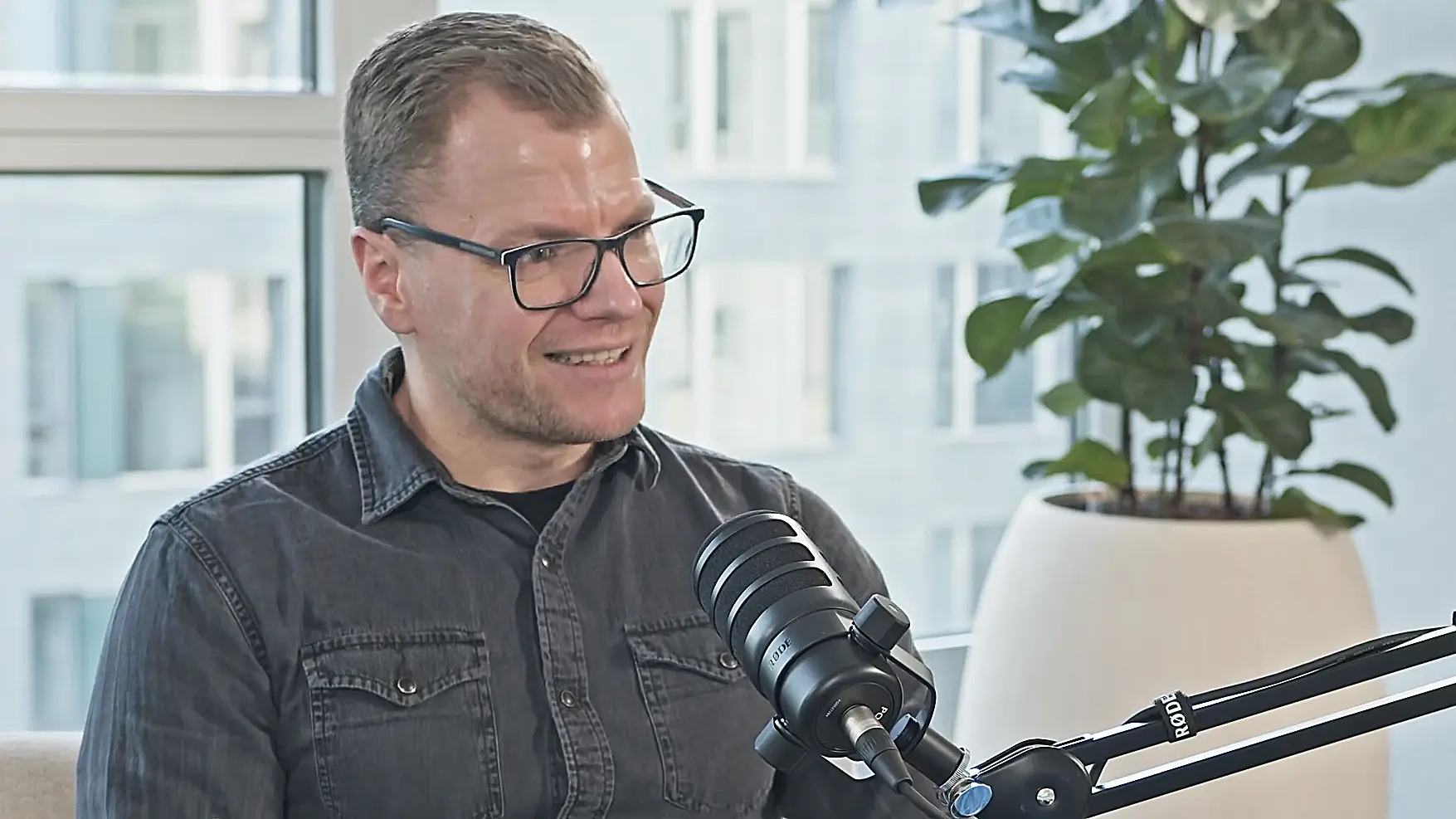
 Trust rocks the cradle: crowdfunding and D2C from scratch.11/03/2026. Starting from zero with a completely unknown product, you need one thing above all: trust. Hendrik Mahncke, founder of Rock My Sleep, knew that from the start. He tells Jean-Marc Noël how a crowdfunding campaign and an idea on a sheet of paper became a serious e‑commerce business, and how an unknown brand earns the trust of parents.Trust rocks the cradle: crowdfunding and D2C from scratch.
 A large number of reviews is a major factor for AI.22/09/2026. E‑commerce is changing fast: customers expect good products, fair prices and a smooth experience, while AI and agentic commerce change how people discover and buy products. Bastian Kolmsee, COO of Trusted Shops, talks to David Rissmann, Head of Strategy and Chief of Staff at Flaconi, about the beauty retailer's path from start-up to international e‑commerce company.A large number of reviews is a major factor for AI.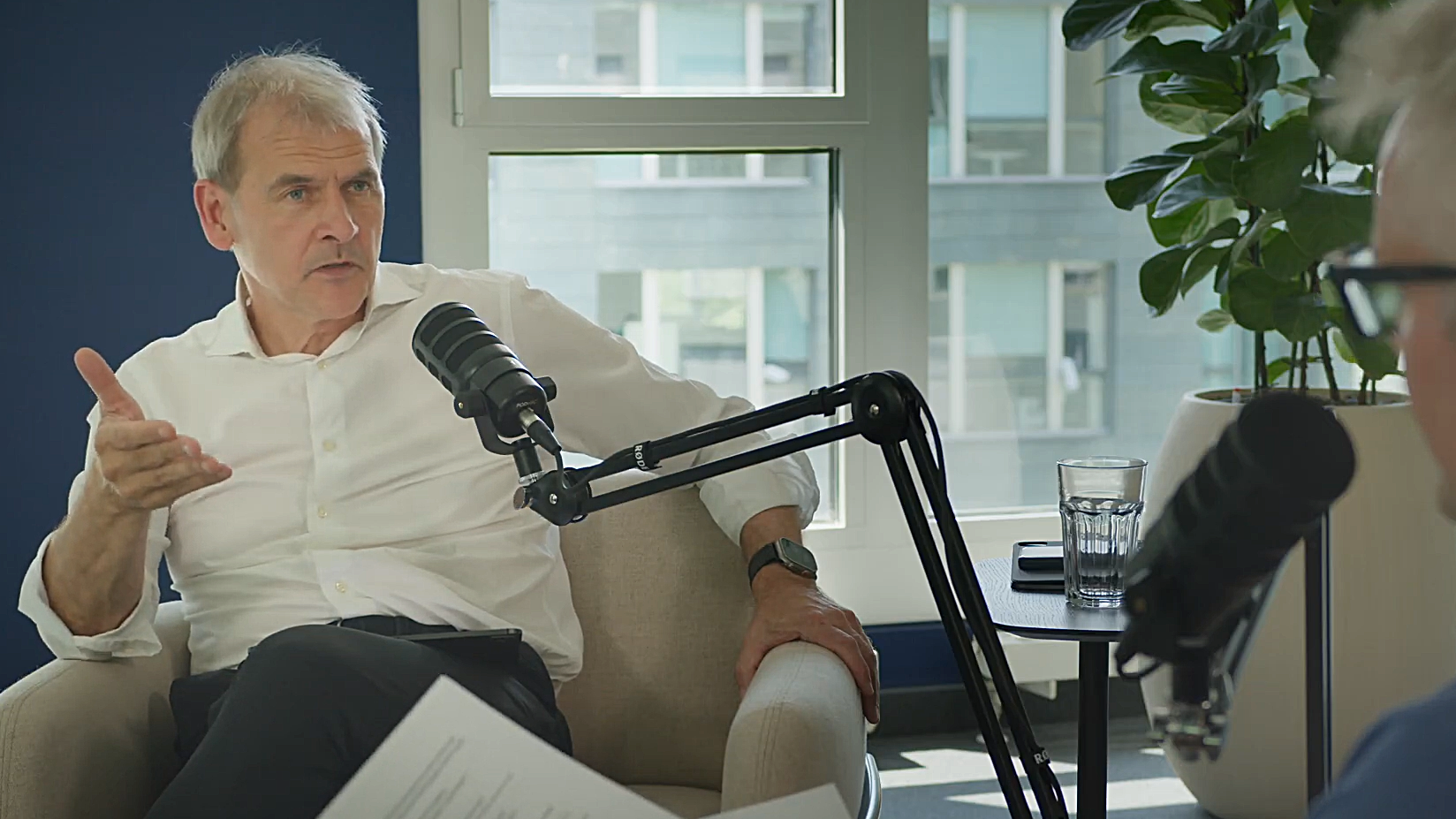
 Unfortunately, those who play by the rules are the ones who lose out.13/08/2026. Fake shops and manipulated reviews harm not only consumers but the whole of online retail. Dr. Carsten Föhlisch talks to Stephan Tromp, Deputy Managing Director of the German Retail Federation (HDE), about the growing threat of online fraud and why trust has become the most important currency in e‑commerce.Unfortunately, those who play by the rules are the ones who lose out.
 Differentiating the indifferent for a 20% conversion uplift.14/04/2026. Electricity and gas are invisible products. That's exactly why trust at E wie Einfach is not a phrase but a conversion strategy. Roman Philippi tells Jean-Marc Noël how the Cologne-based E.ON subsidiary brings innovation, customer focus and measurable trust signals together in a highly regulated market – and what difference a trustmark really makes at checkout.Differentiating the indifferent for a 20% conversion uplift.
 Market realities: navigating regional differences and subscriptions.12/01/2026. “There are moments when you feel like giving up – and that's often when it becomes clear whether a business will truly grow.” Jean-Marc Noël talks to Marius Rossel, founder and CEO of the Spanish e‑commerce agency TRILOGI, about 25 years of entrepreneurship, technological change and why trust is a decisive success factor in the Spanish market.Market realities: navigating regional differences and subscriptions.
 From negative reviews to pure anticipation: rewriting the customer experience through feedback.03/11/2025. How do you build trust in a market where products need explaining – and scale internationally with it? Kevin Föllmer, Head of Sales at DF Automotive, describes the journey from the first unique selling point (“Which part fits my car?”) to a buying experience that systematically removes uncertainty.From negative reviews to pure anticipation: rewriting the customer experience through feedback.
 A shop for a beloved brand has to carry its DNA.18/09/2025. Iconic football pictures turned into a complete shop: the 11FREUNDE shop sells wall art, retro jerseys, accessories, books – and tickets. Shop manager Mattias Benesch explains to Jean-Marc Noël why trust in e‑commerce is more than a nice-to-have, and how to sell high-priced products online to a community that is critical of consumerism.A shop for a beloved brand has to carry its DNA.
 Meraki in e‑commerce: how radically authentic storytelling beats a falsified market.24/07/2025. It all started with a few bottles of olive oil and a dream: as a student, Floris Reurts brought fresh olive oil from Crete to the Netherlands – and soon realised he was onto something bigger. Today Gkazas.com is a growing online brand. Floris tells Jean-Marc Noël how he built it by focusing on origin, transparency and trust.Meraki in e‑commerce: how radically authentic storytelling beats a falsified market.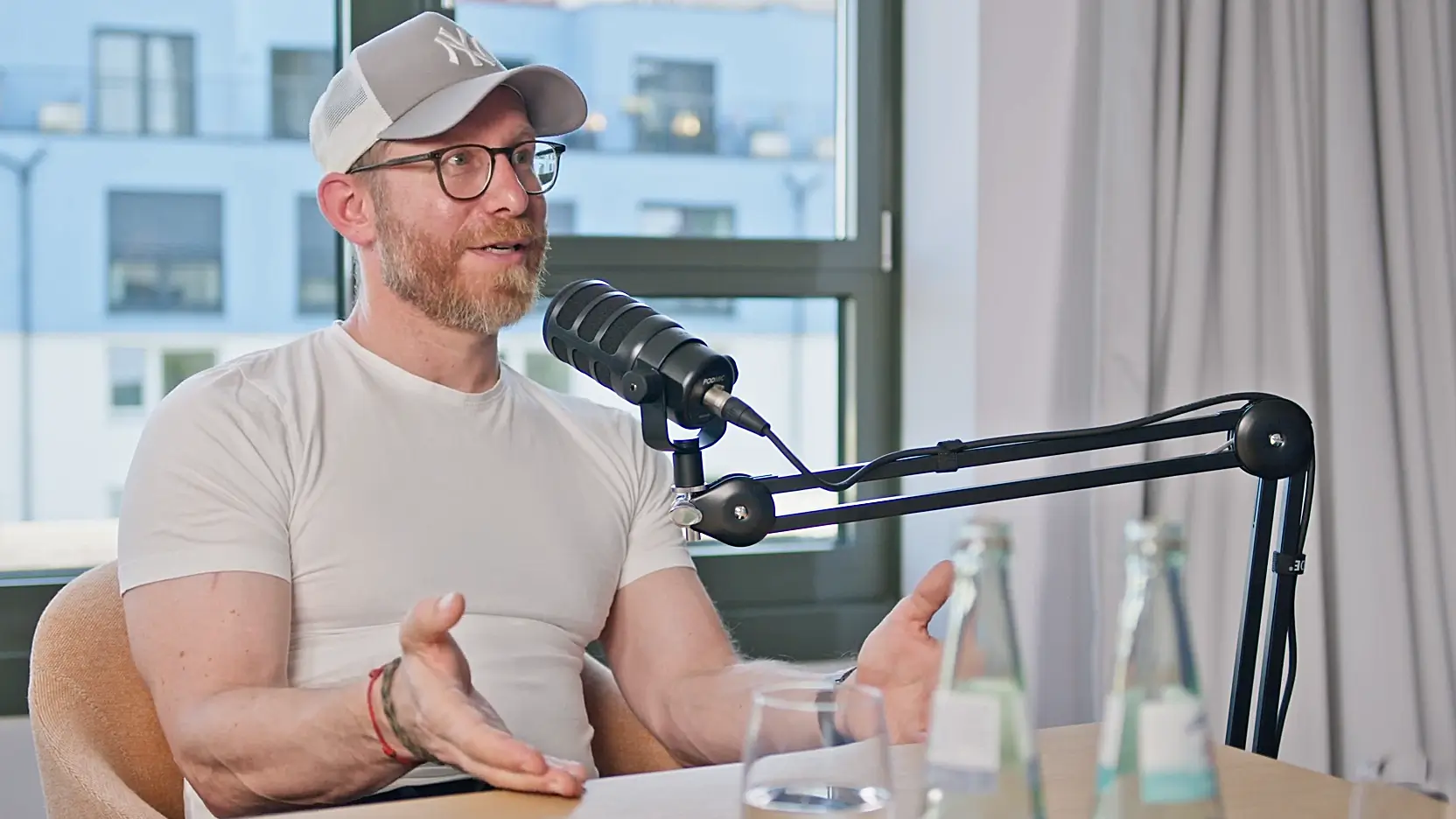
 Always remember what makes you unique – it’s what makes you grow.07/07/2025. Every bag one of a kind, made from real fire hose – that's the idea behind Feuerwear. CEO Robert Klüsener talks to Jean-Marc Noël about sustainable production, building a direct-to-consumer shop and how e‑commerce works when every product exists only once – and why reviews and the Trusted Shops trustmark matter.Always remember what makes you unique – it’s what makes you grow.
 Screw the manual: why zero‑budget success demands your own unconventional path.21/05/2025. Carolin Handschuh started her online shop missforty germany in 2020, out of a personal crisis and without much starting capital. She talks to Jean-Marc Noël about bold decisions, honest marketing and building a strong community – why she made returns chargeable on purpose and what role TikTok plays in building her brand.Screw the manual: why zero‑budget success demands your own unconventional path.
 Your customers are already telling you how to grow – listen to them.28/04/2025. How do you build real trust in the digital age? Beate Rank, CEO and co-founder of Fred & Felia, shares her personal motivation, product development and clever community building. Fred & Felia relies on quality, transparency and genuine customer reviews – and turns dog owners into loyal fans.Your customers are already telling you how to grow – listen to them.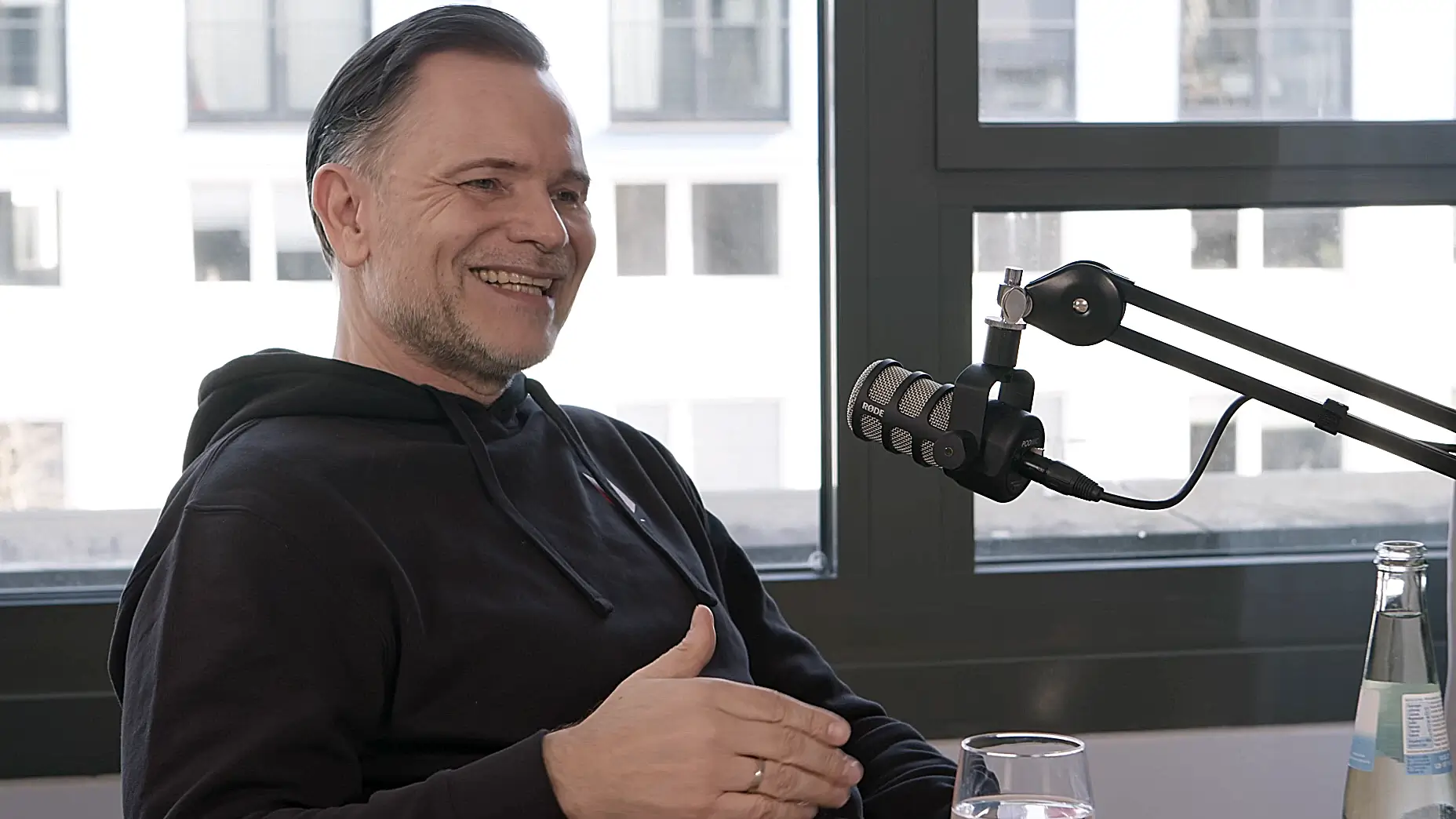
 Be the exact fit when it matters: how precision products win through precise UX.03/04/2025. Custom-made sheet metal, an online configurator and more than 10,000 orders a year: Kantfuchs24 shows how a seemingly simple product can change B2B e‑commerce. The real success factor? Trust. Frank Schulz, COO and co-founder, tells Jean-Marc Noël how speed, precision and customer focus made the company a pioneer.Be the exact fit when it matters: how precision products win through precise UX.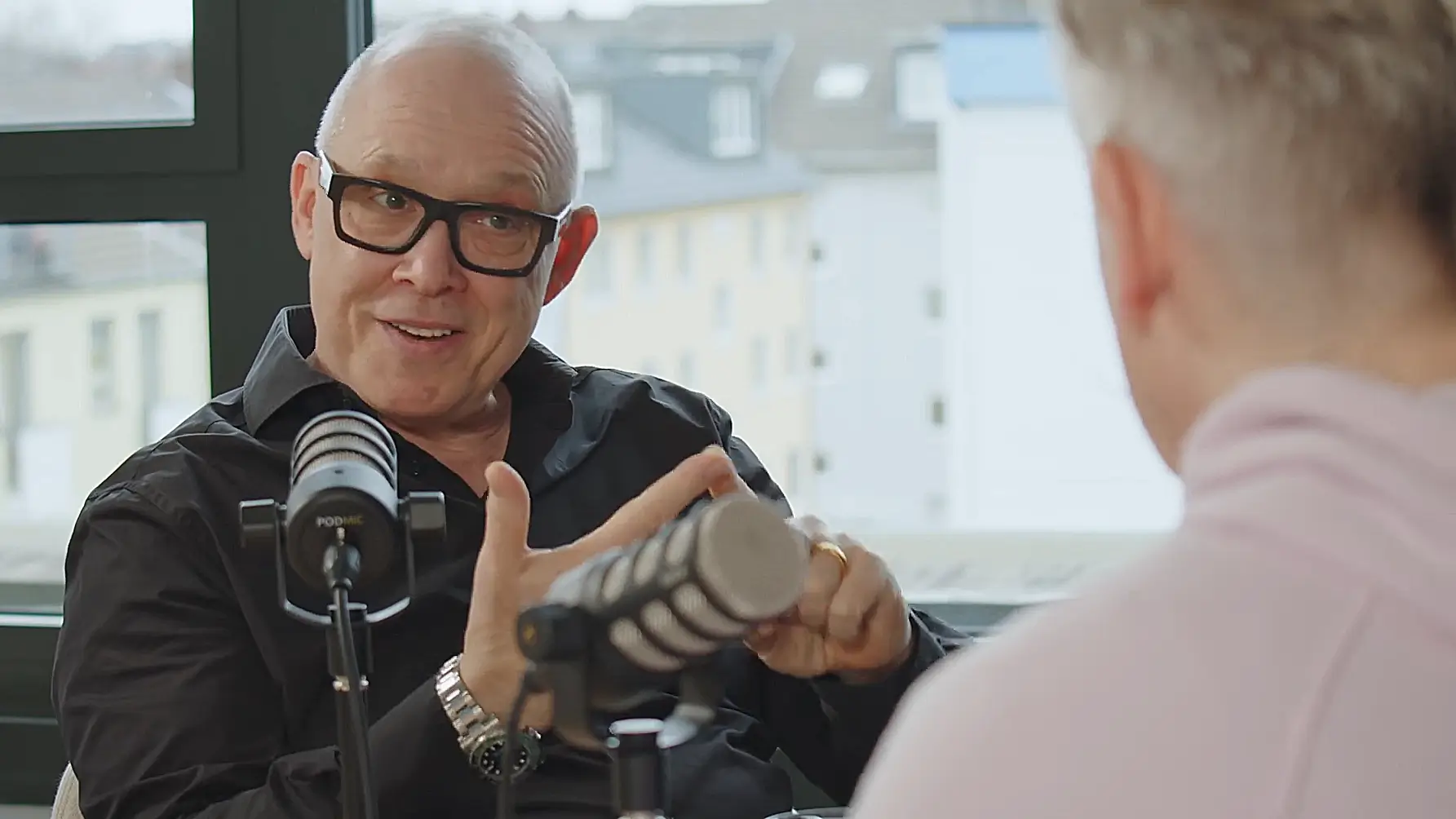
 AI creates opportunity only if customers trust what you do with it.11/03/2025. Data protection, artificial intelligence, influencer marketing – e‑commerce is changing fast. Pixum has been a leader in photo products for 25 years, but competition is tougher than ever. Pixum CEO Daniel Attallah talks to Jean-Marc Noël about how transparency, data security and the Trusted Shops trustmark keep customers' trust.AI creates opportunity only if customers trust what you do with it.
More from #trstd casts
 We require transparent AI. Trust cannot be built without transparency.29/09/2026. Artificial intelligence has long been more than hype – and yet agentic AI is far from reality everywhere. In conversation with Sabrina Engling, Valentina Kerst of the German AI Association (KI Bundesverband) explains where companies stand today, which topics are underestimated and why good data foundations are decisive for the next stage. Kerst sees the biggest gap in data governance: companies need to know which data they have, where it lives, who may access it and how it is structured. Only a reliable data foundation makes it possible to use AI agents meaningfully.We require transparent AI. Trust cannot be built without transparency.
- A large number of reviews is a major factor for AI.22/09/2026. E‑commerce is changing fast: customers expect good products, fair prices and a smooth experience, while AI and agentic commerce change how people discover and buy products. Bastian Kolmsee, COO of Trusted Shops, talks to David Rissmann, Head of Strategy and Chief of Staff at Flaconi, about the beauty retailer's path from start-up to international e‑commerce company.A large number of reviews is a major factor for AI.
- Customer feedback is our main learning source.25/08/2026. 10,000 reviews, AI and a new course in e‑commerce: from fashion brand with physical stores to modern omnichannel retailer, More & More has gone through a full digital transformation. Jean-Marc Noël, CEO and founder of Trusted Shops, talks to Thomas Forstpointner, Head of E‑Commerce at More & More, about the challenges along the way and how trust works digitally.Customer feedback is our main learning source.
- Unfortunately, those who play by the rules are the ones who lose out.13/08/2026. Fake shops and manipulated reviews harm not only consumers but the whole of online retail. Dr. Carsten Föhlisch talks to Stephan Tromp, Deputy Managing Director of the German Retail Federation (HDE), about the growing threat of online fraud and why trust has become the most important currency in e‑commerce.Unfortunately, those who play by the rules are the ones who lose out.
 When emotions play a role, rationality goes out the window.28/07/2026. Why do we often trust a website within seconds? And why is a professional design often enough to switch off our critical thinking? Dr. Carsten Föhlisch talks to Michael Rasimus, head of the eye-tracking lab at DHBW Karlsruhe, about the psychology behind fake shops and online fraud, and what eye tracking reveals about where people really look.When emotions play a role, rationality goes out the window.
 Fake shops with AI: highly professional, fast-rising fraud.29/05/2026. Fake shops can hardly be told apart from real ones any more – AI makes it possible, and the numbers show online fraud is rising sharply. Dr. Carsten Föhlisch talks to Isabelle Rosière, Managing Director of Deutschland sicher im Netz e.V. (DsiN), about the rapid professionalisation of online fraud and what it means for consumers.Fake shops with AI: highly professional, fast-rising fraud.
 76,000 fake shops uncovered: the industrial scale of global e‑commerce fraud.18/05/2026. When Matthias Marx started investigating open data leaks on the internet, he came across something he couldn't place at first: thousands of professionally designed web shops on the same technical base, with hidden code to skim credit card data. What followed was the discovery of BogusBazaar, a criminal network of more than 76,000 fake shops, run like a real company from China.76,000 fake shops uncovered: the industrial scale of global e‑commerce fraud.
- Differentiating the indifferent for a 20% conversion uplift.14/04/2026. Electricity and gas are invisible products. That's exactly why trust at E wie Einfach is not a phrase but a conversion strategy. Roman Philippi tells Jean-Marc Noël how the Cologne-based E.ON subsidiary brings innovation, customer focus and measurable trust signals together in a highly regulated market – and what difference a trustmark really makes at checkout.Differentiating the indifferent for a 20% conversion uplift.
- Trust rocks the cradle: crowdfunding and D2C from scratch.11/03/2026. Starting from zero with a completely unknown product, you need one thing above all: trust. Hendrik Mahncke, founder of Rock My Sleep, knew that from the start. He tells Jean-Marc Noël how a crowdfunding campaign and an idea on a sheet of paper became a serious e‑commerce business, and how an unknown brand earns the trust of parents.Trust rocks the cradle: crowdfunding and D2C from scratch.
- Market realities: navigating regional differences and subscriptions.12/01/2026. “There are moments when you feel like giving up – and that's often when it becomes clear whether a business will truly grow.” Jean-Marc Noël talks to Marius Rossel, founder and CEO of the Spanish e‑commerce agency TRILOGI, about 25 years of entrepreneurship, technological change and why trust is a decisive success factor in the Spanish market.Market realities: navigating regional differences and subscriptions.
- From negative reviews to pure anticipation: rewriting the customer experience through feedback.03/11/2025. How do you build trust in a market where products need explaining – and scale internationally with it? Kevin Föllmer, Head of Sales at DF Automotive, describes the journey from the first unique selling point (“Which part fits my car?”) to a buying experience that systematically removes uncertainty.From negative reviews to pure anticipation: rewriting the customer experience through feedback.
- A shop for a beloved brand has to carry its DNA.18/09/2025. Iconic football pictures turned into a complete shop: the 11FREUNDE shop sells wall art, retro jerseys, accessories, books – and tickets. Shop manager Mattias Benesch explains to Jean-Marc Noël why trust in e‑commerce is more than a nice-to-have, and how to sell high-priced products online to a community that is critical of consumerism.A shop for a beloved brand has to carry its DNA.