Meraki in e‑commerce: how radically authentic storytelling beats a falsified market.
24/07/202533:04E‑commerceVerifiable trust

The audio player is provided by Letscast, which sets cookies.
It all started with a few bottles of olive oil and a dream: as a student, Floris Reurts brought fresh olive oil from Crete to the Netherlands – and soon realised he was onto something bigger. Today Gkazas.com is a growing online brand. Floris tells Jean-Marc Noël how he built it by focusing on origin, transparency and trust.
Comment onYouTube (opens in a new window)
In this episode: Jean‑Marc Noël, Floris Reurts (Gkazas)
Transcript
# Community of Trust — Gkazas.com with Floris Reurts
Jean-Marc Noël: When you started to realise the potential of this product and thought about how to bring it to the Netherlands, what was your biggest challenge?
Floris Reurts: I think the most difficult thing, first of all, is to see whether there is a product-market fit. And if it is there, then fully go for it. You really need to want it.
So, passion.
There is a beautiful word in Greek: meraki. It embraces everything around passion. It is really the perfect word for what you need.
Don't think about the money. Think about the passion.
Jean-Marc Noël: Community of Trust with Jean-Marc Noël. Today's guest: Floris Reurts, CEO of Gkazas.com.
I'm Jean-Marc Noël, co-founder and CEO of Trusted Shops. In this podcast, we go beyond theory to bring you real, practical insights directly from Trusted Shops merchants who have successfully built trust and scaled their online business.
Today I'm thrilled because we're joined by Floris Reurts, co-founder and CEO of Gkazas.com.
Gkazas is an incredible story that starts in Crete.
Today we'll dive into this family-business story, where Floris will share how they overcame the challenges of building a successful online business around a very high-quality product.
Floris, welcome to the podcast.
Floris Reurts: Thank you. Thank you.
Jean-Marc Noël: Floris, tell us what exactly you do. What is Gkazas.com? What are you selling, and why is your brand so unique?
Floris Reurts: Amongst other things, I set up this company with my stepfather: Gkazas Olive Oil.
The idea goes back to when I was really young, about 12 years old. I saw my stepfather in the kitchen with this fresh, green olive oil that he was so proud of.
When I got a bit older, I realised I couldn't find this product anywhere in the Netherlands. And when I could find something similar in some unusual place, it was mostly very expensive.
While I was studying at the University of Amsterdam, I thought: how can it be that this product they're so proud of is not accessible here in the Netherlands? And when it is here, why is it so expensive?
That's how we came to the idea of bringing that product directly from there to the Netherlands — without mixing it, without messing around with it, without misleading customers.
That's how Gkazas actually started.
We started bringing that pure product directly to the Netherlands.
Jean-Marc Noël: And how did you do that in the very beginning?
I can imagine you're rooted in Crete, in the soil where the olives grow, and then you want to bring that product to the Netherlands. That's not so easy.
What was the beginning like?
Floris Reurts: It all started very small.
As a family — my mum, my brother, my sister and I — we started filling bottles ourselves.
My mum married my stepfather when I was around 16, and we grew up with him.
At some point, we started bringing olive oil from his family to the Netherlands in our own bottles, with our own labels.
We started giving it to friends and family.
Then, at some point, we also started selling it to shops on consignment. They could put it on the shelves and, once it was sold, they paid us the money.
That's how it all started.
We went shop by shop to see whether there was a product-market fit.
I didn't know that term back then.
Jean-Marc Noël: Exactly. You weren't calling it product-market fit at the time.
Floris Reurts: No. It was simply: what do people think of our olive oil?
Do you cook with olive oil every day? Probably.
For us, it was always there. It came fresh from the factory, we tasted it, it was so green, so beautiful.
And that kind of product was nowhere to be found in the Netherlands.
So we thought: this healthy product, and the way it's produced there, deserves a story.
And the Greeks, in our experience, weren't very focused on telling that story. They live in the moment. They don't necessarily think in terms of marketing and storytelling.
Jean-Marc Noël: Come on — the Greeks told some of the greatest stories in human history. You should have been inspired.
Floris Reurts: Exactly.
At one point we were thinking: they founded democracy, you have Socrates, Plato, Aristotle — how can it be that they're not telling this story to people now?
They would just take an old plastic water bottle, fill it with olive oil, and say: why would you need anything else?
Jean-Marc Noël: So you had to come in and tell them how to do it?
Floris Reurts: Not really tell them.
At the time, they wouldn't necessarily understand why you would care about the beautiful bottle. They're so pure, they live in the moment.
They care a bit more now, of course.
But we thought: we can help them tell their story.
We use their beautiful product. We use their family name. We bring it directly to the Netherlands, and we help tell the story.
That's what we did.
Jean-Marc Noël: So when you started to realise the potential of that product and thought about bringing it to the Netherlands, what was the biggest challenge when turning it into a real business, and later an online business?
Floris Reurts: I think the most difficult thing is first to see whether there is a product-market fit.
And if there is, fully go for it.
You need to really want it. You need passion.
There is this beautiful Greek word, meraki. It is passion. It embraces everything around passion.
For me, it's the perfect word for what you need to start a business.
You need passion for what you're going to do.
Don't think about the money. Think about the passion, because in the beginning it will only cost you money.
That's one of the biggest challenges.
You need the chicken before the egg. You need to invest first before you can harvest later.
With olive oil, that is even harder because olive oil is an expensive product.
You first have to buy the olive oil. Then you have to invest in selling it and marketing it. And only after a while do you get paid for it.
For the past ten years, I've been struggling with financing inventory, sales and marketing.
You need a very long breath.
We saw, by selling it, giving it to people and letting them taste it, that there was a product-market fit.
We looked at things like retention, referrals and scarcity.
That part was there.
But financing it all was very difficult, and probably still is one of the biggest challenges.
Jean-Marc Noël: Then you started a successful online business with a website and with storytelling.
How did you start that part?
What did you learn?
What worked really well, and what challenges or mistakes did you encounter?
Floris Reurts: Telling the story was what made us unique.
Telling the story through online marketing and sales is one of the things that differentiates us.
The olive-oil market is heavily falsified.
So our product needs a story behind it to explain to consumers why ours is a little more expensive than some alternatives.
The reason is that we don't mix the olive oil.
It is the olive oil we get from Crete, directly from the farmer. We put it in our bottle without mixing it or changing it, and we sell it directly to the consumer.
It's more expensive than various competing products.
But we need to explain to people that you cannot compare those products directly with ours.
Ours is fresh. It is the best of the best. It is a fair family product, and our brand stands for that.
That online storytelling and marketing is what made us grow and what differentiates us from competitors.
Jean-Marc Noël: Very practically, how did you start?
Did you programme the website yourself? Did you hire an agency and say: we need something now?
Floris Reurts: There's a bit of a story behind that.
I actually studied finance at university.
So the question was whether I would enter the financial world, maybe banking.
I was already having interviews.
But I found out that my passion was really with the olive oil.
At that point, we'd received our SKAL certificate — the organic certification — which was a big thing for us.
We also had our brand identity professionally developed by a very good marketing agency.
We were ready to become more professional.
Then I thought: do I go into the financial world for two or three years and put the olive-oil business on the side, or do I fully go for the olive oil?
After some internships in corporate finance, I thought: I'm not going to make presentations to sell somebody else's company. I want to build my own company.
That's where I got all my energy from.
I was unstoppable. Meraki.
So I decided not to work for a bank or one of the Big Four.
Instead, I went to work at Wayne Parker Kent, which had won the Unicorn Awards that year and was one of the most innovative companies in content marketing at the time.
Jean-Marc Noël: So you learned content marketing there.
Floris Reurts: Yes.
They were extremely good at building brands online.
Jean-Marc Noël: What is the one thing you learned there about content marketing that you'd tell our listeners to pay attention to?
Floris Reurts: It's a big topic.
But then, and still now, the idea was to be as holistic and as organic as possible.
We wanted to spend as little as possible and always look for the low-hanging fruit.
Where is your audience?
How can I find that audience in the most efficient and cheapest way?
That was what we did.
At the time, it was very innovative.
We started storytelling through native content.
That meant telling a story without constantly pushing the brand.
Jean-Marc Noël: So you take your own story and make it authentic.
Your whole story is very authentic. It's a family story and a Greek story.
At what point did you realise that trust was a critical factor in reaching your audience and converting people into buyers?
Floris Reurts: Trust is exactly what our company is about.
It's about our family name.
We show people that our family brings an honest family product to the Netherlands — and now also to Belgium, Germany and England.
We keep telling people: if you buy our product, our family stands behind it.
Our family makes sure that what you think you're buying is what you actually get — and ideally even better — for a fair price.
That's what our company is all about.
We show people that our brand is like a stamp: this product is okay.
Jean-Marc Noël: I think that's really the core.
So let's break it down step by step.
You have that story. How did you manage to convey it through the different channels?
You built a website, you have social channels and marketing channels. How do you do that in practice?
Floris Reurts: Very concretely, when I started at Wayne Parker Kent, they had around 20 online magazines with a lot of reach.
One of them, for example, was a culinary website with a large culinary audience.
I started working there with the idea that I could learn from these people how to tell my story and how to build an online brand.
Offline, we had the brand ready. But now we were ready for the online world.
And we didn't want to do it like everyone else. We wanted to do it in the best possible way.
I worked there five days a week.
In the evenings and at weekends, I started organising people around me from that same company to help build my website.
At the same time, we created a brand film.
The film showed our family going to Crete, getting the product ourselves, harvesting the olives, filling the olive oil and bringing it directly from there.
We showed the Netherlands that our family stands for quality and that we bring it directly from Crete to the Netherlands.
Then we launched that film together with our new website and brand identity.
Jean-Marc Noël: So it wasn't really an external agency. It was almost your agency.
Floris Reurts: Exactly.
I was working at that agency, and the people around me liked the idea and wanted to help me.
That's how it started.
We went live with our brand identity and our family story.
Then we made this one-and-a-half or two-minute film that told the whole story.
We launched it together with the new brand identity and website, and it got picked up by a lot of newspapers.
That was around 2016, I think.
That was really the moment when we said: okay, this is going live. This is the start of building the brand.
Because I was working at Wayne Parker Kent, with all those online brands and magazines, it got picked up nationally.
Within one or two months, we'd found our audience and were in a lot of newspapers.
That first launch was what really started making us successful.
Jean-Marc Noël: So it was the power of an authentic family story, supported by evidence and transparency.
And then that story was distributed through highly relevant magazines and newspapers.
How did you use that initial momentum to continue developing the brand?
I assume it wasn't only online sales. You also went into distribution.
Floris Reurts: Yes.
We created the buzz, and then the bigger distributors started noticing us.
But before that, we were still directly visiting independent shops.
We went to a distributor and said: look, we're already in 50 stores. Maybe it's a good moment to put our product in your catalogue.
That's how it started rolling.
We started with one distributor.
The 50 stores became 200.
Then we knocked on the door of another distributor.
And of course we had our sales team — and I was doing it too.
We went to the stores with the car full of olive oil, and we weren't allowed to come back until it was empty.
Today we're in around two and a half to three thousand shops.
I've driven to Belgium with a big van, and my brother did the same.
We had two vans and turned it into a competition: who could empty theirs first?
We booked Airbnbs, stayed there, and didn't leave until the vans were empty.
We just wanted to get the product into the stores.
I think around 20% of the customers didn't even pay the invoice.
We didn't care at the time.
We just wanted to get it out there and make the shop owners ambassadors.
We gave them samples and showed them our story so they could explain it to their customers.
That's what it's all about.
The difference in our olive oil is quality and the story behind it.
We need to explain why you should buy our product and why it may be a little more expensive than the falsified alternatives.
Jean-Marc Noël: How are you using social media channels today to spread that story?
Floris Reurts: Next to Gkazas, we founded a marketing agency.
That agency is constantly looking for innovative ways to tell our story as organically as possible.
We take a holistic view.
We think offline and online.
We do tastings, email collection, social media, YouTube, Pinterest — everything.
Jean-Marc Noël: If one of our listeners said: I have a great story and I want to tell it, but I can only do one thing — what would you recommend as the best channel today?
Floris Reurts: In Europe, at the moment, you still first need a website — and a website that works well.
That is always the painful part: how are you going to finance that website?
You need a website where you can tell your story in detail, where you can run campaigns, and where you can bring your audience.
In my case, you need a good brand identity, and you need to pay for that.
You need a good story first — a strategic idea of what story you're going to tell.
If you have product-market fit, then you think about the story that helps you penetrate the market.
Then you need one place where you can bring that whole story together in different ways for different audiences.
Once that's in place, the next question is: how am I going to get traffic there?
What kind of content am I going to create for which audiences?
And how do I make sure they find what they're looking for on the website?
Jean-Marc Noël: Are you using channels like Instagram or TikTok to drive traffic to the website?
Floris Reurts: We use everything.
YouTube, Pinterest, TikTok, Snapchat, LinkedIn.
Personally, I also tell stories on LinkedIn.
We think about every possible way, always starting with the low-hanging fruit.
Where is our audience?
Jean-Marc Noël: How do you structure your day around that?
People may hear you and think: Floris must be working all the time.
How do you make sure you're publishing on Pinterest, TikTok, LinkedIn and everywhere else?
Floris Reurts: That has been a struggle for the past ten years: creating sequence, consistency and rhythm.
That's one of the reasons I started the marketing agency.
At the moment, I'm not even directly involved in creating most of the content anymore.
I check it, and I put my ideas into the machine — into the funnel.
I'm lucky that I managed to build that machine, my marketing machine and my sales team.
It wasn't easy to build and keep alive.
Now I have ideas, we have ideas, and we put them into the machine with copywriters, designers and developers.
Then we think about the newest and most innovative ways to get those ideas to the audience.
My LinkedIn content is one example.
I have stories I want to tell personally, sometimes also because I'm searching for the reason why I do what I do and maybe other people can learn from it.
That's my personal way of storytelling.
On Instagram, for example, we create a feed for two or three months based on content we've created in different campaigns.
We create the captions, discuss them, and make a plan for when to post what.
Then content from Instagram may also be adapted for LinkedIn, Pinterest, Facebook or X.
Every platform has its own way of communicating.
On YouTube, you have Shorts and longer videos.
So you have to figure out which platforms work for you, but it has to be structured.
Jean-Marc Noël: And it sounds as though you're doing it very regularly and systematically.
It's not one week of content and then nothing for two months.
Floris Reurts: Exactly.
Consistency is success.
If you start a business, don't think you'll make it in one, two or three years.
If there is product-market fit, if you believe in it, if you have the passion, then keep going.
Keep going and stay consistent.
Jean-Marc Noël: Everybody makes mistakes along the way.
If there is one thing you wish you had done differently, what would it be?
Floris Reurts: That's difficult.
I had the olive-oil business, I had the marketing agency, and then other companies came to us and asked: can you do things for us too?
I put a lot of energy, and also money, into other companies around me.
Maybe if I hadn't done that, I wouldn't be where I am now.
So I don't really regret it.
But it cost a lot of energy and money because I was dividing my focus.
It would probably have been good at some points to keep a little more focus.
If you believe in your product, there is product-market fit and there is passion, then try to focus as much as possible.
Always ask yourself: does the choice I'm making right now strengthen my goal, my focus and my passion?
That's a good question to keep asking yourself.
Jean-Marc Noël: You've clearly put an incredible amount of effort and passion into this.
For many online-store owners, especially at the beginning, it can be daunting.
You need to know your limits.
How do you deal with that today so you don't stretch yourself too thin?
Floris Reurts: I try to use the strengths I have for the most important things.
That's where I am now.
I try to delegate.
When I was younger, maybe I was stronger, maybe more naive. Things just happened, and I learned a lot from it.
So I don't regret it, but more focus might have helped.
Today, for example, we work in Scrum with two-week planning cycles in our marketing agency.
The world is moving so fast that it is always about prioritising what is most important right now.
You work on that, then check again with the team and reprioritise.
The things that stay on the backlog because they aren't important enough eventually fade away.
So focus on the most important things you need to do and don't stress out.
You can only do everything you can.
Do your best and make sure you don't overdo it.
For me personally, I also don't drink, I exercise a lot and I eat very healthily.
I'm very conscious about where I use my energy.
If you want to accomplish your dreams, you need to set goals.
Anything that gets between me and those goals — for me, that might be drinking or eating unhealthily — takes energy away.
Jean-Marc Noël: So you're very disciplined.
And of course you've got this great olive oil you can use every day.
We know the Mediterranean diet is very healthy.
I remember speaking recently with people from Sardinia, where there are places where people regularly live beyond 100.
Floris Reurts: They say they forget to die.
They don't drink a lot of alcohol, and when they do, it may be their own wine.
They don't eat too much meat, and when they do, it's often from animals that live outside.
They don't eat too much sugar.
They eat fresh vegetables, lentils, honey — a pure life.
And not too much stress.
Jean-Marc Noël: Exactly. No stress.
So if you had one action for the online retailers listening today — one thing they can do right now to improve their business — what would it be?
Floris Reurts: Make sure your website is fast, invest in it, and make sure it is trustworthy.
When it's fast, when it looks good, and when it has the Trusted Shops Trustmark on it, people think: okay, this is the real deal.
Then the story needs to be clear.
There is a main story, of course, but the story is different for every visitor.
You have audiences who are 25 and audiences who are 70. They may have different reasons for buying the same product.
In Europe today, I still think a fast, great website that works really well and tells the right story to different audiences is very important.
In Asia, perhaps things are already moving more towards social media and influencer-led shopping.
But in Europe, the website is still extremely important.
Jean-Marc Noël: Floris, thank you so much for this meraki, this passion, and for sharing your experience and your story with us today.
I think it's genuinely inspiring to see how consistently you created this business, rooted in your family and in a great product.
For many listeners, I think this is a real inspiration for how to move forward.
That's a wrap for this episode of Community of Trust.
We hope you're walking away with practical, real-world strategies that you can apply to your own business.
If you enjoyed this episode, be sure to subscribe to the podcast and leave a review.
Reviews are, after all, what we call the currency of trust. They help us reach more merchants like you.
For more insights and trusted resources, visit Trusted Shops.
And Floris, if people want to learn more about you: Gkazas.com, right?
Floris Reurts: Gkazas.com.
Jean-Marc Noël: Perfect.
Thank you for listening, and until next time: keep building trust and growing your business.
Floris, thank you so much for being our guest today on Community of Trust.
Floris Reurts: It was an honour. Thank you.
Community of Trust. Available wherever podcasts are found. Subscribe today.
Share this episode
Get in touch with our team


Because you listened to »Meraki in e‑commerce: how radically authentic storytelling beats a falsified market.«
 Differentiating the indifferent for a 20% conversion uplift.14/04/2026. Electricity and gas are invisible products. That's exactly why trust at E wie Einfach is not a phrase but a conversion strategy. Roman Philippi tells Jean-Marc Noël how the Cologne-based E.ON subsidiary brings innovation, customer focus and measurable trust signals together in a highly regulated market – and what difference a trustmark really makes at checkout.Differentiating the indifferent for a 20% conversion uplift.
 From negative reviews to pure anticipation: rewriting the customer experience through feedback.03/11/2025. How do you build trust in a market where products need explaining – and scale internationally with it? Kevin Föllmer, Head of Sales at DF Automotive, describes the journey from the first unique selling point (“Which part fits my car?”) to a buying experience that systematically removes uncertainty.From negative reviews to pure anticipation: rewriting the customer experience through feedback.
 Be the exact fit when it matters: how precision products win through precise UX.03/04/2025. Custom-made sheet metal, an online configurator and more than 10,000 orders a year: Kantfuchs24 shows how a seemingly simple product can change B2B e‑commerce. The real success factor? Trust. Frank Schulz, COO and co-founder, tells Jean-Marc Noël how speed, precision and customer focus made the company a pioneer.Be the exact fit when it matters: how precision products win through precise UX.
 We require transparent AI. Trust cannot be built without transparency.29/09/2026. Artificial intelligence has long been more than hype – and yet agentic AI is far from reality everywhere. In conversation with Sabrina Engling, Valentina Kerst of the German AI Association (KI Bundesverband) explains where companies stand today, which topics are underestimated and why good data foundations are decisive for the next stage. Kerst sees the biggest gap in data governance: companies need to know which data they have, where it lives, who may access it and how it is structured. Only a reliable data foundation makes it possible to use AI agents meaningfully.We require transparent AI. Trust cannot be built without transparency.
 A large number of reviews is a major factor for AI.22/09/2026. E‑commerce is changing fast: customers expect good products, fair prices and a smooth experience, while AI and agentic commerce change how people discover and buy products. Bastian Kolmsee, COO of Trusted Shops, talks to David Rissmann, Head of Strategy and Chief of Staff at Flaconi, about the beauty retailer's path from start-up to international e‑commerce company.A large number of reviews is a major factor for AI.
 Customer feedback is our main learning source.25/08/2026. 10,000 reviews, AI and a new course in e‑commerce: from fashion brand with physical stores to modern omnichannel retailer, More & More has gone through a full digital transformation. Jean-Marc Noël, CEO and founder of Trusted Shops, talks to Thomas Forstpointner, Head of E‑Commerce at More & More, about the challenges along the way and how trust works digitally.Customer feedback is our main learning source.
 Unfortunately, those who play by the rules are the ones who lose out.13/08/2026. Fake shops and manipulated reviews harm not only consumers but the whole of online retail. Dr. Carsten Föhlisch talks to Stephan Tromp, Deputy Managing Director of the German Retail Federation (HDE), about the growing threat of online fraud and why trust has become the most important currency in e‑commerce.Unfortunately, those who play by the rules are the ones who lose out.
 When emotions play a role, rationality goes out the window.28/07/2026. Why do we often trust a website within seconds? And why is a professional design often enough to switch off our critical thinking? Dr. Carsten Föhlisch talks to Michael Rasimus, head of the eye-tracking lab at DHBW Karlsruhe, about the psychology behind fake shops and online fraud, and what eye tracking reveals about where people really look.When emotions play a role, rationality goes out the window.
 Fake shops with AI: highly professional, fast-rising fraud.29/05/2026. Fake shops can hardly be told apart from real ones any more – AI makes it possible, and the numbers show online fraud is rising sharply. Dr. Carsten Föhlisch talks to Isabelle Rosière, Managing Director of Deutschland sicher im Netz e.V. (DsiN), about the rapid professionalisation of online fraud and what it means for consumers.Fake shops with AI: highly professional, fast-rising fraud.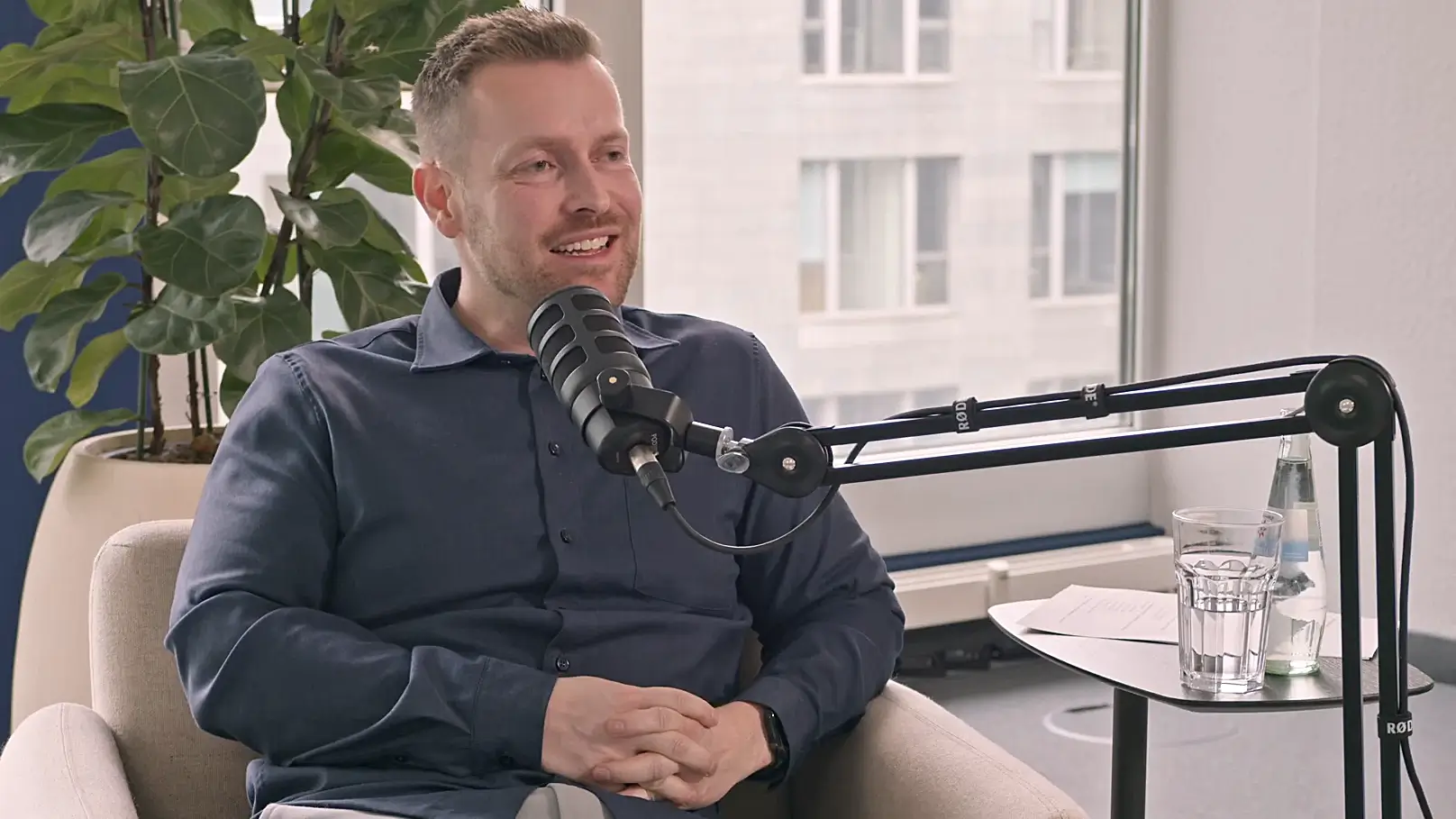

 Hard lessons in logistics, drop-shipping and agency red flags.28/05/2026. Made to measure, down to the centimetre: what DIY stores can't do, Grimberg GmbH turned into a business model. Maurice Grimberg and his sister Leonie run the family company from Sievern, started by their father in 2004 in a hallway, as a modern e‑commerce business with more than 130,000 customers in Germany and the Benelux. How do you notice that an agency doesn't really understand your product – and when do you act on it?Hard lessons in logistics, drop-shipping and agency red flags.
 76,000 fake shops uncovered: the industrial scale of global e‑commerce fraud.18/05/2026. When Matthias Marx started investigating open data leaks on the internet, he came across something he couldn't place at first: thousands of professionally designed web shops on the same technical base, with hidden code to skim credit card data. What followed was the discovery of BogusBazaar, a criminal network of more than 76,000 fake shops, run like a real company from China.76,000 fake shops uncovered: the industrial scale of global e‑commerce fraud.
 Trust rocks the cradle: crowdfunding and D2C from scratch.11/03/2026. Starting from zero with a completely unknown product, you need one thing above all: trust. Hendrik Mahncke, founder of Rock My Sleep, knew that from the start. He tells Jean-Marc Noël how a crowdfunding campaign and an idea on a sheet of paper became a serious e‑commerce business, and how an unknown brand earns the trust of parents.Trust rocks the cradle: crowdfunding and D2C from scratch.
 Market realities: navigating regional differences and subscriptions.12/01/2026. “There are moments when you feel like giving up – and that's often when it becomes clear whether a business will truly grow.” Jean-Marc Noël talks to Marius Rossel, founder and CEO of the Spanish e‑commerce agency TRILOGI, about 25 years of entrepreneurship, technological change and why trust is a decisive success factor in the Spanish market.Market realities: navigating regional differences and subscriptions.
 Always remember what makes you unique – it’s what makes you grow.07/07/2025. Every bag one of a kind, made from real fire hose – that's the idea behind Feuerwear. CEO Robert Klüsener talks to Jean-Marc Noël about sustainable production, building a direct-to-consumer shop and how e‑commerce works when every product exists only once – and why reviews and the Trusted Shops trustmark matter.Always remember what makes you unique – it’s what makes you grow.
 Screw the manual: why zero‑budget success demands your own unconventional path.21/05/2025. Carolin Handschuh started her online shop missforty germany in 2020, out of a personal crisis and without much starting capital. She talks to Jean-Marc Noël about bold decisions, honest marketing and building a strong community – why she made returns chargeable on purpose and what role TikTok plays in building her brand.Screw the manual: why zero‑budget success demands your own unconventional path.
 AI creates opportunity only if customers trust what you do with it.11/03/2025. Data protection, artificial intelligence, influencer marketing – e‑commerce is changing fast. Pixum has been a leader in photo products for 25 years, but competition is tougher than ever. Pixum CEO Daniel Attallah talks to Jean-Marc Noël about how transparency, data security and the Trusted Shops trustmark keep customers' trust.AI creates opportunity only if customers trust what you do with it.
More from #trstd casts
- We require transparent AI. Trust cannot be built without transparency.29/09/2026. Artificial intelligence has long been more than hype – and yet agentic AI is far from reality everywhere. In conversation with Sabrina Engling, Valentina Kerst of the German AI Association (KI Bundesverband) explains where companies stand today, which topics are underestimated and why good data foundations are decisive for the next stage. Kerst sees the biggest gap in data governance: companies need to know which data they have, where it lives, who may access it and how it is structured. Only a reliable data foundation makes it possible to use AI agents meaningfully.We require transparent AI. Trust cannot be built without transparency.
- A large number of reviews is a major factor for AI.22/09/2026. E‑commerce is changing fast: customers expect good products, fair prices and a smooth experience, while AI and agentic commerce change how people discover and buy products. Bastian Kolmsee, COO of Trusted Shops, talks to David Rissmann, Head of Strategy and Chief of Staff at Flaconi, about the beauty retailer's path from start-up to international e‑commerce company.A large number of reviews is a major factor for AI.
- Customer feedback is our main learning source.25/08/2026. 10,000 reviews, AI and a new course in e‑commerce: from fashion brand with physical stores to modern omnichannel retailer, More & More has gone through a full digital transformation. Jean-Marc Noël, CEO and founder of Trusted Shops, talks to Thomas Forstpointner, Head of E‑Commerce at More & More, about the challenges along the way and how trust works digitally.Customer feedback is our main learning source.
- Unfortunately, those who play by the rules are the ones who lose out.13/08/2026. Fake shops and manipulated reviews harm not only consumers but the whole of online retail. Dr. Carsten Föhlisch talks to Stephan Tromp, Deputy Managing Director of the German Retail Federation (HDE), about the growing threat of online fraud and why trust has become the most important currency in e‑commerce.Unfortunately, those who play by the rules are the ones who lose out.
- When emotions play a role, rationality goes out the window.28/07/2026. Why do we often trust a website within seconds? And why is a professional design often enough to switch off our critical thinking? Dr. Carsten Föhlisch talks to Michael Rasimus, head of the eye-tracking lab at DHBW Karlsruhe, about the psychology behind fake shops and online fraud, and what eye tracking reveals about where people really look.When emotions play a role, rationality goes out the window.
- Fake shops with AI: highly professional, fast-rising fraud.29/05/2026. Fake shops can hardly be told apart from real ones any more – AI makes it possible, and the numbers show online fraud is rising sharply. Dr. Carsten Föhlisch talks to Isabelle Rosière, Managing Director of Deutschland sicher im Netz e.V. (DsiN), about the rapid professionalisation of online fraud and what it means for consumers.Fake shops with AI: highly professional, fast-rising fraud.
- Hard lessons in logistics, drop-shipping and agency red flags.28/05/2026. Made to measure, down to the centimetre: what DIY stores can't do, Grimberg GmbH turned into a business model. Maurice Grimberg and his sister Leonie run the family company from Sievern, started by their father in 2004 in a hallway, as a modern e‑commerce business with more than 130,000 customers in Germany and the Benelux. How do you notice that an agency doesn't really understand your product – and when do you act on it?Hard lessons in logistics, drop-shipping and agency red flags.
- 76,000 fake shops uncovered: the industrial scale of global e‑commerce fraud.18/05/2026. When Matthias Marx started investigating open data leaks on the internet, he came across something he couldn't place at first: thousands of professionally designed web shops on the same technical base, with hidden code to skim credit card data. What followed was the discovery of BogusBazaar, a criminal network of more than 76,000 fake shops, run like a real company from China.76,000 fake shops uncovered: the industrial scale of global e‑commerce fraud.
- Differentiating the indifferent for a 20% conversion uplift.14/04/2026. Electricity and gas are invisible products. That's exactly why trust at E wie Einfach is not a phrase but a conversion strategy. Roman Philippi tells Jean-Marc Noël how the Cologne-based E.ON subsidiary brings innovation, customer focus and measurable trust signals together in a highly regulated market – and what difference a trustmark really makes at checkout.Differentiating the indifferent for a 20% conversion uplift.
- Trust rocks the cradle: crowdfunding and D2C from scratch.11/03/2026. Starting from zero with a completely unknown product, you need one thing above all: trust. Hendrik Mahncke, founder of Rock My Sleep, knew that from the start. He tells Jean-Marc Noël how a crowdfunding campaign and an idea on a sheet of paper became a serious e‑commerce business, and how an unknown brand earns the trust of parents.Trust rocks the cradle: crowdfunding and D2C from scratch.
- Market realities: navigating regional differences and subscriptions.12/01/2026. “There are moments when you feel like giving up – and that's often when it becomes clear whether a business will truly grow.” Jean-Marc Noël talks to Marius Rossel, founder and CEO of the Spanish e‑commerce agency TRILOGI, about 25 years of entrepreneurship, technological change and why trust is a decisive success factor in the Spanish market.Market realities: navigating regional differences and subscriptions.
- From negative reviews to pure anticipation: rewriting the customer experience through feedback.03/11/2025. How do you build trust in a market where products need explaining – and scale internationally with it? Kevin Föllmer, Head of Sales at DF Automotive, describes the journey from the first unique selling point (“Which part fits my car?”) to a buying experience that systematically removes uncertainty.From negative reviews to pure anticipation: rewriting the customer experience through feedback.