Unfortunately, those who play by the rules are the ones who lose out.
13/08/202633:40Verifiable trustReputation

The audio player is provided by Letscast, which sets cookies.
Fake shops and manipulated reviews harm not only consumers but the whole of online retail. Dr. Carsten Föhlisch talks to Stephan Tromp, Deputy Managing Director of the German Retail Federation (HDE), about the growing threat of online fraud and why trust has become the most important currency in e‑commerce.
Comment onYouTube (opens in a new window)
Original language: German
In this episode: Dr. Carsten Föhlisch, Stephan Tromp (HDE)
Transcript
# Community of Trust — HDE with Stephan Tromp
Stephan Tromp: I also have the feeling that it always takes far too long to get a fake shop taken down. It takes an extremely long time before the authorities act at all.
Here's another example. The European Commission recently imposed a €200 million fine on Temu for activities in 2024. We're now in 2026.
In those two years, Temu gained massive market share, not only in Germany but across Europe.
And that's what frustrates me.
You can gain market share using unfair methods — whether you're a fake shop or a player like Temu — without following the rules, and in the end the ones who look stupid are the companies that comply with the law.
Dr. Carsten Föhlisch: Hello and welcome to a new episode of our Community of Trust podcast.
I'm Carsten Föhlisch from Trusted Shops, and today we're talking about fake shops and fake reviews and how fraud threatens trust in online retail.
We have another great guest with us today. I'm very pleased to welcome Stephan Tromp, Deputy Managing Director of the German Retail Federation, the HDE.
Welcome, Stephan.
Stephan Tromp: Thank you very much for the invitation. It's great to be here.
Dr. Carsten Föhlisch: Very glad to have you.
Let me start with a few facts.
As the HDE, you represent the interests of around 300,000 retail companies in Germany.
Online retail is obviously an indispensable part of the business today — for most retailers, probably for almost all of them in one form or another.
Trust plays a major role in digital purchasing decisions.
Fake shops and fake reviews don't only harm consumers. They also harm legitimate retailers, because every case of fraud ultimately undermines trust in the retail sector as a whole.
What role does the HDE play when it comes to consumer trust in digital retail?
Stephan Tromp: First of all, the HDE is the leading organisation representing retail in Germany.
We represent the industry's interests vis-à-vis politics, public authorities and other organisations.
And when we talk about trust — consumers' trust in the performance of retail — then the entire retail sector is involved: physical retail, online retail and all the bridges between the two.
We all know that trust is the basis of everything.
That's why we're completely aligned with consumer-protection organisations when it comes to the need to take action against fake reviews and fake shops.
They simply destroy trust.
Dr. Carsten Föhlisch: So trust matters both offline and online.
And if I can put it this way, your members are the reputable retailers.
There are other associations where I sometimes wonder whether all the members are quite as reputable, but with the HDE I have no doubts.
Let me put my glasses on so I can read this properly.
So you represent serious, trustworthy retail, if we can put it that way.
Stephan Tromp: I certainly hope so.
Around 75% of German retail turnover is represented within our organisation.
That ranges from the large food-retail chains to the major non-food retailers, both physical and online.
All the major multichannel companies are members, but the major online players and marketplaces also sit around the table with us and help shape the industry's positions.
Dr. Carsten Föhlisch: And you've been doing that for a very long time. How long has the HDE actually existed?
Stephan Tromp: The HDE itself has existed since 1919.
Its predecessor organisations were founded at the end of the 19th century.
So we can look back on a very long tradition and a great deal of experience.
Dr. Carsten Föhlisch: So you're really an institution in German retail.
And we already work together in a number of areas around trustworthy and reputable commerce.
Let's come back to fake shops and fake reviews.
Has the problem grown? I have the feeling it's become much more prevalent. What's your impression?
Stephan Tromp: It has definitely increased.
If you look at the platform run by the Federation of German Consumer Organisations, there were more than 10,000 reports of fake shops in 2024.
In the first three quarters of 2025, there were already 8,000.
So the trend is clearly upwards.
Investigations by the European Commission show a similar picture.
In the age of AI, where you can build a convincing shop very quickly, unfortunately the problem is growing further.
That makes it all the more important to raise awareness among consumers, educate them and work together with consumers and the authorities to get the issue under control.
Dr. Carsten Föhlisch: We'll come back to the specific measures in a moment.
You can pass laws, but you can also take other forms of action. I'm generally a fan of having as few laws as possible, and I think we're fairly aligned on that.
But let's look at the economic damage.
Can you quantify it at all?
It's probably difficult, but how large is the economic damage to legitimate retailers when consumers lose trust because of fake shops and fake reviews?
Do you have studies or estimates, or is there another way to frame it economically?
Stephan Tromp: Putting an exact number on it is difficult.
For 2026, we're expecting around €96 billion in sales of new products online, plus another roughly €10 billion in refurbished and second-hand products.
So the market will exceed €100 billion.
I don't want to throw out an arbitrary figure for the damage caused by fake shops.
But one thing is clear: every euro that goes into a fake shop where the promised goods are never delivered results in lost trust.
And that's the real problem.
Every single purchase made through a fake shop damages confidence in online retail as a whole.
Whether we can quantify that precisely or not isn't the decisive point.
The decisive point is that these fake shops exist and are unfortunately still able to operate.
Dr. Carsten Föhlisch: So you could say that every case of fraud damages the image of the entire online-retail sector.
Stephan Tromp: Definitely.
Research by the European Commission also shows that around 70% of consumers believe they have already encountered a fake shop at some point.
That gives you a sense of the scale.
And many cases aren't even reported.
Organisations such as Deutschland sicher im Netz point out that people are often embarrassed. They think: how could this have happened to me?
So there's probably a substantial number of unreported cases as well.
Dr. Carsten Föhlisch: That's particularly interesting because even before AI, we always saw fake shops peak around Christmas, when online retail is busiest.
Our Trustmark would be copied during that period as well.
But recently we had a heatwave and suddenly saw the same thing with air-conditioning units.
Have you seen similar cases?
Stephan Tromp: Yes.
We had a shop selling air-conditioning units that was copied one-to-one and turned into a fake shop.
That was interesting because if these heatwaves continue, summer may become a second major season for fake shops.
Generally speaking, current topics and products that are suddenly in high demand naturally attract fraud.
Criminals invest their energy where they believe they can make money.
Dr. Carsten Föhlisch: And it's a huge business.
The products were sold out everywhere, and suddenly there were shops that still had them available — even at normal prices.
At some point, common sense should tell you something isn't right.
But when people urgently want something, they may still fall for it.
Stephan Tromp: You just mentioned a very important point: common sense.
Sometimes I really do shake my head and think: this is obvious.
If a branded product is being offered at 10% of its normal price, your common sense should tell you that this is very unlikely to be legitimate.
But unfortunately the reflex is still: wow, that's cheap.
And then the person has already fallen for the fake shop.
Dr. Carsten Föhlisch: Exactly. That's the education side.
But there are also concrete mechanisms for fighting fake shops or highlighting trustworthy shops.
Let's go a little deeper into one of those: reviews.
We offer reviews ourselves, and genuine reviews are an important source of orientation.
At the same time, reviews are also being used to manufacture trust for fake shops that shouldn't be trusted at all.
Design plays a role too, and it isn't always easy to distinguish genuine from fake reviews.
Consumers often just see some stars and don't question them very much.
Are you seeing the same thing?
Dr. Carsten Föhlisch: How important have reviews become? Do retailers really need them, or does the brand itself count more? How does that work from your perspective?
Stephan Tromp: Reviews are essential in online retail. They provide orientation and create a basis of trust. Especially when things are confusing, customers use them as an anchor.
As the HDE, we are also involved in the initiative Gemeinsam gegen Fake-Bewertungen — Together Against Fake Reviews — because it is so important that both customers and businesses can rely on reviews.
What continues to surprise me is that the authorities do not act against this much more consistently and forcefully. In the end, fake reviews cause economic damage in two directions.
First, customers are induced to make purchases on the basis of false reviews. Second, legitimate retailers that invest a lot of money in proper website design or accurate product descriptions on marketplaces are pushed down the rankings when someone gains an advantage through fake reviews.
So it is manipulative on both sides.
And unfortunately, that is one of the problems: the authorities still do not act strongly enough against fake reviews. And I also expect the platforms themselves to take greater responsibility, because very often they are ultimately hosting these providers.
Dr. Carsten Föhlisch: Exactly. And we already have mechanisms under the Digital Services Act. Which authority would actually be responsible in Germany — the Federal Network Agency?
Stephan Tromp: Primarily the Bundesnetzagentur, yes. In Germany, the Bundesnetzagentur is the Digital Services Coordinator when the DSA applies, but there is also market surveillance more generally.
Dr. Carsten Föhlisch: What kinds of manipulation are you seeing? Is it simply purchased product reviews? Agencies writing positive reviews for clients? It can also work the other way around, with competitors posting negative reviews. What do you encounter?
Stephan Tromp: The cheapest and simplest method is simply buying more positive reviews.
Another method is that when a customer has had a bad experience, the provider that received the poor review tries to push it down or put pressure on the customer, sometimes by threatening legal action and saying: that simply isn't true.
Then you also see businesses trying to counter one negative review with a large number of purchased positive ones in order to push the bad review down.
And of course customers can also be encouraged to leave positive reviews by being offered benefits such as vouchers or discounts.
If that is based on a real customer experience, fair enough — I don't have a problem with that. But quite often it is simply purchased or pushed content.
Dr. Carsten Föhlisch: There is plenty of case law on that as well.
What do your retailers do when they are affected?
I have a case myself at the moment involving Google. A customer who bought individual products from us thanked us with a one-star review. But let's not go too deeply into that.
What can retailers do? Is it effective to fight back, or is it difficult?
Stephan Tromp: It is difficult.
What works best is when a retailer is already operating positively: looking after customers, communicating well and maintaining a close relationship with them. That is extremely important — first of all, you need to have your own house in order.
And if you then notice that someone online may be a direct competitor and appears to be using unfair methods, there are points of contact: us, Trusted Shops, the Wettbewerbszentrale, the vzbv.
You need to raise awareness and, where appropriate, involve the relevant platform. You mentioned Google; Meta is another major one.
All platforms and social-media environments where customers communicate with one another are important. You need to communicate positively there, but you also need to point out misconduct where it exists.
Dr. Carsten Föhlisch: Which isn't always easy.
But let's go back to fake shops for a moment.
Fake shops often have fake reviews as well. By now, they're really two sides of the same coin.
Stephan Tromp: A fake shop needs reviews. How else does it gain visibility? Quite simply by using artificial, false reviews that promote the shop.
Dr. Carsten Föhlisch: And sometimes they even say "verified".
Stephan Tromp: Exactly.
And in the age of AI and AI agents, the whole issue takes on another dimension because an AI agent can react to those signals as well.
We talked earlier about the disadvantages for honest retailers.
A fake shop can push itself to the front and force legitimate retailers further back. That is another form of distortion of competition.
Dr. Carsten Föhlisch: At the German Consumer Day there was also a demand that major platforms should no longer be allowed to advertise fake shops.
That matters across the customer journey. Someone searches for a product, sees an ad somewhere and enters a fake shop through that ad.
And these shops have become extremely professional, as you said, particularly because of AI.
In the past, people were told: look at the language, check whether there is an address in the legal notice.
But that doesn't really help much anymore.
Can consumers still recognise fake shops today? What should they look for?
Stephan Tromp: It is getting harder and harder in the age of AI.
AI makes many things much easier and allows everything to look extremely professional.
You mentioned poor translations. Sorry, but that isn't really a warning sign anymore. With professional AI translation tools, you can produce very good translations. That is no longer a reliable indicator.
What you do at Trusted Shops, for example, is becoming more important: you actually examine providers closely before awarding your Trustmark.
And I also believe consumers have some responsibility for their own money.
They shouldn't buy blindly just because an offer looks fantastic.
You don't have to inspect every tiny detail every single time, but if a branded product is being offered for a fraction of the normal price, all the warning lights should go on.
Dr. Carsten Föhlisch: If it's too good to be true.
Sometimes common sense just switches off.
I always compare it with an offline example. Imagine someone at the railway station saying: "I've got a fantastic television here. Give me €2,000 today and I'll come back tomorrow."
Nobody would do that. But online, people somehow seem more willing to take the risk.
So let's talk about what can actually be done.
We've already said education is important. The HDE also runs campaigns, of course. But appealing to people's common sense isn't always enough.
Fake shops are becoming increasingly professional and, of course, they copy our Trustmark too.
We work with service providers to get such shops technically blocked because legal action alone is often too slow and inefficient.
So technical verification plays a role.
We have #trstd Login, which we may come back to in a moment, and trust also needs to be verifiable for AI agents.
But education is still important. Things like "the price is too good to be true" or "I can only pay in advance" — for me, that is often one of the strongest indicators of a fake shop.
Still, education reaches its limits, doesn't it?
Stephan Tromp: There is a very good initiative from the consumer advice centres, the Fakeshop-Finder.
It should really be made much more widely known so that consumers actively use it and check shops.
The problem, of course, is that fake shops can change domains very quickly. Changing a domain on the global internet can happen in seconds.
That makes it a constant game of cat and mouse.
But again: common sense still matters. If an offer is unbeatable, that should make you suspicious.
Dr. Carsten Föhlisch: We've discussed that in earlier episodes as well.
The Verbraucherzentrale NRW is also represented on our advisory board by Thomas Bradler, and we've spoken with him and others because we use the Fakeshop-Finder ourselves.
But I always point out one limitation: if the traffic light is green, that doesn't mean you can definitely shop there safely.
Stephan Tromp: Exactly. That's the catch.
Dr. Carsten Föhlisch: If it's red, stay away. But green isn't a purchase recommendation. They say that themselves, but many consumers read it that way.
I recently came across a counterfeit Rolex shop through a Facebook ad. The site advertised itself with a green Fakeshop-Finder result.
The funny thing was that even the Fakeshop-Finder result was fake — the domain had a hyphen inserted somewhere.
So everything was fabricated. That shows the limits of these tools.
You mentioned platforms earlier. What would you like to see from platforms and marketplaces, and how is cooperation working today?
Stephan Tromp: We are in dialogue with the platforms.
Advertising revenue is naturally very lucrative for them.
To give one example: the consumer organisations found that the five fake shops with the greatest reach generated around 134 million impressions through Google or Meta.
That gives you an idea of the scale.
I understand why advertising is an attractive business for platforms, but they also bear responsibility for whom they host and whose reach they amplify.
I would like to see platforms cooperate much more closely, for example with the Digital Services Coordinator in Germany, the Bundesnetzagentur, with the vzbv and with us, to develop mechanisms ensuring that advertising can only be placed by businesses that actually operate a legitimate shop.
From my perspective, that is one of the core responsibilities of the platforms.
Dr. Carsten Föhlisch: It doesn't seem to be working perfectly yet.
I saw the Google representative at the German Consumer Day. He was questioned quite hard and said, essentially: "We're already doing a lot, and if we didn't, imagine how much worse it would be."
But I still have the feeling that it simply takes far too long to get fake shops taken down.
Stephan Tromp: It takes too long in general.
Let me give you a different example.
As the HDE, we are also campaigning against Temu and Shein because of unfair business practices: dark patterns, spinning prize wheels, countdown timers that immediately restart when they reach zero, misleading price displays and so on.
It takes far too long before the authorities act.
The European Commission recently imposed a €200 million fine on Temu for activities in 2024. We're now in 2026.
During those two years, Temu gained enormous market share, not only in Germany but throughout Europe.
That is what frustrates me.
You can gain market share through unfair methods — whether you're a fake shop or a platform like Temu — without complying with the rules. And at the end of the day, the ones who look foolish are the companies that comply with the law.
When it comes to platform responsibility, I expect the authorities to give our laws real force by actually enforcing them.
Our president always says: "Pull the plug." I think that's quite a good image.
Dr. Carsten Föhlisch: I could have said that myself.
You are very active on this issue. I've seen you on LinkedIn in Brussels as well.
That brings us neatly to the political and regulatory side.
Which measures do you consider useful?
The Digital Fairness Act is coming, with issues like dark patterns, commerce and probably youth protection.
But does it really target the right people?
To put it provocatively: shouldn't we be targeting the Temus and Sheins rather than German SMEs, which are already subject to a great many rules?
I often think: another law, another law. Wouldn't it be better to enforce the existing rules properly first?
Has that improved? What else would you like to see?
Stephan Tromp: The HDE has a very clear position on this.
We already have enough laws.
What we expect is consistent enforcement of the existing legal framework, not new legislation.
There is now discussion in Brussels about creating another Digital Fairness Act. We say very clearly: we don't need it.
What already exists needs to be enforced, and it needs to be enforced quickly.
Every day that someone who is breaking the rules is allowed to continue operating and continue making money unfairly is a lost day for honest retailers and for consumers.
I would like to see much stronger cooperation among the different authorities at both European and German level, together with the vzbv, with us and with organisations like yours.
The goal should be to get fake shops and fake reviews off the internet as quickly as possible.
Dr. Carsten Föhlisch: In other words, enforcement.
France has tried something in relation to Shein, although perhaps somewhat half-heartedly. It isn't easy.
The customs changes are a first step, but really only a first step, right?
Stephan Tromp: It is an important signal that the €150 customs exemption threshold has been abolished from 1 July.
What we are now observing is that providers such as Temu and Shein are increasingly importing goods into the EU in containers and then sending individual parcels to consumers from within the single market.
We welcome that.
Why? Because it makes it easier for the authorities to inspect goods.
And I also don't think that flying billions of individual parcels from China is the most environmentally friendly method.
Last year, it was almost six billion parcels.
Transporting goods in containers and then distributing them within Europe is simply a more sensible approach.
Dr. Carsten Föhlisch: I completely agree.
I also think it is somewhat unfair that the debate often focuses on adding new obligations for European businesses.
Consumer organisations tend to support the Digital Fairness Act and yet another layer of rules.
Then enforcement examples are made out of German and European retailers, even though they are not the ones using dark patterns or flooding the market with unsafe products.
Those are other actors.
Stephan Tromp: That's exactly the problem.
Our laws can really only be enforced against organisations that are established within the European single market.
There isn't a single agreement between the European Union and a third country that would allow the EU to exercise sovereign enforcement directly against companies in those countries — neither with China nor with the United States.
The EU can enforce its rules within the EU.
So we build up a regulatory framework, and in the first instance it hits our own companies.
Meanwhile, businesses outside Europe continue sending parcels in.
That's why it is so important to reduce the flood of individual parcels and move more imports into containers and distribution centres, where the goods can be inspected more effectively.
Dr. Carsten Föhlisch: Is the HDE also campaigning for agreements that would enable stronger enforcement against Chinese retailers? Those are probably very difficult negotiations.
Stephan Tromp: We played a significant role in getting the customs exemption removed.
In November, we will also get a handling fee on top of that. That will naturally make it less attractive to order low-value items online from China.
So customs measures are one part of the answer.
Looking ahead, I think two other things are crucial.
First: enforce the rules we already have rather than creating new ones.
Second: we need to think together about how to make the whole system more controllable.
In the age of AI agents, that also means asking whether we can create tools that allow automated verification.
Trusted Shops is already working in that area.
Dr. Carsten Föhlisch: You're taking the questions out of my mouth — that's exactly where I wanted to go.
Stephan Tromp: Ultimately, we also have to use new technology in the fight against fake shops and fake reviews.
From my perspective, AI agents are going to play a very important role.
And I would like to see us work together — you, the vzbv, the platforms and others — to determine which tools we can build so that an AI agent can automatically check whether a shop is genuine or fake.
Where do the reviews come from? What are the typical signals? Which signals should the agent take into account before recommending something as trustworthy or untrustworthy?
So this isn't only about regulation. It's also about using new technology together to fight fake shops.
Dr. Carsten Föhlisch: That's exactly it.
We should go to the vzbv together, Stephan.
We're actively working on this.
The Fakeshop-Finder is a first signal, but then what?
Then you could check with Trusted Shops whether you're actually on the genuine brand website.
We recently had another example involving air-conditioning shops.
One legitimate shop had been copied completely. The fake was essentially a mirror of the real site.
But one thing could not be copied: the #trstd Login.
That is the new technology and it is designed to be tamper-resistant. The fake shop couldn't reproduce it.
Everything else looked identical.
So why shouldn't systems link these signals together?
Yes, we're a commercial company and we earn money through consumer protection, but that doesn't mean we can't work hand in hand and complement one another.
That is exactly the point.
AI can create a professional-looking fake shop in seconds, generate fake reviews, and make it almost impossible to distinguish the fake with the naked eye.
So something has to be verified.
You already said that you also see technology as part of the answer.
Stephan Tromp: Absolutely.
Let me add one number from our side.
Once a year, we publish our Online Monitor, which provides transparent market figures for online retail.
Last year, 35% of consumers had already used AI to prepare a purchase.
That number will continue to rise.
Dr. Carsten Föhlisch: I do that myself, of course.
Stephan Tromp: And I'm convinced that products people order repeatedly and that no longer require any advice will increasingly be purchased with the help of AI.
Vacuum-cleaner bags, for example, or cat litter.
We have cats — and who really wants to carry ten kilograms of cat litter through the pedestrian zone?
For recurring purchases like that, AI will play a much greater role.
Consumer organisations may even view that positively because such purchases can potentially become less susceptible to manipulation.
What we need to develop together are transparent standards.
What does a legitimate shop need to look like? What characteristics does it need? Which links or verification mechanisms need to be present so that we can say with confidence: this is a real shop?
You just gave a concrete example.
We need to develop things like that together so that the black sheep can be filtered out — or at least identified.
Dr. Carsten Föhlisch: We're already working on that through the #trstd <protocol>, together with AWS, and we have major pilot customers.
I think that is exactly the idea: a protocol through which the agent receives genuine trust signals and can evaluate them objectively.
It can determine: this is trustworthy.
And there is also someone standing behind that signal and taking responsibility for it — that's us.
That has been our approach for more than 26 years, including Buyer Protection.
Stephan Tromp: I think it's good that you're working in that direction as well.
And if we can do something together, including with consumer-protection organisations, then absolutely.
At the end of the day, it helps consumers and it helps honest retailers if we jointly develop tools that identify fake shops and expose fake reviews, while making legitimate businesses visible and keeping them visible for agents and machines.
That goes back to what I said earlier about positive communication: "I'm a real shop. I comply with the rules. You're safe with me."
Things like statutory warranty rights and all the obligations that continue after the purchase are extremely important to consumers.
Dr. Carsten Föhlisch: Absolutely — especially with all the upcoming repair obligations.
But let's not go any deeper into that or we'll have material for another podcast episode.
I think you've already touched on your wishes, but I'd still like to finish with one question.
If you had three wishes for effectively reducing fake shops and fake reviews, what would they be?
Stephan Tromp: First, consistent enforcement against fraudsters — and quickly.
I would like authorities to act in time to remove bad actors from the market as quickly as possible.
Second, we really need to work together on trustworthy standards.
For me, that is the positive side: distinguish yourself positively.
Don't always focus only on what doesn't work. Focus on what does work.
And third, last but not least: relief for legitimate retailers, not even more regulation.
The rules we already have need to remain manageable and realistically implementable, especially for SMEs.
We shouldn't keep adding another layer of bureaucracy.
Dr. Carsten Föhlisch: That speaks to me.
Thank you very much, Stephan Tromp, for giving us the perspective of German retail.
That's it for today's episode of Community of Trust.
What we've learned is that we need a combination of education, regulation, enforcement and technical standards.
Only by combining those elements can we make trust visible and protect the retail sector as a whole from fake shops and fake reviews.
Thank you again, Stephan, and have a safe journey back to Berlin.
Stephan Tromp: Thank you, Carsten, for having me. I really enjoyed it.
Dr. Carsten Föhlisch: My pleasure.
Share this episode
Get in touch with our team

Because you listened to »Unfortunately, those who play by the rules are the ones who lose out.«
 Always remember what makes you unique – it’s what makes you grow.07/07/2025. Every bag one of a kind, made from real fire hose – that's the idea behind Feuerwear. CEO Robert Klüsener talks to Jean-Marc Noël about sustainable production, building a direct-to-consumer shop and how e‑commerce works when every product exists only once – and why reviews and the Trusted Shops trustmark matter.Always remember what makes you unique – it’s what makes you grow.
 AI creates opportunity only if customers trust what you do with it.11/03/2025. Data protection, artificial intelligence, influencer marketing – e‑commerce is changing fast. Pixum has been a leader in photo products for 25 years, but competition is tougher than ever. Pixum CEO Daniel Attallah talks to Jean-Marc Noël about how transparency, data security and the Trusted Shops trustmark keep customers' trust.AI creates opportunity only if customers trust what you do with it.
 We require transparent AI. Trust cannot be built without transparency.29/09/2026. Artificial intelligence has long been more than hype – and yet agentic AI is far from reality everywhere. In conversation with Sabrina Engling, Valentina Kerst of the German AI Association (KI Bundesverband) explains where companies stand today, which topics are underestimated and why good data foundations are decisive for the next stage. Kerst sees the biggest gap in data governance: companies need to know which data they have, where it lives, who may access it and how it is structured. Only a reliable data foundation makes it possible to use AI agents meaningfully.We require transparent AI. Trust cannot be built without transparency.
 Customer feedback is our main learning source.25/08/2026. 10,000 reviews, AI and a new course in e‑commerce: from fashion brand with physical stores to modern omnichannel retailer, More & More has gone through a full digital transformation. Jean-Marc Noël, CEO and founder of Trusted Shops, talks to Thomas Forstpointner, Head of E‑Commerce at More & More, about the challenges along the way and how trust works digitally.Customer feedback is our main learning source.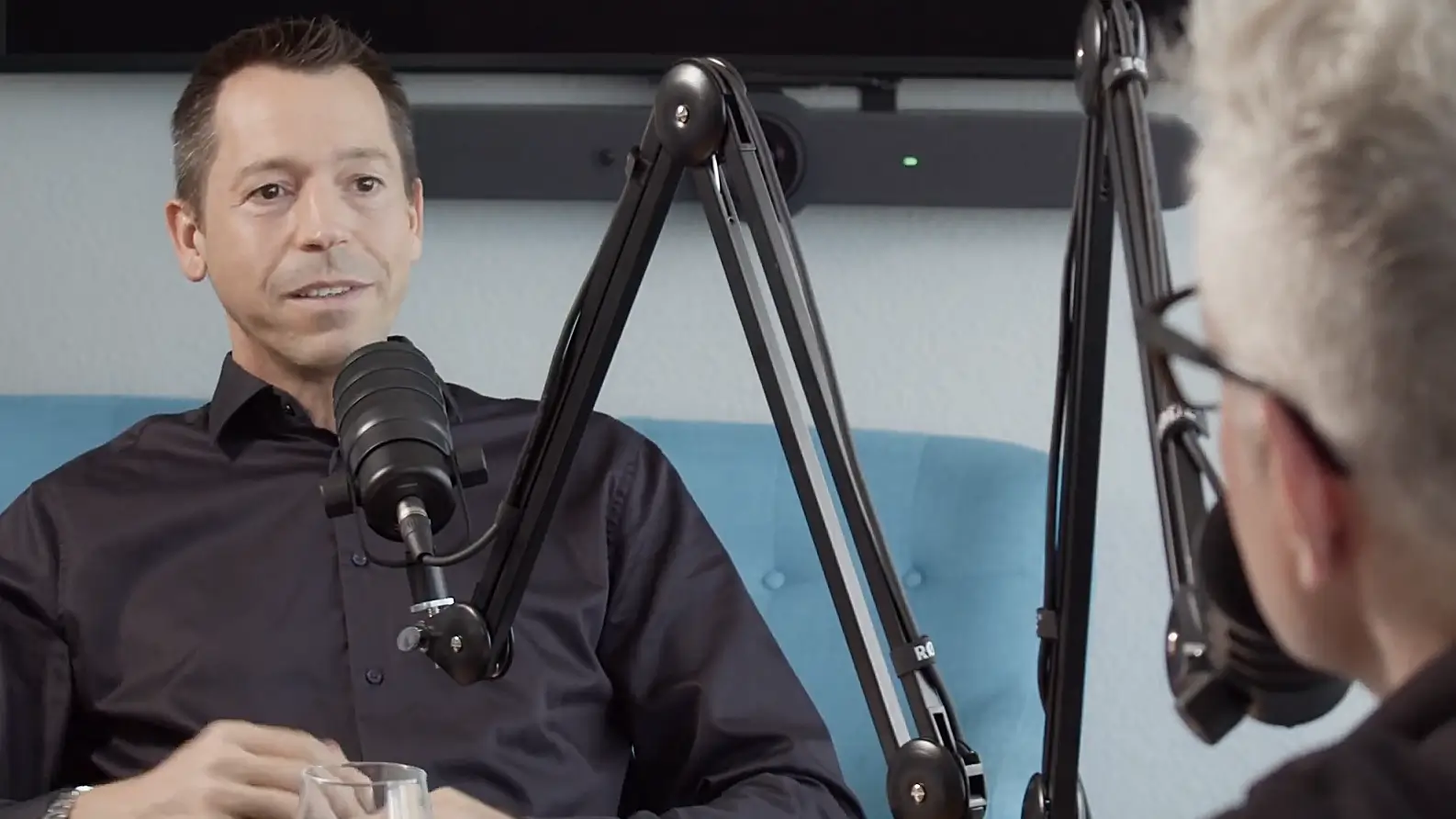
 When emotions play a role, rationality goes out the window.28/07/2026. Why do we often trust a website within seconds? And why is a professional design often enough to switch off our critical thinking? Dr. Carsten Föhlisch talks to Michael Rasimus, head of the eye-tracking lab at DHBW Karlsruhe, about the psychology behind fake shops and online fraud, and what eye tracking reveals about where people really look.When emotions play a role, rationality goes out the window.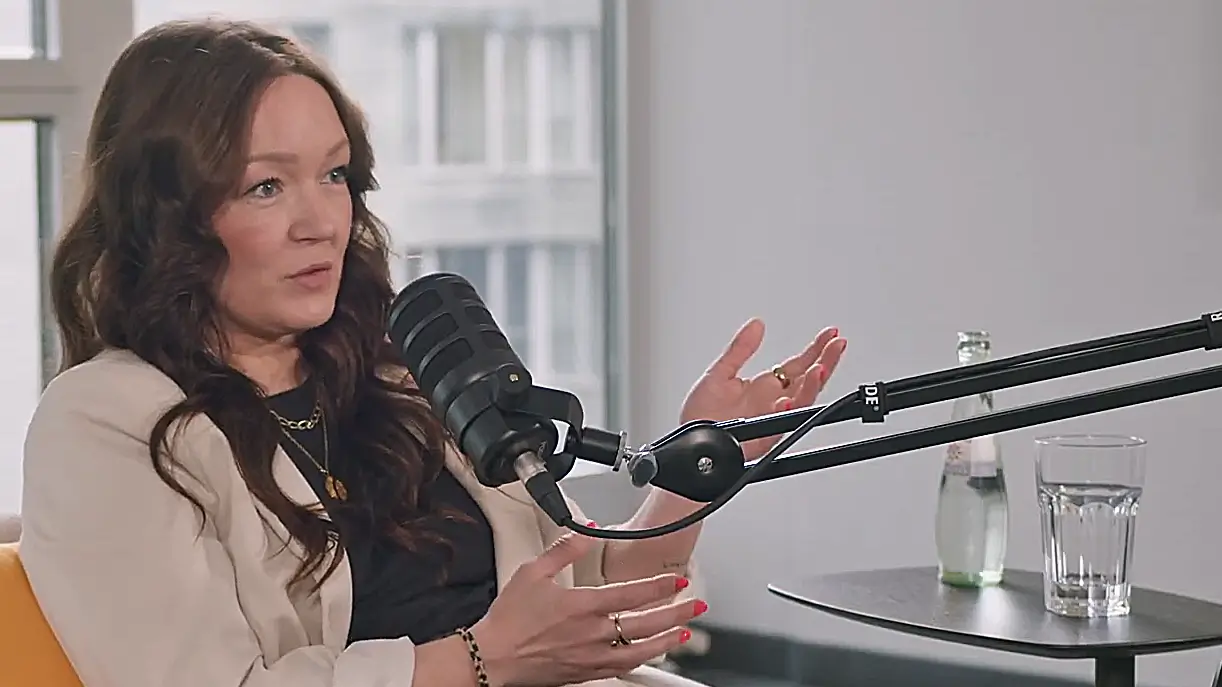
 Fake shops with AI: highly professional, fast-rising fraud.29/05/2026. Fake shops can hardly be told apart from real ones any more – AI makes it possible, and the numbers show online fraud is rising sharply. Dr. Carsten Föhlisch talks to Isabelle Rosière, Managing Director of Deutschland sicher im Netz e.V. (DsiN), about the rapid professionalisation of online fraud and what it means for consumers.Fake shops with AI: highly professional, fast-rising fraud.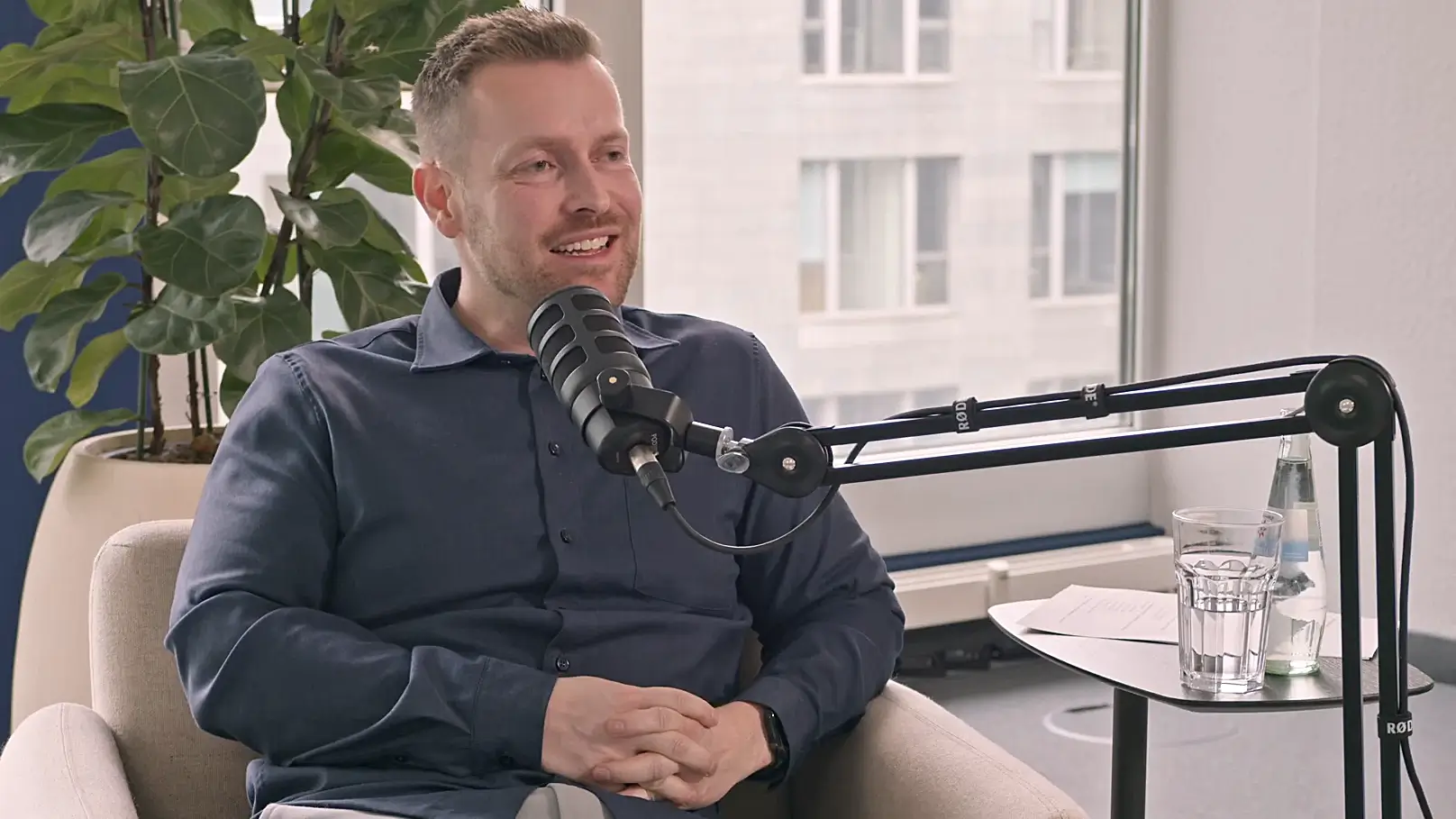

 Hard lessons in logistics, drop-shipping and agency red flags.28/05/2026. Made to measure, down to the centimetre: what DIY stores can't do, Grimberg GmbH turned into a business model. Maurice Grimberg and his sister Leonie run the family company from Sievern, started by their father in 2004 in a hallway, as a modern e‑commerce business with more than 130,000 customers in Germany and the Benelux. How do you notice that an agency doesn't really understand your product – and when do you act on it?Hard lessons in logistics, drop-shipping and agency red flags.
 76,000 fake shops uncovered: the industrial scale of global e‑commerce fraud.18/05/2026. When Matthias Marx started investigating open data leaks on the internet, he came across something he couldn't place at first: thousands of professionally designed web shops on the same technical base, with hidden code to skim credit card data. What followed was the discovery of BogusBazaar, a criminal network of more than 76,000 fake shops, run like a real company from China.76,000 fake shops uncovered: the industrial scale of global e‑commerce fraud.
 Differentiating the indifferent for a 20% conversion uplift.14/04/2026. Electricity and gas are invisible products. That's exactly why trust at E wie Einfach is not a phrase but a conversion strategy. Roman Philippi tells Jean-Marc Noël how the Cologne-based E.ON subsidiary brings innovation, customer focus and measurable trust signals together in a highly regulated market – and what difference a trustmark really makes at checkout.Differentiating the indifferent for a 20% conversion uplift.
 Trust rocks the cradle: crowdfunding and D2C from scratch.11/03/2026. Starting from zero with a completely unknown product, you need one thing above all: trust. Hendrik Mahncke, founder of Rock My Sleep, knew that from the start. He tells Jean-Marc Noël how a crowdfunding campaign and an idea on a sheet of paper became a serious e‑commerce business, and how an unknown brand earns the trust of parents.Trust rocks the cradle: crowdfunding and D2C from scratch.
 From negative reviews to pure anticipation: rewriting the customer experience through feedback.03/11/2025. How do you build trust in a market where products need explaining – and scale internationally with it? Kevin Föllmer, Head of Sales at DF Automotive, describes the journey from the first unique selling point (“Which part fits my car?”) to a buying experience that systematically removes uncertainty.From negative reviews to pure anticipation: rewriting the customer experience through feedback.
 A shop for a beloved brand has to carry its DNA.18/09/2025. Iconic football pictures turned into a complete shop: the 11FREUNDE shop sells wall art, retro jerseys, accessories, books – and tickets. Shop manager Mattias Benesch explains to Jean-Marc Noël why trust in e‑commerce is more than a nice-to-have, and how to sell high-priced products online to a community that is critical of consumerism.A shop for a beloved brand has to carry its DNA.
 Meraki in e‑commerce: how radically authentic storytelling beats a falsified market.24/07/2025. It all started with a few bottles of olive oil and a dream: as a student, Floris Reurts brought fresh olive oil from Crete to the Netherlands – and soon realised he was onto something bigger. Today Gkazas.com is a growing online brand. Floris tells Jean-Marc Noël how he built it by focusing on origin, transparency and trust.Meraki in e‑commerce: how radically authentic storytelling beats a falsified market.
 Your customers are already telling you how to grow – listen to them.28/04/2025. How do you build real trust in the digital age? Beate Rank, CEO and co-founder of Fred & Felia, shares her personal motivation, product development and clever community building. Fred & Felia relies on quality, transparency and genuine customer reviews – and turns dog owners into loyal fans.Your customers are already telling you how to grow – listen to them.
 Be the exact fit when it matters: how precision products win through precise UX.03/04/2025. Custom-made sheet metal, an online configurator and more than 10,000 orders a year: Kantfuchs24 shows how a seemingly simple product can change B2B e‑commerce. The real success factor? Trust. Frank Schulz, COO and co-founder, tells Jean-Marc Noël how speed, precision and customer focus made the company a pioneer.Be the exact fit when it matters: how precision products win through precise UX.
More from #trstd casts
- We require transparent AI. Trust cannot be built without transparency.29/09/2026. Artificial intelligence has long been more than hype – and yet agentic AI is far from reality everywhere. In conversation with Sabrina Engling, Valentina Kerst of the German AI Association (KI Bundesverband) explains where companies stand today, which topics are underestimated and why good data foundations are decisive for the next stage. Kerst sees the biggest gap in data governance: companies need to know which data they have, where it lives, who may access it and how it is structured. Only a reliable data foundation makes it possible to use AI agents meaningfully.We require transparent AI. Trust cannot be built without transparency.

 A large number of reviews is a major factor for AI.22/09/2026. E‑commerce is changing fast: customers expect good products, fair prices and a smooth experience, while AI and agentic commerce change how people discover and buy products. Bastian Kolmsee, COO of Trusted Shops, talks to David Rissmann, Head of Strategy and Chief of Staff at Flaconi, about the beauty retailer's path from start-up to international e‑commerce company.A large number of reviews is a major factor for AI.
- Customer feedback is our main learning source.25/08/2026. 10,000 reviews, AI and a new course in e‑commerce: from fashion brand with physical stores to modern omnichannel retailer, More & More has gone through a full digital transformation. Jean-Marc Noël, CEO and founder of Trusted Shops, talks to Thomas Forstpointner, Head of E‑Commerce at More & More, about the challenges along the way and how trust works digitally.Customer feedback is our main learning source.
- When emotions play a role, rationality goes out the window.28/07/2026. Why do we often trust a website within seconds? And why is a professional design often enough to switch off our critical thinking? Dr. Carsten Föhlisch talks to Michael Rasimus, head of the eye-tracking lab at DHBW Karlsruhe, about the psychology behind fake shops and online fraud, and what eye tracking reveals about where people really look.When emotions play a role, rationality goes out the window.
- Fake shops with AI: highly professional, fast-rising fraud.29/05/2026. Fake shops can hardly be told apart from real ones any more – AI makes it possible, and the numbers show online fraud is rising sharply. Dr. Carsten Föhlisch talks to Isabelle Rosière, Managing Director of Deutschland sicher im Netz e.V. (DsiN), about the rapid professionalisation of online fraud and what it means for consumers.Fake shops with AI: highly professional, fast-rising fraud.
- Hard lessons in logistics, drop-shipping and agency red flags.28/05/2026. Made to measure, down to the centimetre: what DIY stores can't do, Grimberg GmbH turned into a business model. Maurice Grimberg and his sister Leonie run the family company from Sievern, started by their father in 2004 in a hallway, as a modern e‑commerce business with more than 130,000 customers in Germany and the Benelux. How do you notice that an agency doesn't really understand your product – and when do you act on it?Hard lessons in logistics, drop-shipping and agency red flags.
- 76,000 fake shops uncovered: the industrial scale of global e‑commerce fraud.18/05/2026. When Matthias Marx started investigating open data leaks on the internet, he came across something he couldn't place at first: thousands of professionally designed web shops on the same technical base, with hidden code to skim credit card data. What followed was the discovery of BogusBazaar, a criminal network of more than 76,000 fake shops, run like a real company from China.76,000 fake shops uncovered: the industrial scale of global e‑commerce fraud.
- Differentiating the indifferent for a 20% conversion uplift.14/04/2026. Electricity and gas are invisible products. That's exactly why trust at E wie Einfach is not a phrase but a conversion strategy. Roman Philippi tells Jean-Marc Noël how the Cologne-based E.ON subsidiary brings innovation, customer focus and measurable trust signals together in a highly regulated market – and what difference a trustmark really makes at checkout.Differentiating the indifferent for a 20% conversion uplift.
- Trust rocks the cradle: crowdfunding and D2C from scratch.11/03/2026. Starting from zero with a completely unknown product, you need one thing above all: trust. Hendrik Mahncke, founder of Rock My Sleep, knew that from the start. He tells Jean-Marc Noël how a crowdfunding campaign and an idea on a sheet of paper became a serious e‑commerce business, and how an unknown brand earns the trust of parents.Trust rocks the cradle: crowdfunding and D2C from scratch.
 Market realities: navigating regional differences and subscriptions.12/01/2026. “There are moments when you feel like giving up – and that's often when it becomes clear whether a business will truly grow.” Jean-Marc Noël talks to Marius Rossel, founder and CEO of the Spanish e‑commerce agency TRILOGI, about 25 years of entrepreneurship, technological change and why trust is a decisive success factor in the Spanish market.Market realities: navigating regional differences and subscriptions.
- From negative reviews to pure anticipation: rewriting the customer experience through feedback.03/11/2025. How do you build trust in a market where products need explaining – and scale internationally with it? Kevin Föllmer, Head of Sales at DF Automotive, describes the journey from the first unique selling point (“Which part fits my car?”) to a buying experience that systematically removes uncertainty.From negative reviews to pure anticipation: rewriting the customer experience through feedback.
- A shop for a beloved brand has to carry its DNA.18/09/2025. Iconic football pictures turned into a complete shop: the 11FREUNDE shop sells wall art, retro jerseys, accessories, books – and tickets. Shop manager Mattias Benesch explains to Jean-Marc Noël why trust in e‑commerce is more than a nice-to-have, and how to sell high-priced products online to a community that is critical of consumerism.A shop for a beloved brand has to carry its DNA.