Always remember what makes you unique – it’s what makes you grow.
07/07/202531:07ReputationVerifiable trust

The audio player is provided by Letscast, which sets cookies.
Every bag one of a kind, made from real fire hose – that's the idea behind Feuerwear. CEO Robert Klüsener talks to Jean-Marc Noël about sustainable production, building a direct-to-consumer shop and how e‑commerce works when every product exists only once – and why reviews and the Trusted Shops trustmark matter.
Comment onYouTube (opens in a new window)
Original language: German
In this episode: Jean‑Marc Noël, Robert Klüsener (Feuerwear)
Transcript
# Community of Trust — Feuerwear with Robert Klüsener
Jean-Marc Noël: What makes your online shop so special?
Robert Klüsener: We make unique pieces. That means we take the actual bag — not just the product model, but that one individual bag with that one print on it — photograph it, put it online, and then it exists only once.
So it's basically: what you see is what you get.
Jean-Marc Noël: Community of Trust, the podcast. Today with Robert Klüsener, CEO of Feuerwear.
I'm Jean-Marc Noël, founder of Trusted Shops, and today I'm particularly pleased because I'm speaking with Robert Klüsener, CEO of Feuerwear.
Feuerwear specialises in sustainable bags and accessories made — and this is the remarkable part — from recycled fire hoses.
Robert, how do you do that? How did you come up with the idea? What exactly is it?
Robert Klüsener: Hi Jean-Marc. It's great to be here.
I run the company together with my brother, and we've been doing it for quite a few years now.
My brother studied clothing technology. In 2005, he wrote his diploma thesis, and it was already about upcycling.
From that, more or less, a very classic founder story emerged.
He experimented with all kinds of materials — surf sails, coffee sacks and so on.
And eventually it all started in the basement at our mother's house.
Jean-Marc Noël: So really the classic basement founder story.
Robert Klüsener: Exactly.
Then a few friends wanted the products. Then friends of friends wanted them.
At some point, he thought: maybe I can turn this into a business.
That was in 2005, when he wrote his diploma thesis.
And in 2009, I joined the company.
Jean-Marc Noël: Incredible.
You have to explain this in a little more detail because it's such an unusual story.
You take this material — the fire hose.
Where do you get it from? How does the whole thing work?
Robert Klüsener: Fire hoses have to be checked after every deployment.
If a hose can no longer hold the required pressure, it is taken out of service.
I can't tell you the exact pressure values anymore, but they are definitely tested under considerable pressure.
We then collect the retired hoses from fire stations in large pallet cages, so that the process makes both economic and ecological sense.
And then comes the part that is probably the most important thing we do and one of the things that differentiates us from most other companies.
Our raw material is always different.
A hose can be of different ages, different thicknesses and different qualities.
I think we assess each hose according to around 20 or 30 criteria and then assign it to the product for which it is suitable.
We don't order a nylon fabric in a precisely defined thickness and quality and then make a backpack from it.
We receive the hose first and then have to decide what it is suitable for.
That is actually one of the most important steps in our production process.
Jean-Marc Noël: So essentially, you first have to inspect the material and then decide which product can be made from it.
Robert Klüsener: Exactly.
And that is a process we've refined and automated over the years.
Jean-Marc Noël: That's really impressive.
And it's not an easy material to work with. It's incredibly robust.
Who cuts it? How does an actual product come into being?
Robert Klüsener: We have a two-part production process.
The first step is exactly what I just described.
We inspect the hoses and sort them.
Internally, we have defined around 20 or 30 different hose qualities.
Jean-Marc Noël: All coming from fire stations?
Robert Klüsener: Exactly.
Then the material is cut to the correct lengths for the sewing operation.
After that, we wash it again.
We only accept material that has already been cleaned as part of the hose-maintenance process, but we wash it again anyway.
Then it goes into the sewing process.
Once the material has been allocated correctly, it can be processed more or less normally, together with the other components — zips, additional webbing and so on.
Jean-Marc Noël: You told me something about this before the recording that I think is really worth telling.
Who actually does this part of the work?
Robert Klüsener: For us, that is done by SBK, a workshop for people with disabilities.
That came about partly by coincidence.
We used to do that work ourselves. It was extremely labour-intensive and required a lot of people.
We're based on a small commercial site in Bickendorf.
SBK temporarily rented space there because, I believe, the roof of their own hall had to be renovated.
That's how we got to know one another.
Today they are located across the road from us.
The people there really enjoy the work because they can see what comes out at the end.
They are cool products that they can identify with, and for us the collaboration works really well too.
Jean-Marc Noël: That's a wonderful story.
First of all, congratulations on how the company has developed.
You started in 2005, so you've now been building this for around 20 years.
But the company didn't really start online.
Today the online shop is incredibly important.
How did that development happen over the years?
Robert Klüsener: We come from a completely different world.
We started in bricks-and-mortar retail.
That was our main growth area at the beginning.
We went to trade fairs.
We're broadly in the "living and giving" category, where retailers are always looking for unusual products.
In the early years, trade fairs worked extremely well for us.
We scaled up fairly quickly to around 300 or 400 retailers.
We always had an online shop, but it was something that ran on the side.
I think the first one may even have been a 1&1 webshop or something similar.
For a long time, an agency managed it for us, again more as a side project.
Then around 2014 or 2015, we realised something was changing.
So we strategically started focusing more strongly on the online business.
And, to be completely honest, we were very fortunate that by the time COVID arrived, online had already become our largest sales channel.
That worked very well for us during that period.
Since then, the world has changed completely — and so has the company.
Previously, we were essentially a brand for physical retail that you could also buy online.
Today, I would say we're a D2C brand that you can also buy in retail.
Jean-Marc Noël: So exactly the other way round.
Tell us more about building that channel.
What makes your online shop special, and what are the biggest challenges you see for that channel today?
Robert Klüsener: There is one thing that genuinely differentiates us from probably 99.99% of online-shop operators, and that is entirely due to the material.
We create unique pieces.
When you process a used fire hose, every individual section is already different.
Some hoses have printing on them.
Some have inspection numbers.
Some have traces from actual deployments.
That is why we started very early on to sell the products in the online shop exactly as they are.
We take the individual bag — not just the product model, but that specific bag with that specific print on it — photograph it, put it online, and then there is only one of it.
So: what you see is what you get.
It really is a completely unique item.
Technically, that has consequences.
Our shop is a complete custom development.
Jean-Marc Noël: So you have a team that continuously develops the shop around that special requirement.
Do you think that was a good decision?
Robert Klüsener: The nice thing is that the functionality is exactly what we need.
After the early 1&1 shop days, we moved to Magento many years ago.
That was pretty difficult because we always had to force Magento very hard into doing what we needed.
It didn't work particularly well for us.
The downside of a completely custom system is that the world is becoming more and more connected.
You need more and more interfaces.
If you have a Shopify shop, for example, you might just tick a box, install a module and it runs.
For us, development usually has to get involved.
That can be quite laborious.
Jean-Marc Noël: So the customisation is great, but for the future you'd sometimes like a little more standardisation.
And you already mentioned services such as customer reviews.
You have extremely good customer reviews.
Before the recording, we ran your Feuerwear reviews through our own AI summary, and the result was very positive.
You score particularly well on quality.
There were a few negative points too, but overall the picture was excellent.
I believe you originally built your own review system.
Why are you using Trusted Shops now?
Robert Klüsener: The latest point at which it became clear was when we had to be able to prove that reviews were verified.
We would have had to invest a huge amount of development work to achieve that ourselves.
At first, we switched only the shop reviews.
Then we also moved the product reviews.
And honestly, it is much more convenient than the system we had stitched together ourselves.
Jean-Marc Noël: I understand.
And it works well.
You have more than 4,000 reviews with a score of 4.86, which is genuinely impressive.
That is becoming particularly important because there are currently competition-law cases where shops are being challenged for displaying reviews without being able to prove where they came from.
So I would say: good choice, Robert.
But today your online shop is your most important channel.
What are the biggest challenges for Feuerwear over the next few years?
Robert Klüsener: The online-marketing game is changing extremely quickly.
And, as in almost everything at the moment, AI plays a huge role.
But I think the change actually brings us back to the core.
You need to know your customers well and understand them properly.
It is becoming more about product fit and having the right message.
Jean-Marc Noël: How do you do that in concrete terms?
When you talk about marketing today, do you work with an agency?
Do you do it yourselves?
What would your advice be to listeners and viewers who are seeing this shift in the market?
Robert Klüsener: I think what is becoming extremely important is that, as a brand, you maintain a unified view of the whole system — regardless of whether you do it internally or externally.
What doesn't work anymore is silo thinking.
You can't have one person running Meta for you and looking only at ROAS there, while someone else runs Google and looks only at ROAS there.
Then you turn Google up because the ROAS looks good, while in reality some of those conversions may have been generated by Meta earlier in the journey.
You need a very good overall view now.
And you need to understand it yourself.
As the managing director of a D2C brand, I don't think you can say anymore: I have no idea how all of this works, I just trust my agencies.
That doesn't work.
Jean-Marc Noël: So what works for your business?
Which channels do you invest in, and where is your own know-how strongest?
Robert Klüsener: One advantage we have, because we've been in the market for such a long time, is a very large existing customer base.
We can communicate with them very well.
Organic social media is important.
And email is incredibly important too.
Email is sometimes still laughed at as old-fashioned, but email CRM is extremely important.
Then, of course, there are social-media ads.
For brands of our size, that is one of the reach channels you can still manage relatively well.
Jean-Marc Noël: And I assume you work more with specialists than with one huge agency?
You control things more directly yourselves.
Robert Klüsener: Exactly.
What we've done is connect marketing, tracking and company controlling much more closely.
That goes back to what I said earlier.
You need to see the whole picture.
You need to know what you're spending at the front and what actually remains at the back.
Jean-Marc Noël: Are there specific tools that have really helped you?
Robert Klüsener: More and more of it is being integrated directly into the platforms.
Take Meta, for example.
We've moved a long way away from manually defining detailed audiences and exclusions.
That is what I meant by saying it increasingly comes back to understanding the customer and having the right message.
With Meta, you mainly need the right creative now.
Jean-Marc Noël: And you've built that capability internally as well?
Robert Klüsener: We've always produced the actual content internally — graphics, video and the creative output.
We've tried outsourcing that from time to time.
But you need to understand the customer.
An agency can potentially do that.
But you also need to know what is happening inside the company.
Our experience over the years is that the content needs to come from the company itself.
Jean-Marc Noël: You've mentioned several times that you have very satisfied customers.
You are clearly in contact and in dialogue with them, and you receive information directly.
Can you tell us a little more about that?
I think that authenticity is really one of your trademarks.
Robert Klüsener: Today, you have all the possibilities you need.
You don't need to commission a panel study where somebody stops random people in the street and asks what they think of Feuerwear.
We have customers.
We can simply email them.
We did that quite recently and got an astonishingly high response rate.
A lot of people were willing to engage.
We then asked some of them specifically whether we might contact them personally.
We're still working through that now.
Our customers are incredibly open.
You can simply call them and talk to them about what matters to them.
It's actually a very simple thing.
Jean-Marc Noël: Looking back, were there things that really didn't go well?
Things you tried that simply didn't work and that taught you something?
Robert Klüsener: Absolutely.
Especially online, we've made all the agency mistakes.
So my "wisdom" definitely comes from experience.
We did the whole thing of managing individual channels very separately.
We had huge KPI tables that ultimately only ever looked at the individual silos.
We've done all of that.
Jean-Marc Noël: So your advice is really to keep the know-how yourself.
Especially now, as AI develops and the tools and platforms become more sophisticated, understand your customer, do part of it yourself, and bring in specialists where they genuinely help.
But the overall message and the overall understanding have to remain with you.
Robert Klüsener: Exactly.
You need to understand how D2C marketing works.
It is actually becoming less and less of a specialist craft in some areas.
A few years ago, perhaps you really needed a specialist for everything.
But if you open Meta Ads Manager today, it isn't beautiful, but technically I would trust my eleven-year-old son to operate it.
That doesn't mean he would understand what he was doing strategically.
But the mechanics themselves aren't the hard part anymore.
Jean-Marc Noël: You and your brother have been doing this for quite a few years now.
One thing we spoke about beforehand, and something I recognise from Trusted Shops too, is that after a while you can become blind to your own business.
You told me that every few years you almost forget that you need to remind people that your products are made from fire hoses.
For you, that's completely obvious.
But customers don't necessarily know it.
How do you deal with that?
Robert Klüsener: Talking to customers is probably the best solution.
If you ask someone why they bought the product, they may say: because it's made from a fire hose.
And then you think: right. Of course.
That's the reminder you need.
Jean-Marc Noël: I also think you use reviews on your website in an exemplary way.
For retailers listening: take a look at the Feuerwear website. I think the reviews are integrated extremely well.
But the world is changing very quickly, especially because of AI.
What does that mean for you?
Where do you see the challenges, and of course the opportunities?
Robert Klüsener: As an entrepreneur, I tend to see the opportunities.
A lot of things are becoming easier, especially technical processes.
We recently changed one of our systems.
In the past, you'd have needed developers to connect it to the shop.
Today, it can be three clicks and the system is connected.
You don't necessarily need someone who has worked in that system for five years just to understand how to create a campaign or send an email.
That's one side.
But at the same time, everything is moving faster and faster.
So you have to understand your core business even better.
You need to make good products that customers actually need.
And you mustn't forget to tell customers what you actually do.
Jean-Marc Noël: Exactly.
And the speed of change is extraordinary.
I recently saw figures in a report by Mary Meeker about the state of AI.
One slide compared how long major companies took to reach 10 million users.
Netflix took years.
OpenAI did it in a matter of months.
You can feel that acceleration everywhere.
So yes, you need to understand your business, but you also need to keep an eye on which tools and developments are emerging.
Is there anything you've tried that has genuinely helped with campaigns or content?
Robert Klüsener: You already mentioned it.
ChatGPT is still the most flexible tool we use.
A lot is happening in graphics too.
I honestly don't know whether we'll still need graphic designers in the same way in five years.
Even today, with ChatGPT, you can do quite a lot.
Recently, I wanted to show my team a quick idea for the website.
I described it to ChatGPT and it essentially built the thing.
That is impressive.
Jean-Marc Noël: So ChatGPT is still the big all-rounder for you.
Are there other specialised tools?
Robert Klüsener: One tool we're currently connecting is Klar.
At the moment, we do something similar with an Excel spreadsheet, but that's obviously very time-consuming.
Jean-Marc Noël: Briefly explain what Klar does.
Robert Klüsener: Klar is basically the dream dashboard for a managing director because it brings everything together.
It combines things like Analytics and Meta data.
It connects the shop data and even fulfilment cost data.
So in the end, you can really see what came out of a campaign, how much discount you gave, all the way down to EBIT.
Jean-Marc Noël: Would you recommend it?
Robert Klüsener: I don't know yet.
We're only just starting with it.
I'm hoping for a lot from it.
Jean-Marc Noël: We also see it being used by more and more retailers, so it is definitely worth looking at.
We've spoken a lot about AI.
But AI isn't only about individual tools. It is also changing how we live.
And for a brand like Feuerwear, which relies so heavily on authenticity, there is another side to it.
With AI, producing fake content has become incredibly easy and cheap.
We've entered an era of fakes — fake news, fake reviews, fake shops, fake websites, and sometimes even fake politicians.
That has a major impact.
What does that mean for you?
Robert Klüsener: That's the other side of AI.
Take ChatGPT itself.
You can't rely on it 100%.
It makes life easier in many areas, but every now and then I ask it: where did you get that information from?
And then it basically says: actually, that information doesn't exist.
As the amount of information grows, maintaining control over what is true — especially where it really matters — is going to become a huge challenge.
Jean-Marc Noël: What does that mean for your marketing and for the future?
You have unique products and a genuine story.
Do you think you need to make that even clearer so people recognise that this is the real thing?
Robert Klüsener: Marketing has always been a large process of trial and error for me.
You can listen to what customers say, but customers are biased towards their own perspective too.
For example, we once ran a survey asking: what should a wallet look like?
Ask 100 customers and you'll get 100 different answers.
That doesn't really help.
Then we started asking more specific questions.
Do you still carry coins, given that people pay digitally more often?
How many cards do you need?
Then you start getting useful answers.
So part of it is simply asking the right questions.
And marketing itself is changing too.
As I said earlier, you don't have to manually steer every target audience in the same way anymore.
The creative finds its way.
So you have to iterate and test.
The big issue is speed.
The output of marketing and the speed of testing have increased dramatically.
Ten years ago, we might have run three or four campaigns a year.
Now we're testing every week.
Jean-Marc Noël: One final question.
You're running the company together with your brother.
How does that work in practice?
Is there friction? Is there creative tension?
How have you organised yourselves over the years?
Robert Klüsener: I think the good thing is that we genuinely complement one another.
That makes life much easier.
I'm more of the numbers person.
I come from marketing and sales.
Martin comes strongly from the product side. He's more of the practical, hands-on person.
So our areas of expertise are relatively clear.
Of course, after 20 years, we've both picked up parts of each other's skills.
But if I were the one sewing the bags, we'd still be bankrupt.
That hasn't changed.
And personally, I actually find working with my brother an advantage.
If I have a really bad day and come into the office, he sees it and knows how to deal with it.
If it were somebody else, I'd have to be more careful about what I say so I don't create unnecessary tension.
My brother knows me.
He thinks: okay, bad day today, I'll leave him alone.
And then it works.
Jean-Marc Noël: Robert, thank you very much for all these insights and for this fantastic story.
First of all, congratulations again.
I also love the fact that it's a Cologne story.
You're based in Bickendorf, here in Cologne, and that made me particularly happy to have this conversation.
That's it for this episode of Community of Trust.
I hope you've picked up valuable, practical tips that you can use directly in your own online shop.
If you enjoyed the episode, subscribe to the podcast and of course leave us a review.
That helps us reach more online retailers.
You'll find more insights and valuable resources at Trusted Shops.
And, of course, become part of our community.
Robert, thank you very much for joining us. It was a pleasure.
Robert Klüsener: Thank you.
Jean-Marc Noël: See you in the next episodes, and good luck with your online business.
Community of Trust. Subscribe wherever you get your podcasts.
Share this episode
Get in touch with our team

Because you listened to »Always remember what makes you unique – it’s what makes you grow.«
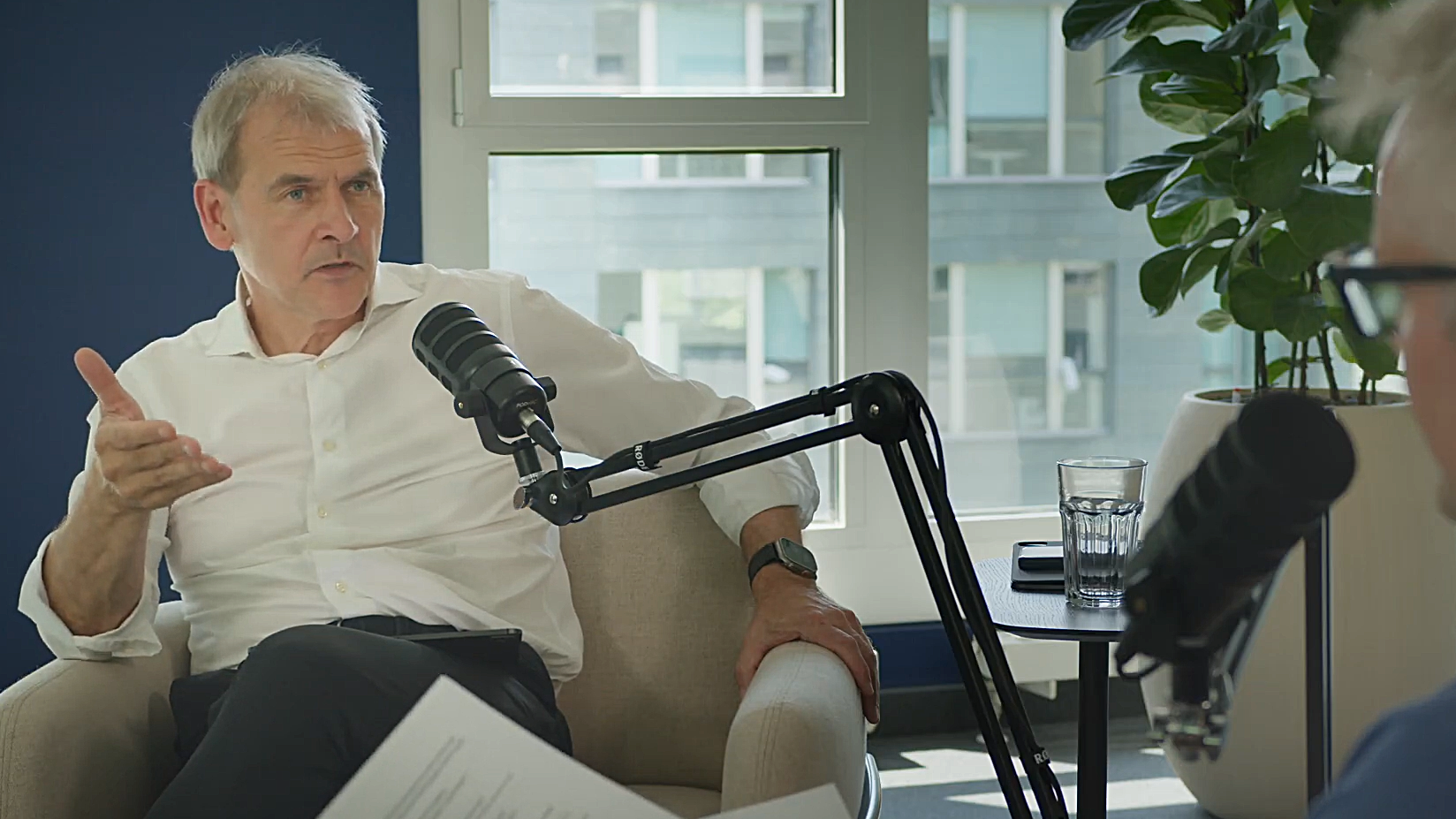
 Unfortunately, those who play by the rules are the ones who lose out.13/08/2026. Fake shops and manipulated reviews harm not only consumers but the whole of online retail. Dr. Carsten Föhlisch talks to Stephan Tromp, Deputy Managing Director of the German Retail Federation (HDE), about the growing threat of online fraud and why trust has become the most important currency in e‑commerce.Unfortunately, those who play by the rules are the ones who lose out.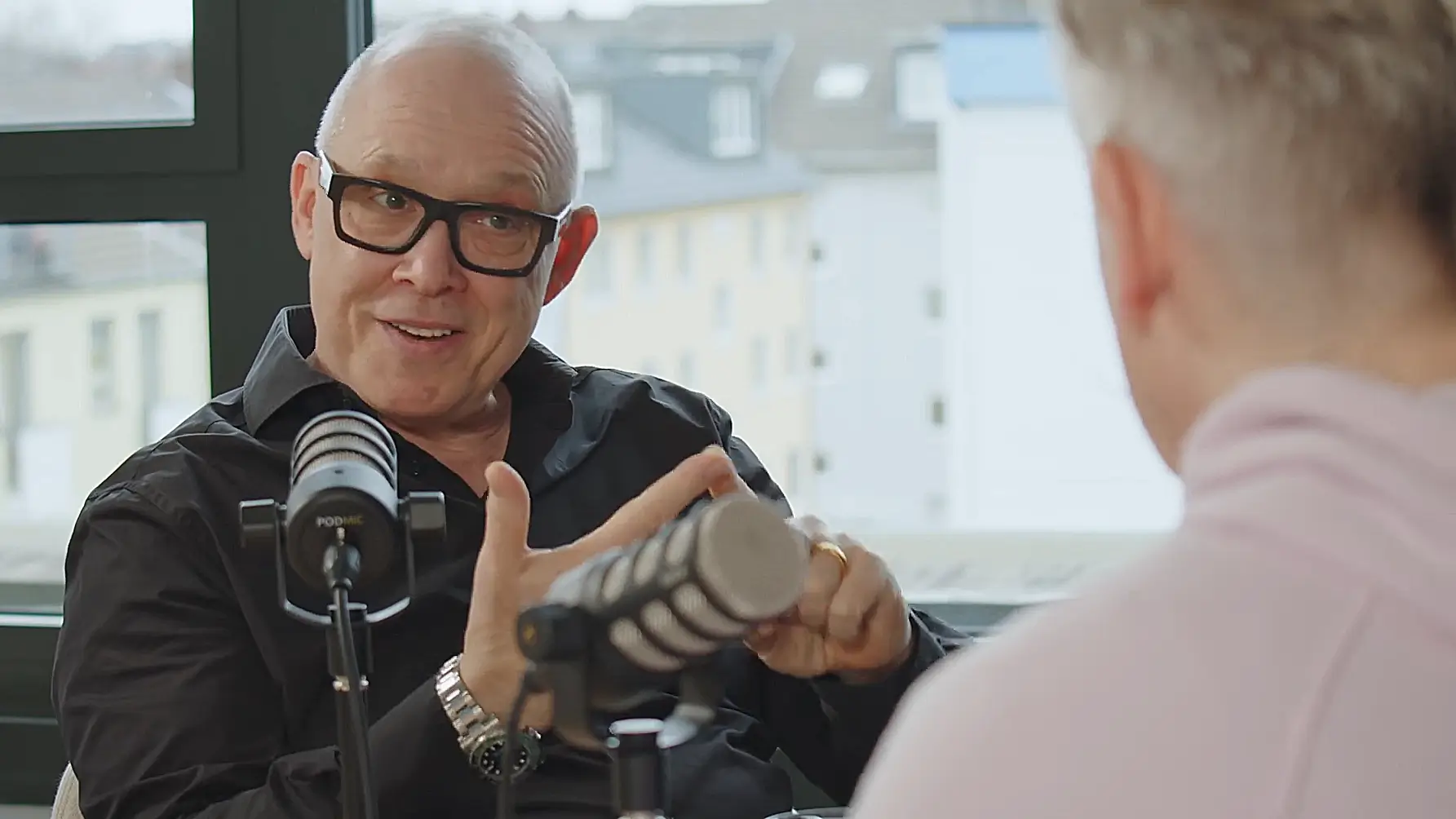
 AI creates opportunity only if customers trust what you do with it.11/03/2025. Data protection, artificial intelligence, influencer marketing – e‑commerce is changing fast. Pixum has been a leader in photo products for 25 years, but competition is tougher than ever. Pixum CEO Daniel Attallah talks to Jean-Marc Noël about how transparency, data security and the Trusted Shops trustmark keep customers' trust.AI creates opportunity only if customers trust what you do with it.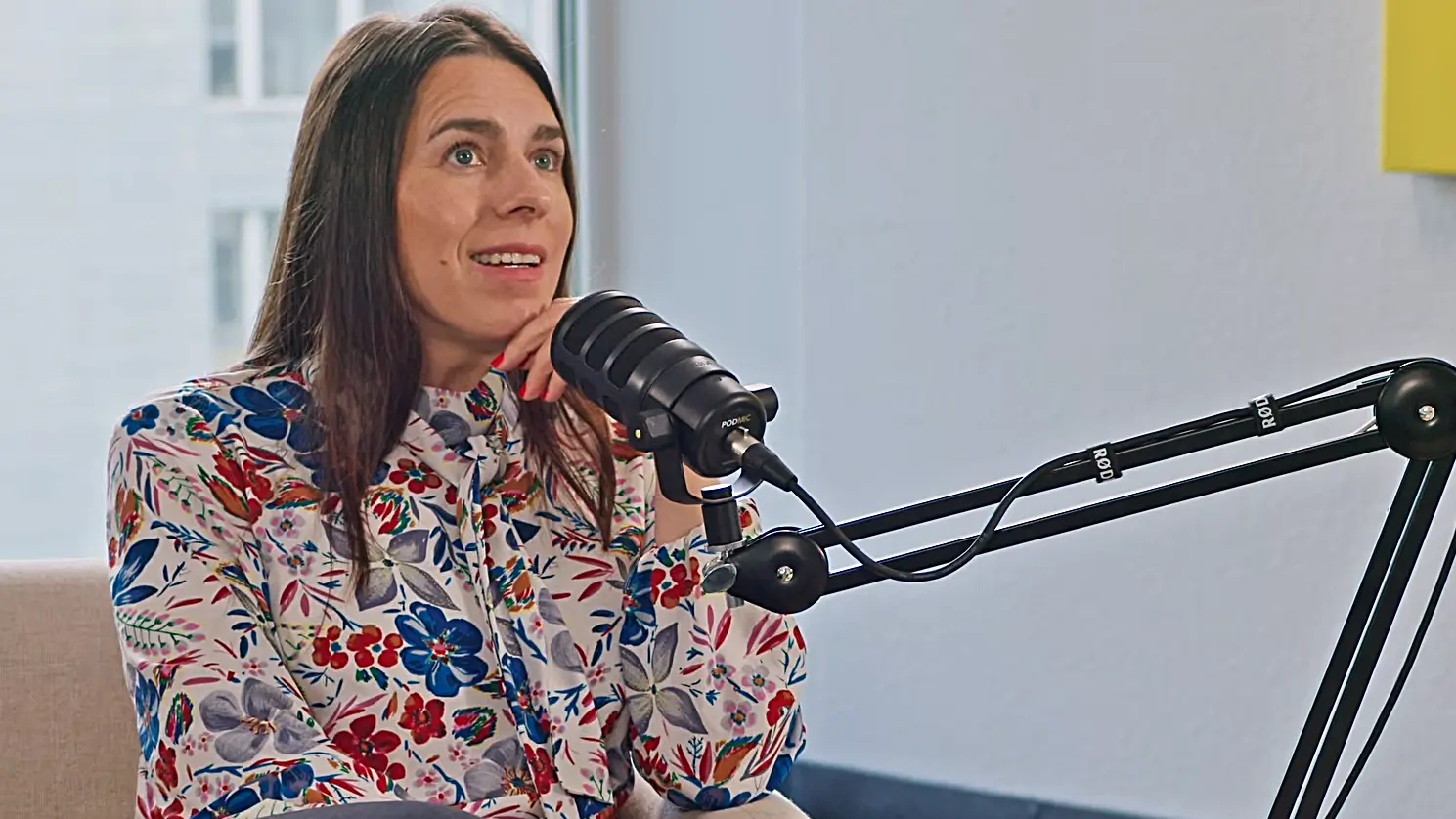
 We require transparent AI. Trust cannot be built without transparency.29/09/2026. Artificial intelligence has long been more than hype – and yet agentic AI is far from reality everywhere. In conversation with Sabrina Engling, Valentina Kerst of the German AI Association (KI Bundesverband) explains where companies stand today, which topics are underestimated and why good data foundations are decisive for the next stage. Kerst sees the biggest gap in data governance: companies need to know which data they have, where it lives, who may access it and how it is structured. Only a reliable data foundation makes it possible to use AI agents meaningfully.We require transparent AI. Trust cannot be built without transparency.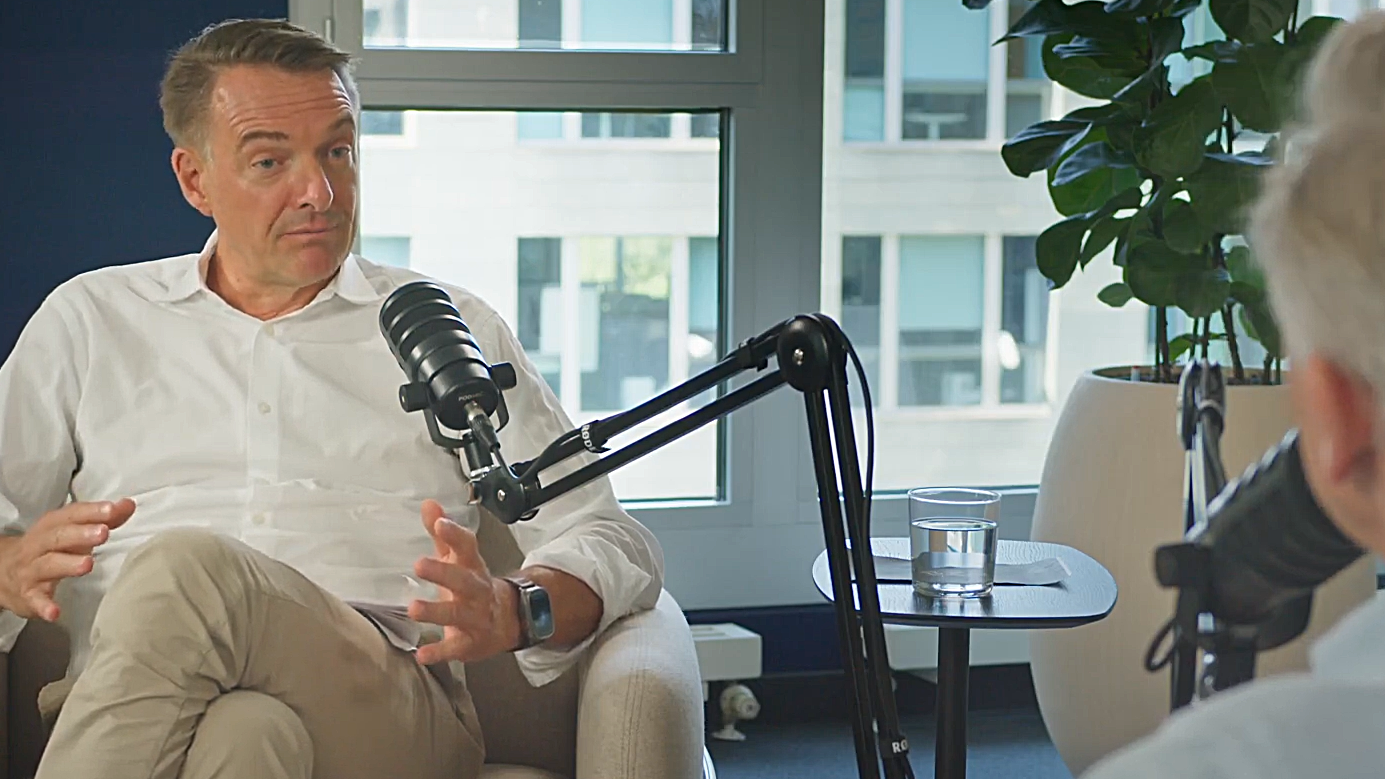
 Customer feedback is our main learning source.25/08/2026. 10,000 reviews, AI and a new course in e‑commerce: from fashion brand with physical stores to modern omnichannel retailer, More & More has gone through a full digital transformation. Jean-Marc Noël, CEO and founder of Trusted Shops, talks to Thomas Forstpointner, Head of E‑Commerce at More & More, about the challenges along the way and how trust works digitally.Customer feedback is our main learning source.
 When emotions play a role, rationality goes out the window.28/07/2026. Why do we often trust a website within seconds? And why is a professional design often enough to switch off our critical thinking? Dr. Carsten Föhlisch talks to Michael Rasimus, head of the eye-tracking lab at DHBW Karlsruhe, about the psychology behind fake shops and online fraud, and what eye tracking reveals about where people really look.When emotions play a role, rationality goes out the window.
 Fake shops with AI: highly professional, fast-rising fraud.29/05/2026. Fake shops can hardly be told apart from real ones any more – AI makes it possible, and the numbers show online fraud is rising sharply. Dr. Carsten Föhlisch talks to Isabelle Rosière, Managing Director of Deutschland sicher im Netz e.V. (DsiN), about the rapid professionalisation of online fraud and what it means for consumers.Fake shops with AI: highly professional, fast-rising fraud.

 Hard lessons in logistics, drop-shipping and agency red flags.28/05/2026. Made to measure, down to the centimetre: what DIY stores can't do, Grimberg GmbH turned into a business model. Maurice Grimberg and his sister Leonie run the family company from Sievern, started by their father in 2004 in a hallway, as a modern e‑commerce business with more than 130,000 customers in Germany and the Benelux. How do you notice that an agency doesn't really understand your product – and when do you act on it?Hard lessons in logistics, drop-shipping and agency red flags.
 76,000 fake shops uncovered: the industrial scale of global e‑commerce fraud.18/05/2026. When Matthias Marx started investigating open data leaks on the internet, he came across something he couldn't place at first: thousands of professionally designed web shops on the same technical base, with hidden code to skim credit card data. What followed was the discovery of BogusBazaar, a criminal network of more than 76,000 fake shops, run like a real company from China.76,000 fake shops uncovered: the industrial scale of global e‑commerce fraud.
 Differentiating the indifferent for a 20% conversion uplift.14/04/2026. Electricity and gas are invisible products. That's exactly why trust at E wie Einfach is not a phrase but a conversion strategy. Roman Philippi tells Jean-Marc Noël how the Cologne-based E.ON subsidiary brings innovation, customer focus and measurable trust signals together in a highly regulated market – and what difference a trustmark really makes at checkout.Differentiating the indifferent for a 20% conversion uplift.
 Trust rocks the cradle: crowdfunding and D2C from scratch.11/03/2026. Starting from zero with a completely unknown product, you need one thing above all: trust. Hendrik Mahncke, founder of Rock My Sleep, knew that from the start. He tells Jean-Marc Noël how a crowdfunding campaign and an idea on a sheet of paper became a serious e‑commerce business, and how an unknown brand earns the trust of parents.Trust rocks the cradle: crowdfunding and D2C from scratch.
 From negative reviews to pure anticipation: rewriting the customer experience through feedback.03/11/2025. How do you build trust in a market where products need explaining – and scale internationally with it? Kevin Föllmer, Head of Sales at DF Automotive, describes the journey from the first unique selling point (“Which part fits my car?”) to a buying experience that systematically removes uncertainty.From negative reviews to pure anticipation: rewriting the customer experience through feedback.
 A shop for a beloved brand has to carry its DNA.18/09/2025. Iconic football pictures turned into a complete shop: the 11FREUNDE shop sells wall art, retro jerseys, accessories, books – and tickets. Shop manager Mattias Benesch explains to Jean-Marc Noël why trust in e‑commerce is more than a nice-to-have, and how to sell high-priced products online to a community that is critical of consumerism.A shop for a beloved brand has to carry its DNA.
 Meraki in e‑commerce: how radically authentic storytelling beats a falsified market.24/07/2025. It all started with a few bottles of olive oil and a dream: as a student, Floris Reurts brought fresh olive oil from Crete to the Netherlands – and soon realised he was onto something bigger. Today Gkazas.com is a growing online brand. Floris tells Jean-Marc Noël how he built it by focusing on origin, transparency and trust.Meraki in e‑commerce: how radically authentic storytelling beats a falsified market.
 Your customers are already telling you how to grow – listen to them.28/04/2025. How do you build real trust in the digital age? Beate Rank, CEO and co-founder of Fred & Felia, shares her personal motivation, product development and clever community building. Fred & Felia relies on quality, transparency and genuine customer reviews – and turns dog owners into loyal fans.Your customers are already telling you how to grow – listen to them.
 Be the exact fit when it matters: how precision products win through precise UX.03/04/2025. Custom-made sheet metal, an online configurator and more than 10,000 orders a year: Kantfuchs24 shows how a seemingly simple product can change B2B e‑commerce. The real success factor? Trust. Frank Schulz, COO and co-founder, tells Jean-Marc Noël how speed, precision and customer focus made the company a pioneer.Be the exact fit when it matters: how precision products win through precise UX.
More from #trstd casts
- We require transparent AI. Trust cannot be built without transparency.29/09/2026. Artificial intelligence has long been more than hype – and yet agentic AI is far from reality everywhere. In conversation with Sabrina Engling, Valentina Kerst of the German AI Association (KI Bundesverband) explains where companies stand today, which topics are underestimated and why good data foundations are decisive for the next stage. Kerst sees the biggest gap in data governance: companies need to know which data they have, where it lives, who may access it and how it is structured. Only a reliable data foundation makes it possible to use AI agents meaningfully.We require transparent AI. Trust cannot be built without transparency.

 A large number of reviews is a major factor for AI.22/09/2026. E‑commerce is changing fast: customers expect good products, fair prices and a smooth experience, while AI and agentic commerce change how people discover and buy products. Bastian Kolmsee, COO of Trusted Shops, talks to David Rissmann, Head of Strategy and Chief of Staff at Flaconi, about the beauty retailer's path from start-up to international e‑commerce company.A large number of reviews is a major factor for AI.
- Customer feedback is our main learning source.25/08/2026. 10,000 reviews, AI and a new course in e‑commerce: from fashion brand with physical stores to modern omnichannel retailer, More & More has gone through a full digital transformation. Jean-Marc Noël, CEO and founder of Trusted Shops, talks to Thomas Forstpointner, Head of E‑Commerce at More & More, about the challenges along the way and how trust works digitally.Customer feedback is our main learning source.
- Unfortunately, those who play by the rules are the ones who lose out.13/08/2026. Fake shops and manipulated reviews harm not only consumers but the whole of online retail. Dr. Carsten Föhlisch talks to Stephan Tromp, Deputy Managing Director of the German Retail Federation (HDE), about the growing threat of online fraud and why trust has become the most important currency in e‑commerce.Unfortunately, those who play by the rules are the ones who lose out.
- When emotions play a role, rationality goes out the window.28/07/2026. Why do we often trust a website within seconds? And why is a professional design often enough to switch off our critical thinking? Dr. Carsten Föhlisch talks to Michael Rasimus, head of the eye-tracking lab at DHBW Karlsruhe, about the psychology behind fake shops and online fraud, and what eye tracking reveals about where people really look.When emotions play a role, rationality goes out the window.
- Fake shops with AI: highly professional, fast-rising fraud.29/05/2026. Fake shops can hardly be told apart from real ones any more – AI makes it possible, and the numbers show online fraud is rising sharply. Dr. Carsten Föhlisch talks to Isabelle Rosière, Managing Director of Deutschland sicher im Netz e.V. (DsiN), about the rapid professionalisation of online fraud and what it means for consumers.Fake shops with AI: highly professional, fast-rising fraud.
- Hard lessons in logistics, drop-shipping and agency red flags.28/05/2026. Made to measure, down to the centimetre: what DIY stores can't do, Grimberg GmbH turned into a business model. Maurice Grimberg and his sister Leonie run the family company from Sievern, started by their father in 2004 in a hallway, as a modern e‑commerce business with more than 130,000 customers in Germany and the Benelux. How do you notice that an agency doesn't really understand your product – and when do you act on it?Hard lessons in logistics, drop-shipping and agency red flags.
- 76,000 fake shops uncovered: the industrial scale of global e‑commerce fraud.18/05/2026. When Matthias Marx started investigating open data leaks on the internet, he came across something he couldn't place at first: thousands of professionally designed web shops on the same technical base, with hidden code to skim credit card data. What followed was the discovery of BogusBazaar, a criminal network of more than 76,000 fake shops, run like a real company from China.76,000 fake shops uncovered: the industrial scale of global e‑commerce fraud.
- Differentiating the indifferent for a 20% conversion uplift.14/04/2026. Electricity and gas are invisible products. That's exactly why trust at E wie Einfach is not a phrase but a conversion strategy. Roman Philippi tells Jean-Marc Noël how the Cologne-based E.ON subsidiary brings innovation, customer focus and measurable trust signals together in a highly regulated market – and what difference a trustmark really makes at checkout.Differentiating the indifferent for a 20% conversion uplift.
- Trust rocks the cradle: crowdfunding and D2C from scratch.11/03/2026. Starting from zero with a completely unknown product, you need one thing above all: trust. Hendrik Mahncke, founder of Rock My Sleep, knew that from the start. He tells Jean-Marc Noël how a crowdfunding campaign and an idea on a sheet of paper became a serious e‑commerce business, and how an unknown brand earns the trust of parents.Trust rocks the cradle: crowdfunding and D2C from scratch.
 Market realities: navigating regional differences and subscriptions.12/01/2026. “There are moments when you feel like giving up – and that's often when it becomes clear whether a business will truly grow.” Jean-Marc Noël talks to Marius Rossel, founder and CEO of the Spanish e‑commerce agency TRILOGI, about 25 years of entrepreneurship, technological change and why trust is a decisive success factor in the Spanish market.Market realities: navigating regional differences and subscriptions.
- From negative reviews to pure anticipation: rewriting the customer experience through feedback.03/11/2025. How do you build trust in a market where products need explaining – and scale internationally with it? Kevin Föllmer, Head of Sales at DF Automotive, describes the journey from the first unique selling point (“Which part fits my car?”) to a buying experience that systematically removes uncertainty.From negative reviews to pure anticipation: rewriting the customer experience through feedback.