How trust evolves along the customer journey.
27/10/202637:38E‑commerceAI
Trust is no longer built on a website alone. As AI reshapes the customer journey, trust must evolve from something people can see into something machines can verify.
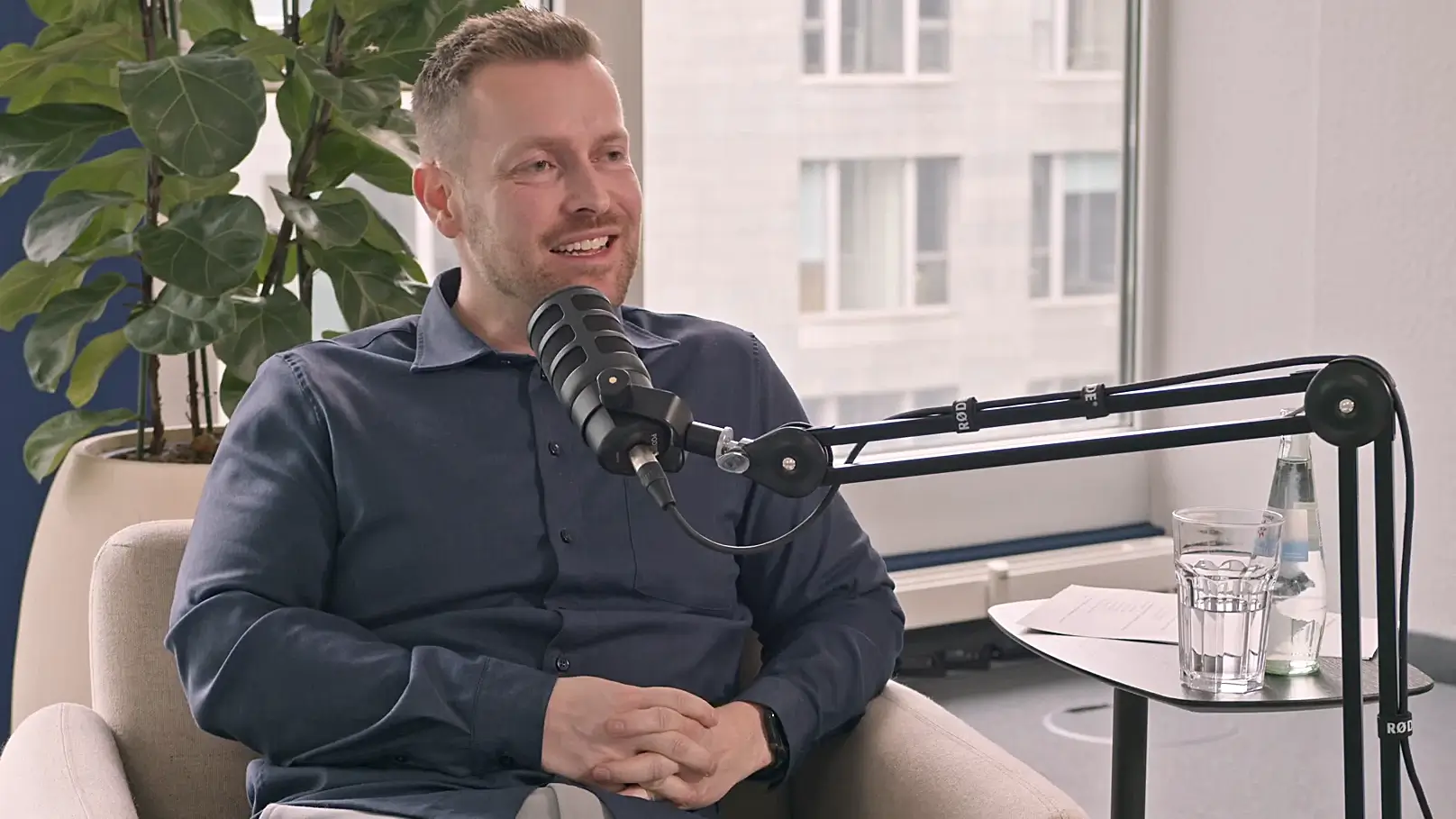
Martin Gross-Albenhausen, Managing Director at bevh, joins Dr Carsten Föhlisch to explore how changing customer expectations, online fraud and AI are transforming e-commerce.
Why does trust begin long before a purchase? What happens when fake shops, fake reviews and counterfeit trustmarks become increasingly convincing? And how can retailers establish trust when AI agents become intermediaries between brands and their customers?
A conversation about the changing role of online shops, the importance of authentic, machine-readable trust signals and why trust is becoming an essential part of the infrastructure of digital commerce.
Comment onYouTube (opens in a new window)
Original language: German
In this episode: Dr. Carsten Föhlisch, Martin Gross-Albenhausen (bevh)
Transcript
# Community of Trust — bevh
Episode 20: How trust evolves along the customer journey.
Guest: Martin Gross-Albenhausen, Managing Director, bevh
Host: Dr Carsten Föhlisch, Trusted Shops
Original language: German
Video: https://www.youtube.com/watch?v=1ar9a8jxGpM
English translation of the German YouTube transcript. Lightly edited for readability. Speaker attribution is inferred from the dialogue; timestamps mark the beginning of passages.
---
Carsten Föhlisch [00:00]: AI also creates new opportunities. But with all the good things you can do with it, at what point does AI become a problem for trust?
Martin Gross-Albenhausen [00:06]: A person can be deceived by a website that looks wonderful. But AI itself cannot be deceived by a beautiful website.
Carsten Föhlisch [00:25]: Hello, everyone, and welcome to a new episode of our podcast, Community of Trust. My name is Carsten Föhlisch from Trusted Shops.
Our topic today is trust in ecommerce, between customer expectations, fraud and AI. I have a wonderful guest here: Martin Gross-Albenhausen, Managing Director at bevh, the German E-Commerce and Distance Selling Association. I'm delighted to have you here. Hello, Martin.
Martin Gross-Albenhausen: Hello, Carsten. It's lovely to be here.
Carsten Föhlisch [00:52]: You've been at bevh for just as long as I've been at Trusted Shops, or perhaps even longer?
Martin Gross-Albenhausen: Probably, yes.
Carsten Föhlisch [01:05]: Perhaps you could briefly explain who you represent and what you do?
Martin Gross-Albenhausen [01:13]: It's important to us to represent every kind and every form of ecommerce. We have large marketplaces, online pure players, multichannel retailers from the bricks-and-mortar sector and, of course, traditional catalogue retailers, all of whom now primarily do business through ecommerce.
We also have live shopping providers, traditional teleshopping providers and live shopping platforms. So basically, the whole spectrum of businesses involved in ecommerce in Germany today.
Carsten Föhlisch [01:40]: Exactly. And ecommerce has become so much a part of retail that we scarcely need to discuss it any more. It's impossible to imagine retail without it, even though turnover in physical retail is still somewhat higher.
Purchasing decisions are now also made across numerous ecommerce channels and touchpoints, as we call them. Retailers therefore have to build trust at many different points and expect that trust in return.
So trust doesn't arise on the website alone, but across the entire digital ecosystem.
You've been following this for many years. When you look at ecommerce today, what do you think is the biggest change that consumers perhaps don't consciously notice in their everyday lives?
Martin Gross-Albenhausen [02:25]: I think the biggest change is that ecommerce has become so normal. Buying through distance selling is really nothing special any more.
When I started looking at the subject around 25 years ago, around the turn of the millennium, it accounted for a small percentage of retail. It was a rather specialised business involving catalogues.
Today, ecommerce plays some part in virtually every purchasing decision, because the alternative is always there in your pocket, on your phone. It's always an option.
And that also shows how much trust people now place in a purchase that takes place not in their immediate vicinity, but at a distance.
Carsten Föhlisch [03:21]: Yes, it's become normal.
I was just thinking of an example of my own. I bought an electric bike for my daughter. I went to a shop here in Cologne, but they didn't have the right frame size. So I looked online again and found another physical shop, also in Cologne, where I eventually bought it. It was around €900 cheaper and the right size.
It really is seamless now; one channel flows into the other. I could just as easily have ordered it online, but we wanted to collect it straight away.
From the retailers' perspective, what do you think has changed most over recent years? Is it this normality, the fact that everyone has to be involved, or something else?
Martin Gross-Albenhausen [03:58]: Well, certainly the competition that has arisen as a result. When everyone is doing it, but at different levels of professionalism, there's a lot of dumb money in the market. That drives up the cost of paid advertising.
More generally, though, it also means that we're facing much more competition and have to demonstrate ever more convincingly why it's worth buying from us rather than someone else.
Carsten Föhlisch [04:27]: And what does that mean for customer relationships, for the relationship between retailers and customers?
Martin Gross-Albenhausen [04:33]: On the one hand, the relationship between retailers and customers is becoming more fleeting. But if I do it properly, it can also become more intense.
What do I mean by that? These days, you no longer have to chase the last click, as we did in the early years of ecommerce, trying to get as close to the purchase as possible. The idea was that the last touch was the decisive one.
You would work very much at the lower end of the funnel and try to be the one people clicked on once they had effectively made their purchasing decision.
By now, we know that competition there is so fierce that, to build a stable relationship – one that generally only becomes profitable with the second or third purchase – you have to start building that relationship much earlier.
That includes all forms of marketing, but particularly upper-funnel marketing, which takes place on social media, for example.
Carsten Föhlisch [05:26]: OK, that's perfect, actually. That's what I was going to ask next. It's always about trust, of course, which is also our subject. Where does trust actually originate?
It's no longer just the website or the marketplace rating. You've said that it actually starts much earlier.
Martin Gross-Albenhausen [05:35]: I've spent a lot of time looking at marketing. In traditional online marketing, there was always this triad, these three different forms.
There were owned channels: the website, perhaps your own newsletter – everything where I can be myself, so to speak, where people know me and where I can fully express who I am.
That's certainly one of the main anchors: all the trust signals I can give customers through a professional website, which today can be imitated so easily. I think we should talk about that again. But it's an important anchor.
The second area, for a long time, was paid channels. In many cases I could build trust simply through the type of advertising I did, through what I did and how I became something tangible for the customer.
And then there were earned channels, where people talked about me on social media.
That illustrates the variety involved, because each of these channels has a different set of signals I need to provide and creates a different kind of trust.
That's what makes it so demanding these days to establish a genuinely stable foundation, a stable relationship with the customer. That's what it's really about: having the customer place their trust in me not just once, but repeatedly, and keep buying from me. It's become quite complex.
Carsten Föhlisch [07:02]: I was just thinking about the other side of that, too. The day before yesterday I was at an event where the topic was fake shops again, but also online fraud more generally.
Fraudsters with fake shops often use Meta ads and the like to get people into their fake shops in the first place. So they're also trying to manipulate that part of the journey. We'll come to that in the next section.
But I think the important point here is that it's not just about the website, the shop itself or the marketplace, but everything around it, across the entire customer journey.
Martin Gross-Albenhausen [07:37]: What's interesting is something you mentioned earlier. You were in a physical shop and didn't find the right product.
Conversely, I'd say that today it's a trust signal if a business with an online presence is actually accessible in the physical world, too.
That can itself be a trust signal, a huge advantage at a time when other trust signals, particularly the professionalism of an online shop, are no longer the game changer they once were: 'This must be a good retailer because it looks really professional.'
Carsten Föhlisch [08:10]: That's not enough. All of that can be faked. And that actually brings us to the next topic.
It's not just about fake shops, but about all the trust signals that are being faked: fake reviews, ads that lead to fake shops, as we've just discussed.
As a consumer, I need to be able to rely on those reviews being genuine, for example. If I want to go to Zalando, it should be the real Zalando and not some clone of it. All of that exists.
We've also discussed fake-shop-as-a-service several times, BogusBazaar and other operations in China where you can order 150 cloned shops at the touch of a button.
That ultimately damages the overall reputation of legitimate retailers, of the industry itself. Some people then lose all interest in shopping online.
How do you see it? To what extent are fraud and fakes now affecting your retailers as well?
Martin Gross-Albenhausen [09:11]: Massively, simply because the types of fraud where the retailer is the victim are becoming increasingly sophisticated.
Sometimes several parties are involved. In some cases my customer is defrauded first, and then I'm defrauded. There are all sorts of different ways fraud can happen.
We're talking here about a particular kind where a fraudulent retailer essentially contaminates my customer relationship.
That's a major issue, too. We see images and entire product offerings being stolen, being scraped.
Within our association, we have a dedicated task force focused solely on fraud scenarios. We need to keep up with developments, recognise what's happening at an early stage and share that knowledge with our members, including knowledge about mitigation – how to deal with these situations.
Carsten Föhlisch [10:12]: And the other way round, which I'd be interested to hear about: the retailer is also defrauded? What kinds of cases are those?
Martin Gross-Albenhausen [10:18]: In the context of marketplaces, for example, someone might copy a product from my shop and list it themselves. A customer orders from them, they order from me, they have a different price and collect the money from the customer.
I'm supposed to deliver it somewhere, and the customer thinks they've already paid. I'm the one left holding the bag, supplying the goods on behalf of the fake retailer.
That's a relatively well-known issue, which is why we can talk about it here.
There are lots of different scenarios in which multiple parties are defrauded and the retailer becomes a victim because, for example, a customer or a customer's account has already been compromised. That happens.
Carsten Föhlisch [11:10]: And the consequences are dramatic. As I say, not only for the individual retailer who becomes a victim, but for the whole industry, because consumers naturally think, 'OK, I've been caught out once, so I don't want to shop online any more', or at least not for a while.
It's becoming increasingly difficult.
At what points in the purchasing process do you think trust is particularly easy to imitate or abuse? Before the purchase, at checkout or after the purchase? Where do you see the problem?
Martin Gross-Albenhausen [11:46]: As I said, it's a complex process. I think that after checkout it becomes apparent fairly quickly whether a retailer is trustworthy.
Between the order and delivery, there are lots of opportunities to communicate in ways that help build trust.
But if you look at it from the other side, at where the most fraud can occur, the entire area before the purchase is much, much more relevant. As a fraudster or a counterfeiter, I have to convince the customer of my integrity. And I try to pull out all the stops.
You've already mentioned several things. One of them is professionalism, and unfortunately, in that respect, AI is our greatest enemy, so to speak.
Today, as you mentioned with BogusBazaar, AI makes it easy to clone or fake an entire shop at a high level of professionalism.
There's also the whole issue of fake reviews. It's no longer easy for customers to make sense of those either.
And we know from painful experience that trustmarks are often counterfeited, too.
Our task as an association, and that of others, is to show people that the trustmark alone isn't enough. You need to click on it and take a close look at how the mechanism behind it works.
Carsten Föhlisch [13:09]: And even that is being counterfeited increasingly well. I've also heard that AI or agentic engineering now makes it possible for a hacker of fairly average intelligence, let's say, to carry out kernel exploits or other attacks at the lowest system level using scripts bought on the dark web.
So it's becoming easier and easier, and the damage is enormous.
Incidentally, there's something really interesting about the topic of what happens after the purchase. At that event at Fraunhofer in Darmstadt, there was also a professor of sociology who had examined fraud more generally over the centuries.
In some cases, particularly with CEO fraud, the fraud is actually repeated afterwards. The approach is something like, 'We've noticed you've been defrauded and we can now clear it up, but you need to put out some bait. You need to transfer another five million.' And in some cases people actually do it.
It's really quite astonishing how quickly this is gaining pace and momentum, particularly with AI.
I think we've already covered most of it. We've been mentioning AI all along, but I'd still like to go into it in a little more depth.
On the negative side, of course, it's easier to clone or fake shops, create scripts and carry out attacks in seconds and on a large scale.
But AI also has a positive side, and as a retailer you have to embrace it to a certain extent if you want to remain part of the game.
AI creates opportunities, too. You can search more effectively, perhaps find answers directly, simplify processes and simply generate images.
We've seen that already. You no longer need a model; you can create AI-generated images, although they now need to be labelled. But AI also creates new opportunities.
At what point do you think that changes? With all the good things you can do with it, at what point does AI become a problem for trust?
Martin Gross-Albenhausen [15:19]: The easy answer would be when it starts hallucinating. Perhaps it attributes something to a retailer that the retailer never actually said anywhere, or hallucinates a link to a retailer where the customer then finds exactly the opposite of what was described, creating confusion.
That's one way in which the extraction of knowledge that takes place through AI can ultimately turn against the specialist retailer, the former custodian of that specialist knowledge.
I think there's a real danger of consumers gradually developing the feeling that they can no longer simply trust the source of the knowledge, because AI may have made a mistake somewhere.
Customers may no longer make that distinction very precisely. Instead, they'll ask in general, 'Well, is any of this actually correct?'
And then you have a general distrust of what's on the internet and what gets disseminated there.
Carsten Föhlisch [16:37]: Perhaps rightly so. It often sounds very plausible, but the devil is in the detail.
I'm currently testing legal AI tools, Libra and Noxtua. In our field you can put it quite simply: in law, 99 per cent right is 100 per cent wrong.
If you get it wrong, it's still wrong, even if everything sounds great.
Martin Gross-Albenhausen [16:56]: Yes, but the point is that in the past, as I said at the beginning, you could look at something and say, 'I don't trust that.'
Today it's no longer 'shit in, shit out', but 'shit in, beautiful shit out'.
You're shown a website that looks beautiful and plausible. The explanation sounds entirely correct. And perhaps it's just something the AI snippet says.
It associates a statement with you as a retailer, perhaps incorrectly, and that statement sounds absolutely logical, but is fundamentally wrong.
What I mean is that as a customer, you're now looking at all that knowledge through a filter, whereas previously you obtained it directly from a reliable expert.
I see that as a creeping danger. But as you said, the opportunities are of course very significant. And perhaps one of the opportunities lies precisely in this.
Think of it this way. As I've just said, a person can be deceived by a website that looks wonderful, that AI has programmed, or whatever. But AI itself cannot be deceived by a beautiful website.
The opportunity lies in making my data readable by AI as a retailer. Above all, it's about having machine-readable data that constitutes a genuine certificate, data that is truly authentic.
If the underlying rules and protocols refer to precisely that authenticity, there's a huge opportunity for the agent to know that this is, or could be, a genuine retailer I can trust, because the retailer is authorised to sell the goods they claim to stock.
The manufacturer has communicated in a machine-readable way that this retailer has the right to sell its products and is a certified retailer of those products.
AI has to assess somehow whether this is a good retailer. That gives it another essential piece of information. But of course I have to be able to provide exactly that data.
And the same applies to something we've been advocating for a very long time: customer reviews are an incredibly important factor – genuine customer reviews.
Those, too, need to be made genuinely trustworthy at the protocol level, trustworthy for machines.
Carsten Föhlisch [19:27]: Well, you've practically answered all my questions already. You can see why we're so concerned with this subject. It could be such an enormous game changer.
As you've said, even consumer protection advocates say that AI agents – and we'll come back to agentic commerce in more detail at the end – cannot be deceived.
If you tell them the maximum price you want to pay, the delivery time, the payment method and the trust signals, whatever those may be – authorisation from a manufacturer, for example, but also other things like customer reviews or all the data we've collected on particular retailers over almost 27 years – and those things can be verified within the protocol, then that's exactly what we're developing at the moment.
I'd like to look a little more closely at the changes that AI is bringing to ecommerce in general.
Incidentally, another example from the offline world, where AI got something completely wrong, dangerously wrong, in fact. My daughter recently had an equestrian competition. I was towing a trailer for the first time and needed to adjust the tyre pressures.
I asked ChatGPT, I think it was, and it said, 'Just photograph the table on the inside of your fuel filler flap and the tyres, and I'll tell you what pressure you need.'
It told me I needed 3.1 bar, but that was wrong, completely wrong, because it had matched the tyres to the wrong entry in the table, even though I'd photographed the tyres.
Thank goodness I checked it myself, because otherwise the tyres would probably have burst. That just came to mind when you were talking about this.
It all sounds so plausible that you think it must be right, but you mustn't stop using your own judgement.
The changes AI is bringing to ecommerce in general are something I'm very concerned with. As a lawyer, I advise online retailers with online shops. Will the shop itself even exist much longer, or will Google or the large language models handle everything, including checkout?
Martin Gross-Albenhausen [21:24]: If I think about all the things that have been declared dead, the catalogue shouldn't exist any more. But it still works. It's under pressure, everything's difficult, but it's still around.
When I look at how much pleasure my wife or my children, especially my daughters, get from spending hours in different shops, looking for the right product for themselves, I think perhaps the purchasing process lends itself more to AI for men than for women. Although we're talking about AI at its current level.
I think things will get really interesting with the developments we haven't even seen yet. For example, instead of asking a question, I say I want to buy something and AI generates my own fashion show. That's the next kind of inspiration.
And if I see myself in an image, a deepfake, so to speak – not in the traditionally malicious sense, but simply in an actual AI-generated video that convinces me, where I get a kind of catwalk experience – then I think it could really pose a threat to the experience I have as a customer browsing a shop today, where I can imagine myself wearing something.
I don't see that happening at the moment. I once waited for the Meta glasses or whatever else might come along, for virtualisation. It didn't work then. Perhaps it's coming now with all this technology. At some point the pieces of the puzzle will fall into place. But for now, I'd say the shop will still exist for quite some time.
One thing we've done, for example, is that we used to have a Shop Management working group, which is now called Digital Commerce Management. Why? Because in many cases the shop is really just the foundation for commerce now.
Essentially, it's where you hold your inventory. In theory, you can also connect your ERP and PIM systems and so on to a commerce engine and use that to supply different channels.
We've always had the idea of bringing in a front end from another provider who can build a better front end. So we've already been modularising things for a long time.
But what we'll end up with is very multi-, multi-multi... How do you put it? You need a lot of options.
You need to be able to use your commerce platform to serve any front end or any presentation channel.
And the challenge now is going to be making my data available to the avatars or AIs out there that I don't control. Do they belong to owned, earned or paid channels? They're no longer my AI bots; they're third parties.
They need to be able to work with my content and present me, use my content to include me in those kinds of shows in the future.
That's why I say the shop will continue to exist, but as a foundation, as the foundation for commerce.
Carsten Föhlisch [24:29]: Yes, basically... how do you put it? You need clean data and interfaces to all sorts of channels. But even 'channels' isn't enough any more. What do you call them – shows?
Martin Gross-Albenhausen [24:48]: You could call them points of sale. That's a traditional term.
What's actually interesting is that even payment no longer needs the secure environment of the shop. Even that's being taken away from me, and I'm no longer needed for it either.
Carsten Föhlisch [25:03]: And what does that mean? We're particularly interested in that, of course, if you're saying this is the new world. I also read something you posted on LinkedIn.
I think in China or the US they're sometimes further ahead or more willing to experiment. They've also made enormous progress with language models and are somewhat...
Martin Gross-Albenhausen [25:21]: Yes, they just do it, rather like they do with products, with agents as well, and then they get going.
Carsten Föhlisch [25:27]: Perhaps to return to the point about men: I always use the example that buying vacuum cleaner bags isn't an emotional shopping experience for me.
I'd perhaps send an agent off to do that. But if I'm buying clothes, I sometimes even go back to physical retail these days, simply so I can take the suit away with me straight away.
I'm curious to see what else is coming. But what we're particularly interested in is which traditional trust signals you think will lose their significance most quickly, if the traditional shop is no longer there, or at least no longer the only option.
Has the trustmark already had its day? I mean, you still have one too, it still exists, but I don't know whether ChatGPT or Claude is particularly interested in it.
Martin Gross-Albenhausen [26:17]: It's really an all-or-nothing question. In the past I would have said that it builds trust with consumers when they find a wide range of payment methods in a shop that they consider secure.
That's why I mentioned it earlier. If that's taken away and the agent handles the entire checkout, it's no longer really a trust signal that distinguishes a good retailer from a bad one in any way.
You mentioned earlier the question of what happens. I think it was last week that I drew attention to a press release from Ant Group in China, a subsidiary of Alibaba Group, which has been heavily involved in all these protocols and, above all, has found a solution in mobile payments.
They've done something very clever, I thought. They said that when an AI agent shops for you, there's also the problem of the transaction within the purchasing process.
The agent can cause a problem with the transaction because of a hallucination. It hallucinates something, makes a purchase and buys the wrong thing.
But in theory it is acting on your behalf, which means the purchase contract is valid. So how do I provide redress?
In Germany, we would say, of course, that there's a right of withdrawal and you can reverse everything. But there are plenty of cases where sending something back isn't that simple.
If it passes on my measurements and hallucinates measurements that are simply incorrect, then we have a problem.
They've created a solution for this by saying that there needs to be a compensation service, a kind of insurance, so that I get my money back.
So what does that mean? Perhaps I have an agent somewhere with a trustmark that says, 'Nothing can go wrong with you. Wherever I buy, I'll get my money back in any case if something goes wrong.'
Suddenly, the trust inherent in checkout has been transferred to an intermediary.
And another little building block of trust in online retail is lost. Or at least it isn't lost – it's still there, but it's no longer under my control.
That's why I think the big question is: what else can we do to build trust?
I think it's data, data, data. We simply need to be in control of our trust data and make it available using all the technology that's there.
Unfortunately, I also have to invest in that. I need MCP servers – Model Context Protocol servers – so that I can serve the customer securely, protect their identity, keep their data safe and carry out exactly the right checkout.
That's an investment to start with. The question is whether it pays off.
Carsten Föhlisch [29:15]: I can tell you that we're working on something, Trusted Protocol, to communicate precisely these things to agents and make it possible for you as a shop to remain visible there.
But we're actually already into the final section. I'm keeping an eye on the time.
From your perspective, what information does an AI agent need to be able to verify reliably before it says, 'You can shop with this retailer'? What are the most important points for you?
Martin Gross-Albenhausen [29:49]: Certainly reliable delivery. Is delivery assured? Are the goods really in stock physically, or is it certain that they're available? Is the stated location of the goods actually correct?
Alongside that, there are lots of other things. If it can see that a certain number of certified transactions have taken place, just knowing that there have been many transactions, perhaps accompanied by a good rating, is significant in itself.
It can say that this is a shop that is evidently capable of scaling what it offers. It's not a one-off lucky success. It really handles volume and can withstand that volume. That's one example.
Then there's something I've already mentioned: whether there's authorisation to sell the goods, particularly branded goods.
But there's another aspect that every retailer can examine. If I have a trustmark or certificate from a third party somewhere – you've said you're working on a Trusted Protocol – is that certificate just a pretty little sticker on my website, or is there a machine-readable, verifiable certification behind it that proves this retailer is a merchant of trust?
The idea is that this is someone I genuinely want to do business with. Incidentally, that's much, much more important in B2B than in B2C.
Carsten Föhlisch [31:18]: What happens to retailers who perhaps still have these logos on their website, but where they can't be verified by machines?
Martin Gross-Albenhausen [31:28]: I think a logo that isn't machine-readable will no longer be a logo in the future. It simply won't be there.
Carsten Föhlisch: It won't be there, will it?
Martin Gross-Albenhausen [31:37]: Think about it. Even today, if I want to tell an AI bot to give me only retailers that have a trustmark, and there isn't some kind of signature or structure that it can read, then it doesn't know that it's there.
It doesn't see anything. The misconception is that it can see something.
Of course, I can give an AI bot an image today and it can interpret that image. But that's an entirely different skill.
Normally, when I ask a question, it falls back on the data it receives. That's why I need to have clean, machine-readable data.
Carsten Föhlisch [32:11]: Yes, that's what we're doing with Trusted Protocol.
I'm also just thinking that things aren't entirely clear when it comes to the order button. We have these rules for the order button. With AI agents, there is no order button.
And all that consumer information doesn't play a role either, because the agent can't be deceived in the same way. There are other issues, such as prompt injection, or whatever method you use to deceive an AI agent.
Martin Gross-Albenhausen [32:39]: From the perspective of an association, this is an extraordinary issue for us right now, because the EU is developing a Digital Fairness Act aimed at traditional human consumers who could be deceived by visual signals, acoustic signals and all sorts of other things.
We have the rules concerning crossed-out prices and all the other things you'll be familiar with. They're all based on the assumption that humans are inherently vulnerable to these things.
But what would actually deceive an agent, or where problems arise here, needs to be addressed. I'm convinced that fortunately much of it is already well regulated, and that we wouldn't need a new law for consumers. But the DFA doesn't address these things, and I think that's a problem.
New rules are being created that are really designed for the old world, not for the world of tomorrow. I find that a little sad.
Carsten Föhlisch [33:32]: EU legislation has always lagged years behind. The EU had set out to be well ahead of the curve.
Martin Gross-Albenhausen: We're finding that this tectonic shift, artificial intelligence, which is also a disruption of our ecommerce business models, has of course caught policymakers out in some respects, at a time when they first have to rethink things themselves, understand them and process them.
They simply don't yet understand a lot of what's happening, or the speed at which it's happening. We don't even understand it ourselves. I always try my best.
Carsten Föhlisch [34:07]: Yes, but in any case, we need to wrap up.
The retailer–customer relationship is definitely being extended to include the retailer–AI agent relationship. Trust is essentially infrastructure – above all, technical infrastructure that makes trust visible, machine-readable and verifiable.
It's no longer enough for something simply to look good and for you to be able to click on it somewhere.
That's why we need to continue evolving, retailers and AI agents alike. It's happening incredibly quickly, that's for certain.
One final question, Martin. If you could change three things to ensure that ecommerce remains trustworthy in a world increasingly shaped by AI, what would they be?
Martin Gross-Albenhausen [34:53]: Three things.
What's a shame is that the first, most important and most fundamental one is something I can't really change.
I'd like to see people, consumers out there, everyone, regain a healthy awareness of the fact that they have a responsibility of their own, personal responsibility.
If that were in place, I wouldn't be so willing to believe just anything I'm told. That's not the same as distrusting everything. It's simply knowing that I have to weigh things up: do I believe this person or not?
And above all, ultimately it's not the other person's fault, so to speak. I have to take care of it myself. It would be really important to me for that to happen.
And I'd need two more points for the other things.
Carsten Föhlisch [35:42]: You don't have to. That's already quite a lot. Personal responsibility, if I understand you correctly, and not believing everything.
Martin Gross-Albenhausen [35:54]: Yes, exactly. I feel we always try too hard to shift responsibility away from ourselves through systems, legislation and by assigning it elsewhere.
And precisely when even the thinking is being done for us, we need at least to retain the ability to question ourselves critically and say, 'OK, ultimately I'm the one here.'
I'm the person on one side of the transaction. And I genuinely need to ask myself whether all this is what I want. Is this the right step for me to take?
Carsten Föhlisch [36:35]: Very interesting. Thank you very much, Martin.
We've learnt that retail is changing, and so is the way trust is built. And AI is changing everything.
AI can quickly create fake shops, simulate trust and itself be involved in purchasing decisions. The decisive question will be whether that trust is reliable, verifiable and machine-readable.
And it's happening incredibly quickly. We need to respond to it in all sorts of areas.
Thank you very much. We could talk for hours more, but that's it for today.
To everyone listening, if you enjoyed it, give us a thumbs up, subscribe and tune in again soon. Thank you once again to Martin Gross-Albenhausen from bevh.
Martin Gross-Albenhausen [37:20]: My pleasure.
Carsten Föhlisch: Have a good journey back to Berlin.
Martin Gross-Albenhausen: Thank you.
Share this episode
Get in touch with our team

Because you listened to »How trust evolves along the customer journey.«
 geschenke-online.de16/11/2026. More than 180,000 customer reviews – and a managing director who personally responds to every new one. Andreas Fiedler of geschenke-online.de explains why customer feedback is a leadership responsibility and how trust is earned when every delivery matters.geschenke-online.de

 A large number of reviews is a major factor for AI.22/09/2026. E‑commerce is changing fast: customers expect good products, fair prices and a smooth experience, while AI and agentic commerce change how people discover and buy products. Bastian Kolmsee, COO of Trusted Shops, talks to David Rissmann, Head of Strategy and Chief of Staff at Flaconi, about the beauty retailer's path from start-up to international e‑commerce company.A large number of reviews is a major factor for AI.
 We require transparent AI. Trust cannot be built without transparency.29/09/2026. Artificial intelligence has long been more than hype – and yet agentic AI is far from reality everywhere. In conversation with Sabrina Engling, Valentina Kerst of the German AI Association (KI Bundesverband) explains where companies stand today, which topics are underestimated and why good data foundations are decisive for the next stage. Kerst sees the biggest gap in data governance: companies need to know which data they have, where it lives, who may access it and how it is structured. Only a reliable data foundation makes it possible to use AI agents meaningfully.We require transparent AI. Trust cannot be built without transparency.
 Customer feedback is our main learning source.25/08/2026. 10,000 reviews, AI and a new course in e‑commerce: from fashion brand with physical stores to modern omnichannel retailer, More & More has gone through a full digital transformation. Jean-Marc Noël, CEO and founder of Trusted Shops, talks to Thomas Forstpointner, Head of E‑Commerce at More & More, about the challenges along the way and how trust works digitally.Customer feedback is our main learning source.

 Hard lessons in logistics, drop-shipping and agency red flags.28/05/2026. Made to measure, down to the centimetre: what DIY stores can't do, Grimberg GmbH turned into a business model. Maurice Grimberg and his sister Leonie run the family company from Sievern, started by their father in 2004 in a hallway, as a modern e‑commerce business with more than 130,000 customers in Germany and the Benelux. How do you notice that an agency doesn't really understand your product – and when do you act on it?Hard lessons in logistics, drop-shipping and agency red flags.
 Differentiating the indifferent for a 20% conversion uplift.14/04/2026. Electricity and gas are invisible products. That's exactly why trust at E wie Einfach is not a phrase but a conversion strategy. Roman Philippi tells Jean-Marc Noël how the Cologne-based E.ON subsidiary brings innovation, customer focus and measurable trust signals together in a highly regulated market – and what difference a trustmark really makes at checkout.Differentiating the indifferent for a 20% conversion uplift.
 Trust rocks the cradle: crowdfunding and D2C from scratch.11/03/2026. Starting from zero with a completely unknown product, you need one thing above all: trust. Hendrik Mahncke, founder of Rock My Sleep, knew that from the start. He tells Jean-Marc Noël how a crowdfunding campaign and an idea on a sheet of paper became a serious e‑commerce business, and how an unknown brand earns the trust of parents.Trust rocks the cradle: crowdfunding and D2C from scratch.
 Market realities: navigating regional differences and subscriptions.12/01/2026. “There are moments when you feel like giving up – and that's often when it becomes clear whether a business will truly grow.” Jean-Marc Noël talks to Marius Rossel, founder and CEO of the Spanish e‑commerce agency TRILOGI, about 25 years of entrepreneurship, technological change and why trust is a decisive success factor in the Spanish market.Market realities: navigating regional differences and subscriptions.
 From negative reviews to pure anticipation: rewriting the customer experience through feedback.03/11/2025. How do you build trust in a market where products need explaining – and scale internationally with it? Kevin Föllmer, Head of Sales at DF Automotive, describes the journey from the first unique selling point (“Which part fits my car?”) to a buying experience that systematically removes uncertainty.From negative reviews to pure anticipation: rewriting the customer experience through feedback.
 Meraki in e‑commerce: how radically authentic storytelling beats a falsified market.24/07/2025. It all started with a few bottles of olive oil and a dream: as a student, Floris Reurts brought fresh olive oil from Crete to the Netherlands – and soon realised he was onto something bigger. Today Gkazas.com is a growing online brand. Floris tells Jean-Marc Noël how he built it by focusing on origin, transparency and trust.Meraki in e‑commerce: how radically authentic storytelling beats a falsified market.
 Screw the manual: why zero‑budget success demands your own unconventional path.21/05/2025. Carolin Handschuh started her online shop missforty germany in 2020, out of a personal crisis and without much starting capital. She talks to Jean-Marc Noël about bold decisions, honest marketing and building a strong community – why she made returns chargeable on purpose and what role TikTok plays in building her brand.Screw the manual: why zero‑budget success demands your own unconventional path.
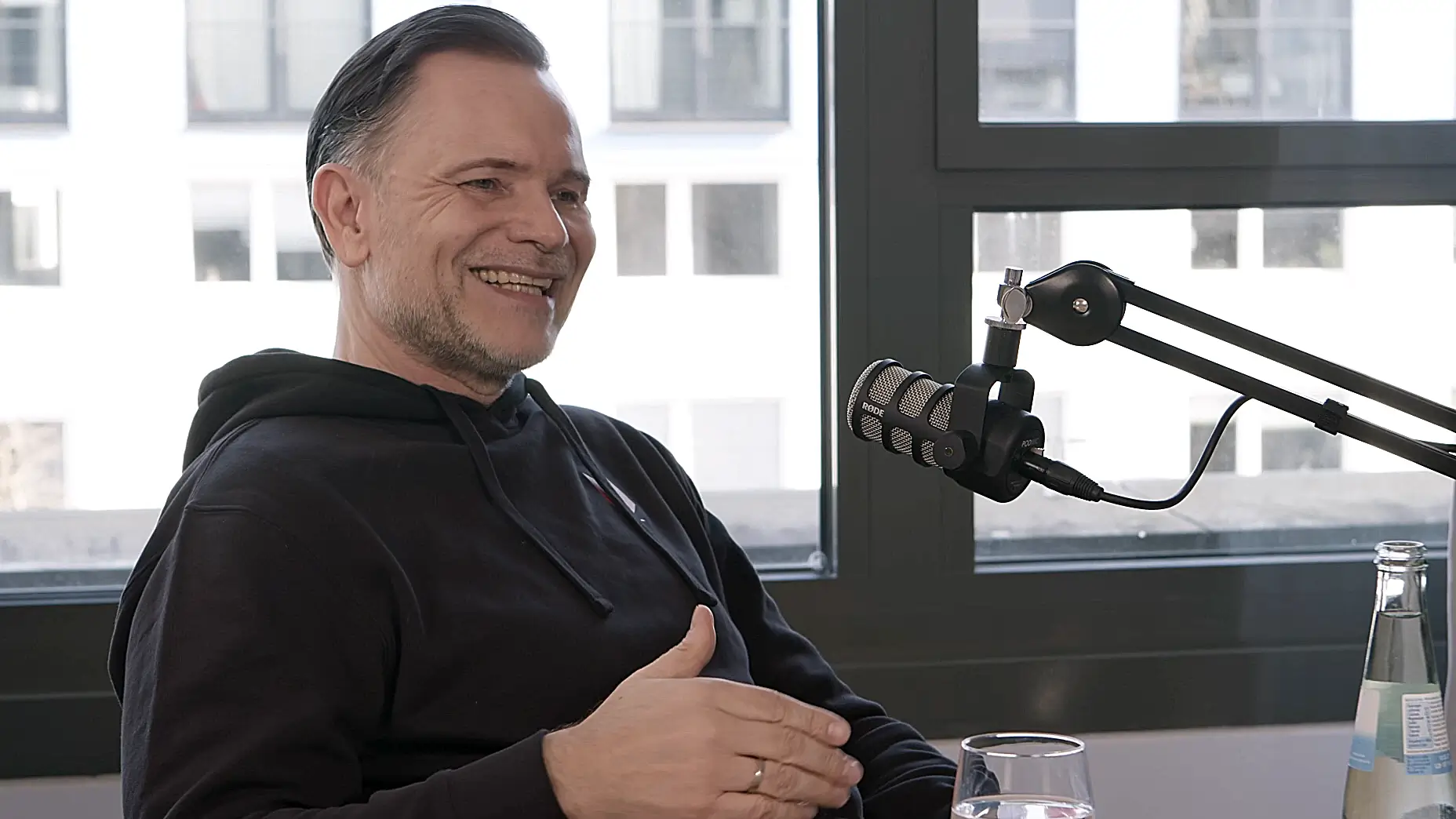
 Be the exact fit when it matters: how precision products win through precise UX.03/04/2025. Custom-made sheet metal, an online configurator and more than 10,000 orders a year: Kantfuchs24 shows how a seemingly simple product can change B2B e‑commerce. The real success factor? Trust. Frank Schulz, COO and co-founder, tells Jean-Marc Noël how speed, precision and customer focus made the company a pioneer.Be the exact fit when it matters: how precision products win through precise UX.
More from #trstd casts
- geschenke-online.de16/11/2026. More than 180,000 customer reviews – and a managing director who personally responds to every new one. Andreas Fiedler of geschenke-online.de explains why customer feedback is a leadership responsibility and how trust is earned when every delivery matters.geschenke-online.de
- We require transparent AI. Trust cannot be built without transparency.29/09/2026. Artificial intelligence has long been more than hype – and yet agentic AI is far from reality everywhere. In conversation with Sabrina Engling, Valentina Kerst of the German AI Association (KI Bundesverband) explains where companies stand today, which topics are underestimated and why good data foundations are decisive for the next stage. Kerst sees the biggest gap in data governance: companies need to know which data they have, where it lives, who may access it and how it is structured. Only a reliable data foundation makes it possible to use AI agents meaningfully.We require transparent AI. Trust cannot be built without transparency.
- A large number of reviews is a major factor for AI.22/09/2026. E‑commerce is changing fast: customers expect good products, fair prices and a smooth experience, while AI and agentic commerce change how people discover and buy products. Bastian Kolmsee, COO of Trusted Shops, talks to David Rissmann, Head of Strategy and Chief of Staff at Flaconi, about the beauty retailer's path from start-up to international e‑commerce company.A large number of reviews is a major factor for AI.
- Customer feedback is our main learning source.25/08/2026. 10,000 reviews, AI and a new course in e‑commerce: from fashion brand with physical stores to modern omnichannel retailer, More & More has gone through a full digital transformation. Jean-Marc Noël, CEO and founder of Trusted Shops, talks to Thomas Forstpointner, Head of E‑Commerce at More & More, about the challenges along the way and how trust works digitally.Customer feedback is our main learning source.
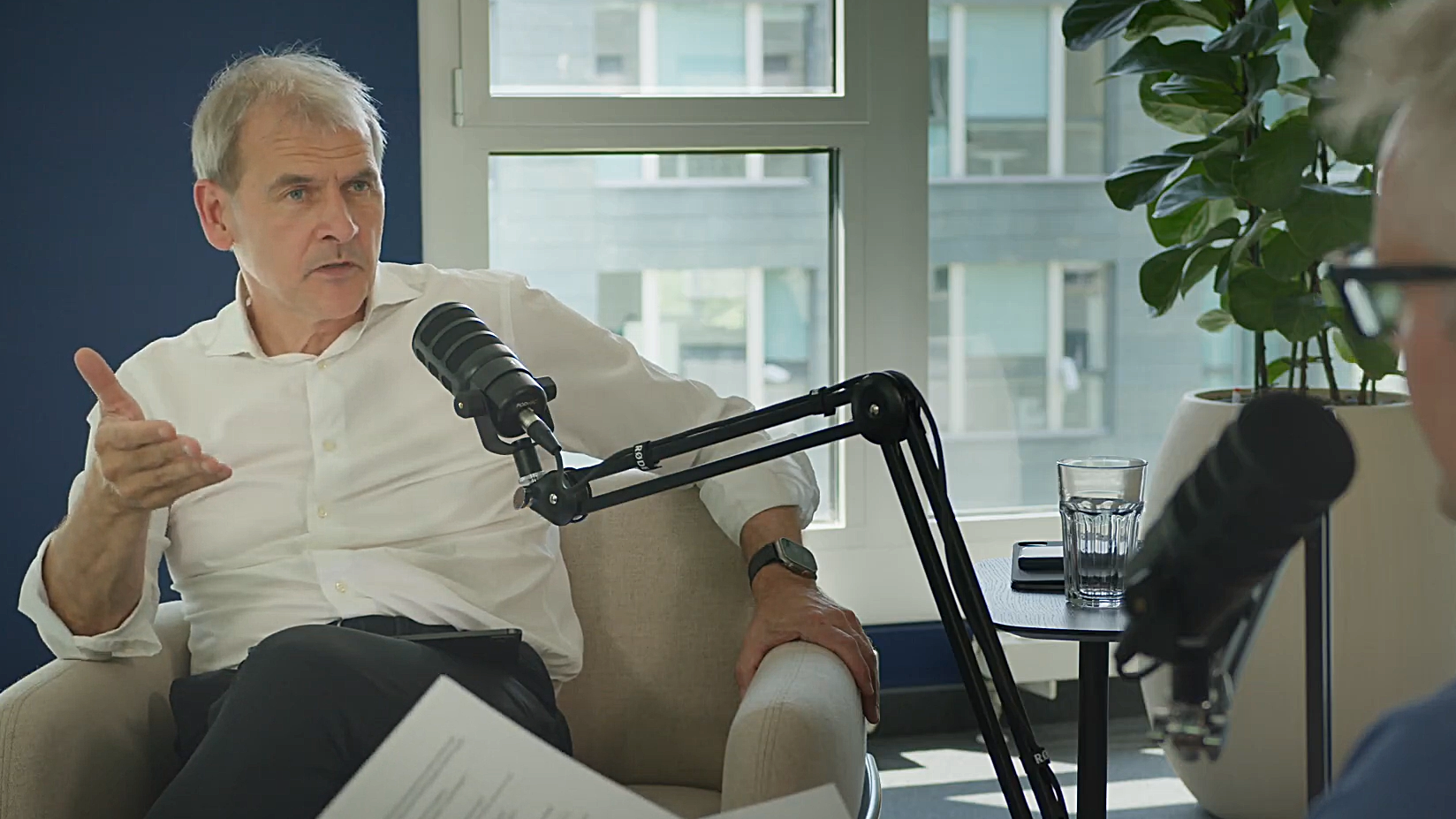
 Unfortunately, those who play by the rules are the ones who lose out.13/08/2026. Fake shops and manipulated reviews harm not only consumers but the whole of online retail. Dr. Carsten Föhlisch talks to Stephan Tromp, Deputy Managing Director of the German Retail Federation (HDE), about the growing threat of online fraud and why trust has become the most important currency in e‑commerce.Unfortunately, those who play by the rules are the ones who lose out.
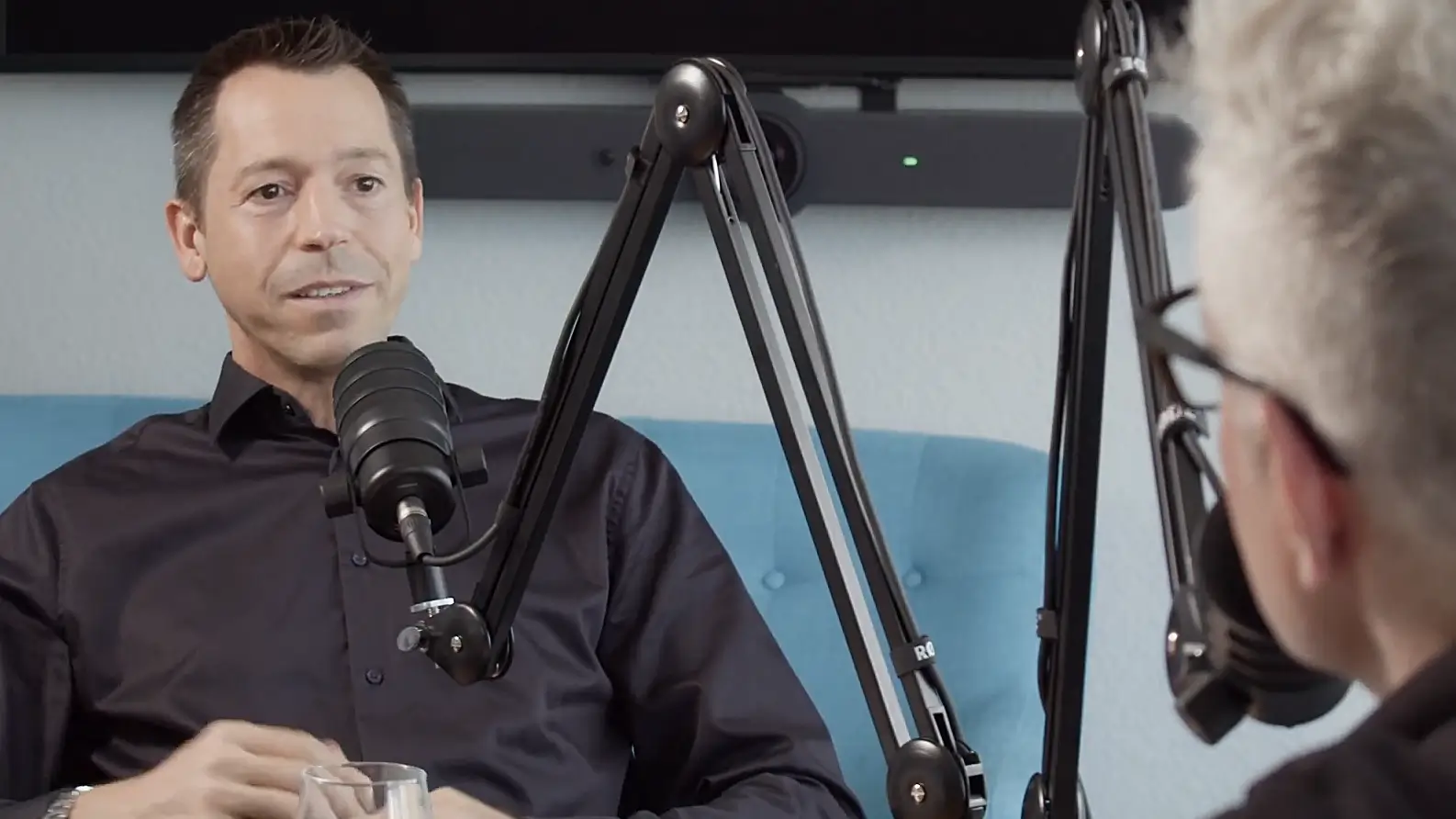
 When emotions play a role, rationality goes out the window.28/07/2026. Why do we often trust a website within seconds? And why is a professional design often enough to switch off our critical thinking? Dr. Carsten Föhlisch talks to Michael Rasimus, head of the eye-tracking lab at DHBW Karlsruhe, about the psychology behind fake shops and online fraud, and what eye tracking reveals about where people really look.When emotions play a role, rationality goes out the window.
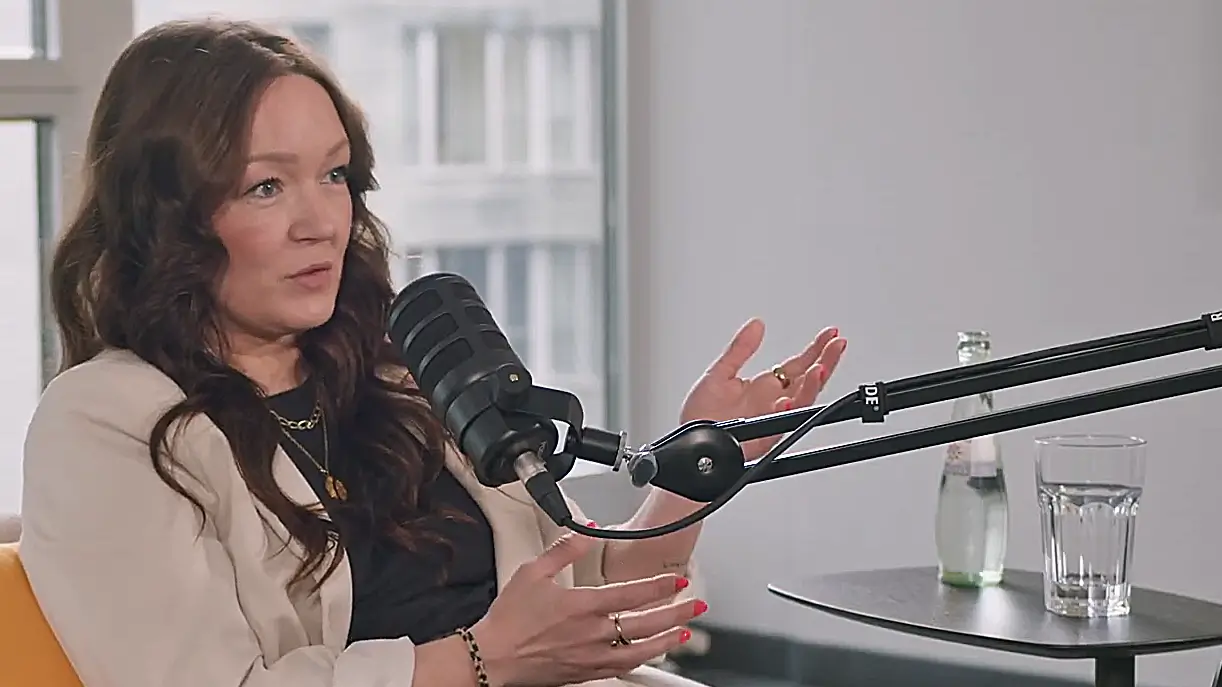
 Fake shops with AI: highly professional, fast-rising fraud.29/05/2026. Fake shops can hardly be told apart from real ones any more – AI makes it possible, and the numbers show online fraud is rising sharply. Dr. Carsten Föhlisch talks to Isabelle Rosière, Managing Director of Deutschland sicher im Netz e.V. (DsiN), about the rapid professionalisation of online fraud and what it means for consumers.Fake shops with AI: highly professional, fast-rising fraud.
- Hard lessons in logistics, drop-shipping and agency red flags.28/05/2026. Made to measure, down to the centimetre: what DIY stores can't do, Grimberg GmbH turned into a business model. Maurice Grimberg and his sister Leonie run the family company from Sievern, started by their father in 2004 in a hallway, as a modern e‑commerce business with more than 130,000 customers in Germany and the Benelux. How do you notice that an agency doesn't really understand your product – and when do you act on it?Hard lessons in logistics, drop-shipping and agency red flags.
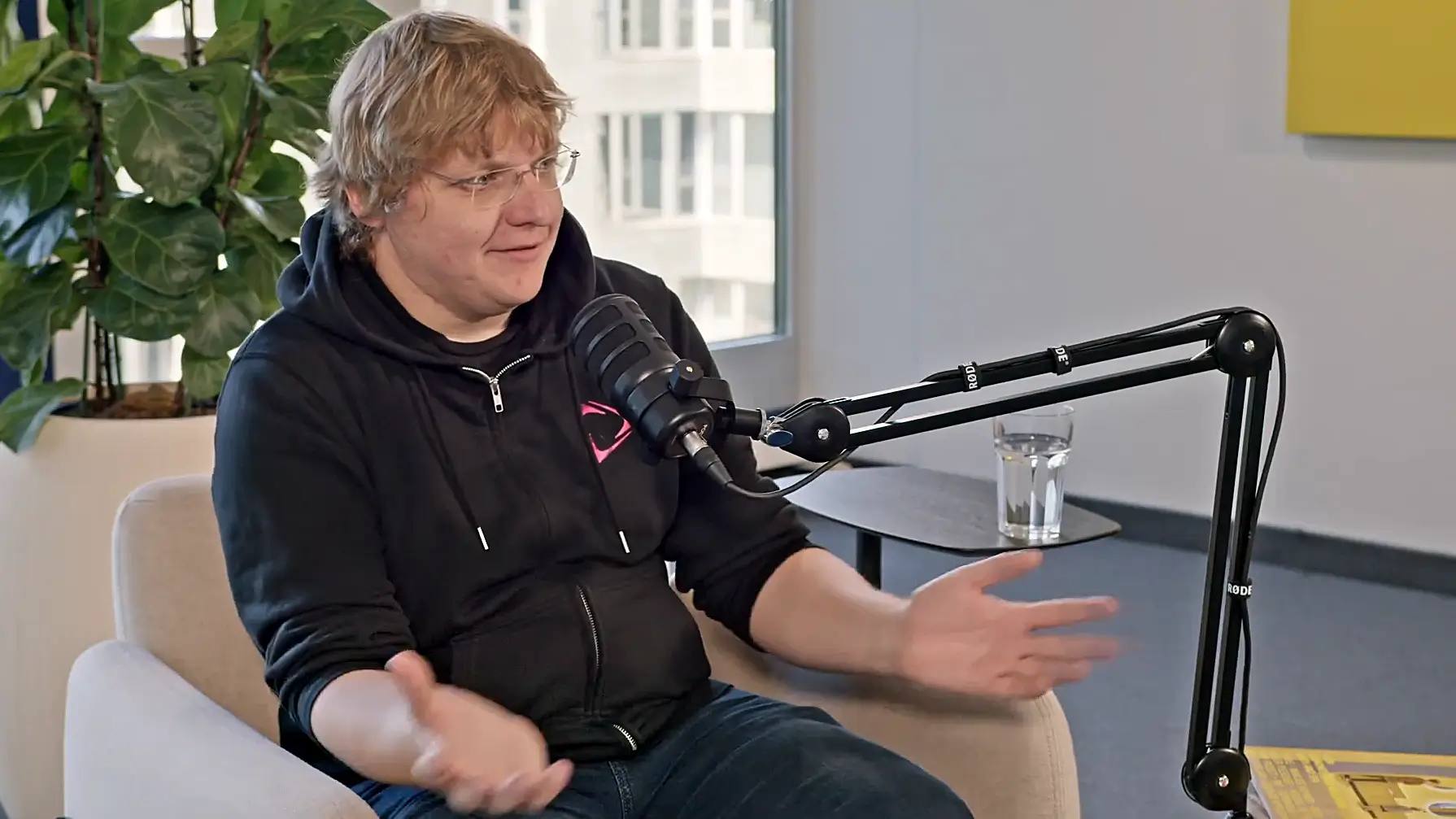
 76,000 fake shops uncovered: the industrial scale of global e‑commerce fraud.18/05/2026. When Matthias Marx started investigating open data leaks on the internet, he came across something he couldn't place at first: thousands of professionally designed web shops on the same technical base, with hidden code to skim credit card data. What followed was the discovery of BogusBazaar, a criminal network of more than 76,000 fake shops, run like a real company from China.76,000 fake shops uncovered: the industrial scale of global e‑commerce fraud.
- Differentiating the indifferent for a 20% conversion uplift.14/04/2026. Electricity and gas are invisible products. That's exactly why trust at E wie Einfach is not a phrase but a conversion strategy. Roman Philippi tells Jean-Marc Noël how the Cologne-based E.ON subsidiary brings innovation, customer focus and measurable trust signals together in a highly regulated market – and what difference a trustmark really makes at checkout.Differentiating the indifferent for a 20% conversion uplift.
- Trust rocks the cradle: crowdfunding and D2C from scratch.11/03/2026. Starting from zero with a completely unknown product, you need one thing above all: trust. Hendrik Mahncke, founder of Rock My Sleep, knew that from the start. He tells Jean-Marc Noël how a crowdfunding campaign and an idea on a sheet of paper became a serious e‑commerce business, and how an unknown brand earns the trust of parents.Trust rocks the cradle: crowdfunding and D2C from scratch.
- Market realities: navigating regional differences and subscriptions.12/01/2026. “There are moments when you feel like giving up – and that's often when it becomes clear whether a business will truly grow.” Jean-Marc Noël talks to Marius Rossel, founder and CEO of the Spanish e‑commerce agency TRILOGI, about 25 years of entrepreneurship, technological change and why trust is a decisive success factor in the Spanish market.Market realities: navigating regional differences and subscriptions.